Shared by The Hierophant on ז׳ בניסן ה׳תשע״א (April 11, 2011) Imagine a printing press and book arts studio shared by everyone in the world looking to design and craft their own siddur.
The Open Siddur Project is building it, online, on the web: a collaborative digital-to-print publishing application where you can make your own siddur, share your work, and adopt, adapt, and redistribute work shared by others — work intended for creative reuse and inclusion in new siddurim and related works of Jewish spiritual practice.
Imagine a social network focused on publishing built around privacy, collaboration, and a public database and digital library of Jewish liturgy in a format that can easily show historical variations and changes across Jewish traditions, manuscripts, and facsimile editions. Imagine a collection of text and recordings, freely licensed for creative reuse in every language Jews pray in or have ever prayed. Reimagine your siddur, custom tailored to your practice, replete with your insights and those selected from your friends, family, and the complete corpus of Jewish tradition, and a record of your family’s and community’s minhagim and nusaḥ.
We’re not there yet. (Progress towards version 1.0 is tracked on our development roadmap. We’re currently working on version 0.7 of our Open Siddur server architecture. We do need help designing an interface to access the texts on this server).).
In the meantime, take a look at the prayers, translations, exercises, art, and recordings that folk are already sharing with free/ libre licenses that permit their creative reuse. That means that you can use these works right now in the creation of new siddurim (alas, offline) while we continue developing the Open Siddur web application. There’s a list of free/libre and open source software and fonts that can help you do that right now.
Please start a conversation with us, join this project by sharing your own work, introduce yourself on our technical and non-technical discussion lists, and begin to imagine the siddur and spiritual practice you’ve always wanted. . . . → Read More: Welcome to the Open Siddur Project
Shared by Abby Jacobson on י״ב בסיון ה׳תשע״ג (May 21, 2013)
Merciful God, a great and powerful windstorm has passed, and it has torn apart the buildings and shattered the rocks before You. You told Elijah, the prophet, that You were not in the windstorm. Please, then, be in the still, small voices of the children crying out to be found. Be in the voices of the rescuers calling out for survivors. Be in the cries of those who are lost and of those who have lost. . . . → Read More: A Prayer for Oklahoma
Shared by Aharon Varady on ב׳ בסיון ה׳תשע״ג (May 11, 2013)
If one has a dream which makes him sad he should go and have it interpreted in the presence of three. He should have it interpreted! Has not Rav Ḥisda said: A dream which is not interpreted is like a letter which is not read? — Say rather then, he should have a good turn given to it in the presence of three. . . . → Read More: Ritual for Judging Bad Dreams for Good
Shared by Aharon Varady on כ״ב באייר ה׳תשע״ג (May 2, 2013)
May my thoughts seek truth and integrity, the humility that is commensurate with my ignorance, the compassion that arises from the depths of awareness, as depths speak to depths… . . . → Read More: Teḥinnah for Honest Journal Reflections
Shared by Enrico Segre on י״ט באייר ה׳תשע״ג (April 29, 2013)
After the popular reception among German speaking Jewry of Fanny Neuda’s Stunden Der Andacht (1855), additional sifrei teḥinnot, collections of prayers composed in the vernacular for women, were published in German. One of them, Hanna. Gebet- und Andachtsbuch für israelitische Frauen und Mädchen, published in 1867, was compiled with teḥinnot composed by the leading luminaries of Liberal Judaism in Breslau, Silesia: Jacob Freund (1827-1877), Rabbi Abraham Geiger (1810-1874), and Rabbi Moritz Güdemann (1835-1918), Manuel Joël (1826-1890), and Moritz Abraham Levy (1817-1872). The title of the collection is a direct reference to the biblical figure, Ḥanna whose petitionary prayer for a child was answered with the birth of her son, the prophet Shmuel. . . . → Read More: Hanna. Gebet- und Andachtsbuch für israelitische Frauen und Mädchen. (Jacob Freund et al, 1867)
Shared by Aharon Varady on י״ד באייר ה׳תשע״ג (April 24, 2013)
I have the great pleasure to be sharing a crowdsourced labor of love, the first book of prayers that the Open Siddur Project has completely proofread on Wikisource: Stunden Der Andacht (Hours of Devotion, 1855) by Fanny Schmiedl Neuda. I initially prepared the transcription from the 145-page, 1858 edition of Stunden Der Andacht with Tesseract-OCR and a scan of the book made by Google Books. Many thanks to Open Siddur Project contributor and volunteer, Chajm Guski, for helping to upload the transcription to the German Wikisource site. Many thanks go to the untold numbers of volunteer proofreaders, both veteran Wikisource volunteers as well as the many folk who came to proofread the text after seeing a tweet, facebook status update, or reading an email asking for German fluent readers for help. . . . → Read More: Stunden Der Andacht (Fanny Schmiedl Neuda, 1855)
Shared by Esteban Gottfried on י״א באייר ה׳תשע״ג (April 21, 2013)
Prayers for students leaving school for or returning from their summer break. . . . → Read More: מי שבירך לתלמידים החוזרים מחופשת ולתלמידים היוצאים לחופשת הקיץ
Shared by The Hierophant on י׳ באייר ה׳תשע״ג (April 20, 2013)
This post is a storage container for facsimile editions and digital transcriptions of Maimonides’ Seder Tefillot (Order of Prayers) found at the end of his Sefer Ahava (Book of Love) in his Mishneh Torah. . . . → Read More: סדר תפילות | The Seder Tefillot of Rabbi Moshe ben Maimon (c. 1180 CE)
Shared by Stephen Belsky on ט׳ באייר ה׳תשע״ג (April 19, 2013)
May the One who spoke the world into being, and who blessed humanity created in God’s image, and who brought about the miracle of these United States to promote freedom and peace among all people — bless, guard, and protect all the inhabitants of the Boston area, and strengthen and encourage their leaders, representatives, police officers, and detectives; bring them out from the shadow of death to light, and from danger to relief; and may the verse be fulfilled for them which says, ‘God is good to all, and shows mercy to all God’s creatures.’ And let us say: amein. . . . → Read More: תפילה לבאסטאן | Prayer for Boston
Shared by Rachel Barenblat on ט׳ באייר ה׳תשע״ג (April 19, 2013)
I wrote this a few days after the Boston Marathon bombing. It arose out of a meditation service which I led at my synagogue. The doors to our sanctuary were open, so we had the sounds of the nearby wetland in our ears, and I invited the meditators to join me in cultivating compassion and sending it toward Boston. The line “My heart is in the east and I am in the west” is adapted from the medieval Spanish poet Judah haLevi. . . . → Read More: Prayer After the Bombing
Shared by Aharon Varady on ה׳ באייר ה׳תשע״ג (April 15, 2013)
My opportunities to express gratitude on secular, nationalist days of thanksgiving have come at an almost unfathomably deep history of suffering and striving in the lives of those who went before me. Only the Earth (from which we, earthlings were born, Bnei Adam from Adamah) has witnessed the constancy of our violent deprivations upon each other. I think this prayer applies just as well for Yom HaAtzmaut in Medinat Yisrael as it does for other secular days of thanksgiving and thankfulness. I insert this after Al Hanissim in the Amidah and in the Birkat Hamazon on such days. . . . → Read More: על הניסים | Thanksgiving Prayer on Secular/National Days of Gratitude
Shared by Sarah Groner on ד׳ באייר ה׳תשע״ג (April 14, 2013)
This prayer is based on the personal prayer said on holidays before Torah reading. The grammar has been adapted as plural rather than singular, so that the couple says the prayer together before their ritual of Kiddushin (betrothal). . . . → Read More: תפילה לפני קידושין | Prayer before Kiddushin for couples by Sarah Groner
Shared by Josh Weinberg on כ״ו בניסן ה׳תשע״ג (April 6, 2013) עַל הַנִּסִּים וְעַל הַפֻּרְקָן וְעַל הַגְּבוּרוֹת וְעַל הַתְּשוּעוֹת וְעַל הַנֶּחָמוֹת וְעַל הַמִּלְחָמוֹת שֶׁעָשִׂיתָ לָנוּ בַּזְּמַן הַזֶּה.
ביום ה’ באייר חמשת אלפים תש”ח למניין שאנו מונים לבריאת העולם, בעת ההכרזה על הקמת מדינת ישראל, זכה עם ישראל לריבונות על אדמתם ולשליטה על גורלם. על נס הקמת מדינה יהודית באשר היא ראשית צמיחת גאולתינו. . . . → Read More: על הניסים | Thanksgiving Prayer on the State of Israel’s Independence Day
Shared by Alan Wagman on כ״ב בניסן ה׳תשע״ג (April 2, 2013) This is an English language interpretation of Kaddish, intended to capture the spirit of translations/interpretations that I have seen in various sources and also to capture the sound and rhythm of the Aramaic text, including syllables which, when read simultaneously with the Aramaic, rhyme with the Aramaic. . . . → Read More: קדיש | Kaddish, an interpretation
Shared by Aharon Varady on י״ט בניסן ה׳תשע״ג (March 30, 2013)
According to Rabbinic tradition, the 21st of Nissan is the day in the Jewish calendar on which Pharaoh’s army was drowned in the Sea of Reeds, and the redeemed children of Yisrael sang the Song of the Sea, the (Shirat Hayam, Exodus 15:1-19). The song, as included in the the morning prayers, comprises one of the most ancient text in Jewish liturgy. The 21st of Nissan corresponds to the 7th day of Passover, and the recitation of the Shirat HaYam is part of the daily Torah Reading. Rabbi Hillel Ḥayim Yisraeli-Lavery shares a performance of a melody he learned for the Shirat Hayam from צוף דבש Tzuf Devash, a Moroccan synagogue in the Old City of Jerusalem. If there is something about this tune that strikes one as particularly celebratory, it might be because the relationship between G!d and the Jewish people is traditionally described as a marriage consummated with the Covenant at Mt. Sinai. The passage of Bnei Yisrael through the Sea of Reeds towards Mt. Sinai thus begins a bridal march commencing in the theophany at Mt. Sinai, 42 days later. . . . → Read More: שירת הים | The Song of the Sea, sung with a Moroccan Nusaḥ by R’ Hillel Ḥayim Yisraeli-Lavery
Shared by Aharon Varady on ט״ו בניסן ה׳תשע״ג (March 26, 2013)
“Sefirot HaOmer” by Aharon Varady, following the color correspondences of Reb Zalman Schachter-Shalomi. Each of the seven weeks and days of the Omer is represented by one of the seven lower Sephirot: Ḥesed, Gevurah, Tiferet, Netzaḥ, Hod, Yesod, and Malkhut, the creative emanations all the worlds were created and continually sustained, as taught in . . . → Read More: סדר ספירת העומר | the Order of Counting the Omer in the Spring
Shared by David Seidenberg on י״ג בניסן ה׳תשע״ג (March 24, 2013)
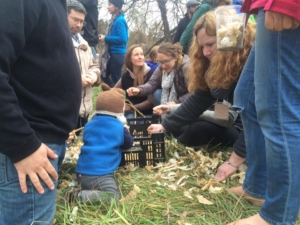
Here’s a kavannah for tonight’s search for ḥametz or for burning ḥametz tomorrow (with added words), from neohasid.org. It would be great if you could share it with your networks. Ḥag sameaḥ! . . . → Read More: Kavanah for Returning Our Ḥametz to the Earth
Shared by Ḥaim Hames on ז׳ בניסן ה׳תשע״ג (March 18, 2013) יהי רצון [מלפניך יהוה אלוהינו ואלוהי אבותנו ואמותנו] שהפתק אשר שם אנכי בקלפי יצטרף לעוד אלפי פתקים שיבטיחו מנהיגות שפויה שתחזק את הערכים הדמוקרטיים, תשאף לשלום עם שכנינו, תפריד דת ומדינה, תדאג לחלשים ותגן על העובדים, תילחם בשחיתות ותנהיג באמצעות הדוגמא אישית. ויהי רצון [מלפניך יהוה אלוהינו ואלוהי אבותנו ואמותנו] שהעם היושב בציון יזכה . . . → Read More: תפילה (ישראלית) לפני הכניסה לקלפי (למאמין וללא מאמין)
Shared by Ḥaim Hames on ז׳ בניסן ה׳תשע״ג (March 18, 2013)
May it be Your will, Lord our God, God of our fathers and mothers, that I leave this house as I entered it – at peace with myself and with others. May my actions benefit all residents of the State of Israel. May I work to improve the society that sent me to this chamber and cause a just peace to dwell among us and with our neighbors. May I always remember that I am a messenger of the public and that I must take care to keep my integrity and innocence intact. May I, and we, succeed in all our endeavors. . . . → Read More: Prayer for Entering the Knesset
Shared by Trisha Arlin on ז׳ בניסן ה׳תשע״ג (March 18, 2013)
Shabbat happens, If I let it. . . . → Read More: If I Let It: A Kavanah for Kabbalat Shabbat
Shared by Eve Levavi on ו׳ בניסן ה׳תשע״ג (March 17, 2013)
A tale is told of Rabbi Eliezer, Rabbi Joshua, Rabbi Elazar son of Azariah, Rabbi Akiva, and Rabbi Tarfon, who held a seder [lit: reclined] in Bnai Brak. They discussed the exodus from Egypt all that night, until their students came and said to them, “Rabbis, the time has come to recite the morning shema.” . . . → Read More: Haggadah for Pesaḥ, an English translation
Shared by Gabriel Wasserman on ו׳ בניסן ה׳תשע״ג (March 17, 2013)
We are grateful to Gabriel Wasserman for sharing these texts comprising Parts 1 through 3 of his Haggadah for the Pesaḥ Seder. . . . → Read More: The Pesaḥ Seder
Shared by Alan Jay Sufrin on ו׳ בניסן ה׳תשע״ג (March 17, 2013) This piyut (liturgical poem) arose after a very meaningful performance of mine in the summer of 2000. It was such a powerful experience that I was moved to say a prayer of thanks to G-d for the opportunity to perform my songs for audiences – but found no such prayer in existence. So I wrote this one. It took about a year to complete and I’ve been saying it backstage right before my performances, and sometimes before recording sessions, since then. . . . → Read More: החונן לדויד מזמור – Performing Musician’s Piyut
Shared by Joy Ladin on כ״ד באדר ה׳תשע״ג (March 6, 2013) The transition ritual poems below are an effort to hear in the Torah the voices of the various parts of the trans self calling one another toward wholeness. . . . → Read More: Transition Ritual Poems
Shared by Lieba B. Ruth on י״ג באדר ה׳תשע״ג (February 23, 2013)
Because we cannot live on two planes, we are granted the opportunity to disguise our external features. We develop the capacity to know each others hearts and find even greater satisfaction in the exchange. Yet, too often, we act as if someone else — who looks remarkably like oneself — is going to provide the support for nonprofit organizations we deem are necessary for a decent life. We assume / hope / pray that someone “else” is doing our part. It’s their turn to make a critical contribution, even a small one, that gives relief, replaces a worn-out part, opens the door wide enough to make a difference. . . . → Read More: Knowing But Not Revealing: A Purim Tax Deduction Loophole
Shared by Aharon Varady on י׳ באדר ה׳תשע״ג (February 20, 2013)
This week of President’s Day and Purim, I’m sharing a civic prayer by the MALBIM, Rabbi Meir Leibush ben Yehiel Michel (1809-1879), whose first published commentary was on Megillat Esther (1845). His life as a wandering rabbi and brilliant intellect reflects the changing expectations of Jews and Jewish religious authorities during the period of emancipation in 19th century Eastern Europe. The Malbim’s fame and popularity rest upon his commentary on the Tanakh (1876). His political life as a community rabbi, however, is a tragic one. . . . → Read More: The Malbim’s Prayer for Alexandru Ioan I Cuza, Domnitor of Romania (1862)
Shared by Aharon Varady on ל׳ בשבט ה׳תשע״ג (February 10, 2013)
Last year around this time, I was sitting with Ya’qub ibn Yusuf in his bookstore, Olam Qatan (54 Emek Refaim in South Jerusalem), asking if he might share some useful practice that I might share through the Open Siddur Project. He offered this thought which he had heard from someone else:
I have difficulty with the idea of thanking G!d for “returning my soul to me” sheheḥezarta bi nishmati while I’m still endeavoring to remain in touch with my dreams. So I much prefer what someone else suggested, that instead of saying nishmati (my soul), to say instead han’shamati (the embodiment of my soul). I thank G!d for returning me to my body — my soul was never missing.
. . . → Read More: Returning the body to the soul: an adaptation of Moshe ibn Makhir’s Modeh Ani
Shared by Aharon Varady on י׳ בשבט ה׳תשע״ג (January 21, 2013)
The earliest artifacts recording Jewish liturgy (or for that matter any Hebrew formulation found in the Torah) are two small silver amulets, discovered in 1979 by Israeli archaeologist Gabriel Barkay. He discovered the amulets in a burial chamber while excavating in Ketef Hinnom, a section of the Hinnom Valley south of Jerusalem’s Old City.
. . . → Read More: Adventures in Ancient Jewish Liturgy: the Birkhat Kohanim
Shared by Trisha Arlin on ט׳ בשבט ה׳תשע״ג (January 20, 2013)
This is the month when we tell the story Of the escape from the narrow place. This is the month of Shabbat Shirah, When we sing the song of liberation. We give thanks for freedom. This is the month when we talk of wine and nuts and fruit, The New Year of the Trees. This is the month of Tu Bishvat When we eat the gifts of our planet. We give thanks to the earth. . . . → Read More: Rosh Ḥodesh Shevat
Shared by Levi Weiman-Kelman on ח׳ בשבט ה׳תשע״ג (January 19, 2013) דומיה – Silence לְךָ דֻמִיָּה תְהִלָּה אֱלֹהִים בְּצִיּוֹן וּלְךָ יְשֻׁלַּם נֶדֶר: תהלים פרק ס”ה (ב’)
To You silence is praise, God in Zion, (Psalm 65.2-3) אֵין עוֹמְדִים לְהִתְפַּלֵּל, אֶלָּא מִתּוֹךְ כֹּבֶד רֹאשׁ. חֲסִידִים הָרִאשׁוֹנִים הָיוּ שׁוֹהִים שָׁעָה אַחַת – וּמִתְפַּלְלִים, כְּדֵי שֶׁיְּכַוְּנוּ אֶת לִבָּם לַמָּקוֹם. אֲפִלּוּ הַמֶּלֶךְ שׁוֹאֵל בִּשְׁלוֹמוֹ – לֹא יְשִׁיבֶנּוּ; וַאֲפִלּוּ . . . → Read More: Source texts on Jewish Prayer and Spirituality
Shared by Esteban Gottfried on ו׳ בשבט ה׳תשע״ג (January 17, 2013)
רִבּוֹן כָּל הַמַעֳשִים, אַתָּה חוֹנֵן לְאָדָם דֲּעַת וּמְלַמֵּד לֶאֶנוֹש בִּינָה. חָנֵּנוּ מֵאִתְּךָ חָכְמָה, בִּינָה וְהַשְכֵּל בּעֶת מִילוּי זְכוּתֶנו וְחוֹבַתֵנוּ הַאֶזְרַחִית לִבְחוֹר אֶת מַנְהִיגֵינו. . . . → Read More: תפילה לבוחר טרם הבחירות: A Prayer for Elections Day
|
Is the Hebrew text below readable? א֚וֹ יַחֲזֵ֣ק בְּמָעוּזִּ֔י יַעֲשֶׂ֥ה שָׁל֖וֹם לִ֑י שָׁל֖וֹם יַֽעֲשֶׂה־לִּֽי׃ If the text above from Isaiah 27:5 is unreadable, please use a more capable web browser, such as Mozilla Firefox or Chromium (Google Chrome). To test your browser further, click here.
Every shekel, drachma, or dollar you contribute helps to liberate the ingredients of Jewish spiritual practice for all collaborating free/libre and open source initiatives. Your tax deductible donation will help us afford to maintain this website, grow this project, and complete our web application.
|