![the Open Siddur Project [logo]](https://opensiddur.org/wp-content/uploads/2018/09/Open-Siddur-Project-Logo-2016.svg)
| Source (Yiddish) | Translation (English) |
|---|---|
1920, 11טען מעי, האָט מען אונז געזאָגט געה, מאַרשירען איבער אללע סטריטען, דער טרױער צו פרײד איז געװאָרען פערביטטען, אױ! גענוג צָרוֹת האָבען מיר שאָהן געליטטען, יִשְׂרָאֵל׳קעל טראָג דײן צִיּוֹן פלעג, צו דײן גָּלוּת איז שױן אַ ברעג, דוא האָסט צוריק דײן לאַנד, גענוג שאָהן זײן צו שפּאָט און צו שאַנד, צִיּוֹן רופט אַהײם איהרע קינדער, אללע זעהען שאָהן, אױך אֲפִילּוּ א בלינדער, אז אֶרֶץ יִשְׂרָאֵל איז שאָהן פאר דעם אידען, צָרוֹת האָט ער שאַהן געהאַט פערשידען. |
In 1920, the 11th of May,[1] The proposed treaty crafted at the San Remo conference in April 1920 was presented to Ottoman Empire officials in Paris on 11 May 1920. We were told: “Go!” Marching through all the streets, Sorrow turned to joy, Oy! we have already suffered enough tsures, Little Yisroel, carry your banner of Ẓíōn, Your exile has already reached its limit, You have regained your country, Enough mockery and shame already, Ẓíōn calls her children home, Everyone sees already, even a blind man, That Erets Yisroel is already for the Yidden, Of many kinds of trouble he has already had enough. |
אידעלע, אידעלע!…… נעהם שאָהן דײן פיעדעלע, שפּיעל שאָהן דײן ליעדעלע, אין בֵּית הַמִּקְדָּשׁ דעם שיר, און בעט גאָט אױך פאר מיר, איך זאָל געניסען צוליעב דיר, מיר האָבען דאָך אײן טאַטען, אַמאָהל האָבען מיר זיך בעשיצט אונטער אײן שאַטען, הוא ביזט דאָך מײן בלוט און פלײש, עס איז װאהר אז מיר האָבען דיר געװאָרפען בַּמַּיִם וּבָאֵשׁ, אָבער יעצט װעלען מיר דיר צו הילפע זײן, פון דײן הײליג לאנד זאָלסט דוא טרינקען דײן װײן, |
Yid-ele, Yid-ele!…… Take already your fidd-le, Play already your song-ele, in the Beit ha-Miqdosh — the shir![2] Likely, a reference to the legendary shir ḥadash — the new song said to be sung in the future (per Rashi on Psalms 96:1), i.e., in the era of the Moshiaḥ. Alternately, a non-specific reference to any of the contextually relevant psalms beginning with שיר, e.g. Psalms 126. And also pray to God for me, That I may rejoice in sympathy with you.[3] Acknowledging that as a Jew living outside the Land of Israel, his joy is secondary. We have, after all, the same father.[4] The eponymous Yisrael, the patriarch Yaaqov (Jacob). Cf. Genesis 32:29. Once we sheltered ourselves beneath one shadow,[5] Likely, a reference to Psalms 91:1 You are indeed my blood and flesh, It’s true that we cast you into the water and fire,[6] Possibly a reference to religious objections to political Zionism in the land of Israel for varied reasons among both orthodox and heterodox Jews in the Diaspora at the time, including in the United States. For “water” and “fire,” compare the confessional prayer Unetaneh Toqef, “מִי בַמַּֽיִם וּמִי בָאֵשׁ” (“who [will die] by water, who [will die] by fire”), the purpose of the Days of Judgement and Atonement being to collectively atone for the transgressions of the community to avoid decrees of earthly suffering at the hands of others (other nations, etc.). But now we shall help you, From your Holy Land you shall drink your wine. |
יִשְׂרָאֵל יִשְׂרָאֵל! שטעה אױף פון דײן שלאָף אַצינד, געה זײא מַקְרִיב קָרְבָּנוֹת אַ שעפּס און אַ רינד, מיר װעלען שאָהן גוט זײן צו דיר אללע, װײל מיר װײסען דײן װערדע און דײן מעלה, אױך אין אללע שלעכטע צײטען, האָסט דוא דײן אֱמוּנָה ניעמאַלס געװאָלט פארבײטען, װען אֲפִילּוּ מען האָט דיר געפּלאָגט און געיאָגט האָסט דוא דיעזעלבע װערטער געזאָגט, שְׁמַע יִשְׂרָאֵל ה׳ אֱלֹהֵינוּ ה׳ אֶחָד, הער צו אידעלע גאָט אונזער גאָט איז אײנער ער טהוט אללעס, אָבער ניט קײנער, דורך זײן געבאָט צוברעכט ער די שׂוֹנְאֵי יִשְׂרָאֵל די בײנער |
Yisroel, Yisroel! arise now from your sleep, Go, offer sacrifices — a sheep and an ox, We will always be good to you all, For we know your worth and your virtue. Even in all the bad times, You never wished to barter away your faith, Even when you were tormented and hunted, You spoke the very same words: Shema’ Yisroel, Hashem Eloheinu, Hashem Eḥad,[7] As the last words uttered before expiring, per Jewish tradition. Hear, Yid-ele — God, our God, is One, He does everything, not anyone else, By His command He breaks the bones of the enemies of Yisroel.[8] Numbers 24:8. Also, following the metaphor of bones as elements of support, find Berakhot 32a.2 and Berakhot 4b.21-22 where raising up Israel follows from bringing about their enemies downfall. |
יעצט איז פיר דיר אידעלע אײן גרױסע פרײד, דוא נעהמסט שאָהן פאָן דײן לאנגען גָּלוּת אָפּשײד, 2000 יאָהר אַרום געװאנדרעװעט דיא גאנצע װעלט, סײ אין דיא גרױסע היצען סײ אין גרױס קעלט, און דו האָסט אלע מאָהל געשריען לְשָׁנָה הַבָּאָה בִּירוּשָׁלַיִם אָבער יעצט איז שאָהן געקומען דיא יְשׁוּעָה מִן הַשָּׁמַיִם, |
Now for you, Yid-ele, there is a great joy, You are already taking leave of your long exile, For 2,000 years you wandered around the whole world, Whether in great heat or in great cold, And you always cried out: “Next year in Jerusalem!” But now from Heaven salvation has already come. |
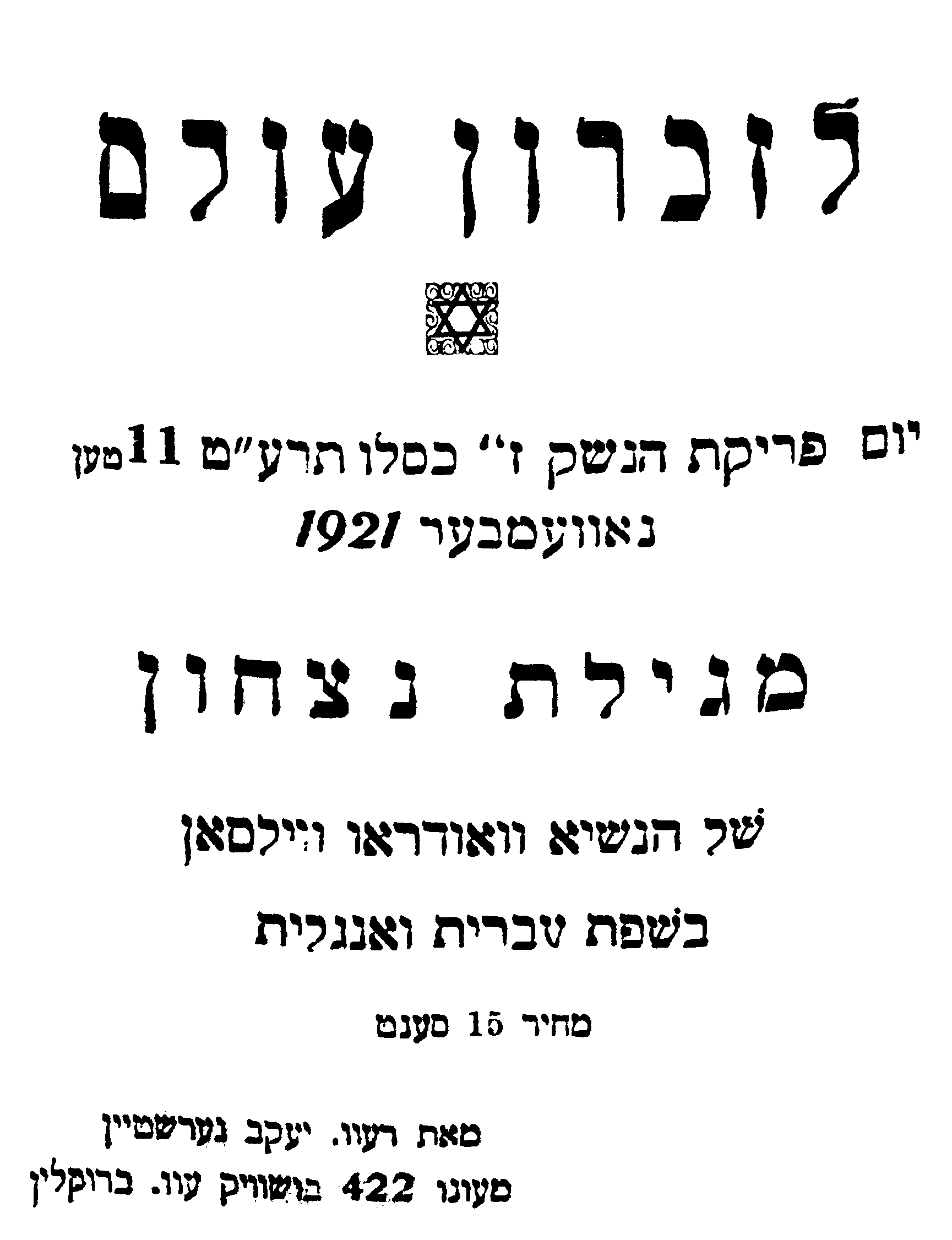
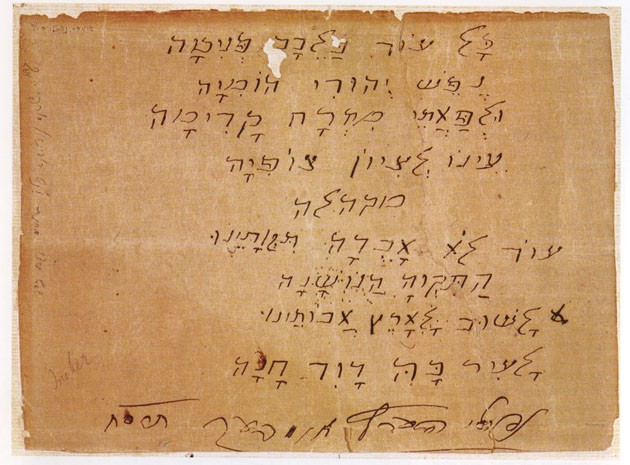
This is “Shir lə-Tsiyōn” by Rabbi Jacob Gerstein, first published in 1920. Many thanks to Shulamith Z. Berger, Curator of Special Collections at Yeshiva University), for sharing the existence of this song in the context of the San Remo conference, and for pointing us to the archival resource from which I prepared this transcription. It appears on the last page of “Various liturgical compositions, manuscript 151.” I also prepared the English translation of the Yiddish. –Aharon Varady
Source(s)

Shir leTsiyon (Jacob Gerstein 1920)
Notes
| 1 | The proposed treaty crafted at the San Remo conference in April 1920 was presented to Ottoman Empire officials in Paris on 11 May 1920. |
|---|---|
| 2 | Likely, a reference to the legendary shir ḥadash — the new song said to be sung in the future (per Rashi on Psalms 96:1), i.e., in the era of the Moshiaḥ. Alternately, a non-specific reference to any of the contextually relevant psalms beginning with שיר, e.g. Psalms 126. |
| 3 | Acknowledging that as a Jew living outside the Land of Israel, his joy is secondary. |
| 4 | The eponymous Yisrael, the patriarch Yaaqov (Jacob). Cf. Genesis 32:29. |
| 5 | Likely, a reference to Psalms 91:1 |
| 6 | Possibly a reference to religious objections to political Zionism in the land of Israel for varied reasons among both orthodox and heterodox Jews in the Diaspora at the time, including in the United States. For “water” and “fire,” compare the confessional prayer Unetaneh Toqef, “מִי בַמַּֽיִם וּמִי בָאֵשׁ” (“who [will die] by water, who [will die] by fire”), the purpose of the Days of Judgement and Atonement being to collectively atone for the transgressions of the community to avoid decrees of earthly suffering at the hands of others (other nations, etc.). |
| 7 | As the last words uttered before expiring, per Jewish tradition. |
| 8 | Numbers 24:8. Also, following the metaphor of bones as elements of support, find Berakhot 32a.2 and Berakhot 4b.21-22 where raising up Israel follows from bringing about their enemies downfall. |
“שִׁיר לְצִיּוֹן | Shir l’Tsiyōn — a hymn celebrating the reïfication of the Balfour Declaration at the culmination of the San Remo conference on 11 May 1920 by Rabbi Jacob Gerstein” is shared through the Open Siddur Project under the Creative Commons Attribution-ShareAlike (CC BY-SA) 4.0 International copyleft license.






Leave a Reply