![the Open Siddur Project [logo]](https://opensiddur.org/wp-content/uploads/2018/09/Open-Siddur-Project-Logo-2016.svg)
| Source (Hebrew) | Translation (English) | Translation (German) |
|---|---|---|
אֲשַׁחֵר אֶל אֵל כָּל שְׁנוֹת עִדָּנַי אֱלֹהֵי מֵרָחֹק נִמְצָא וְקָרוֹב מַצְדִּיקִי בְּדִינַי שׁ֚וּבָה יִשְׂרָאֵ֔ל עַ֖ד יְהֹוָ֣ה׃ (הושע יד:ב) |
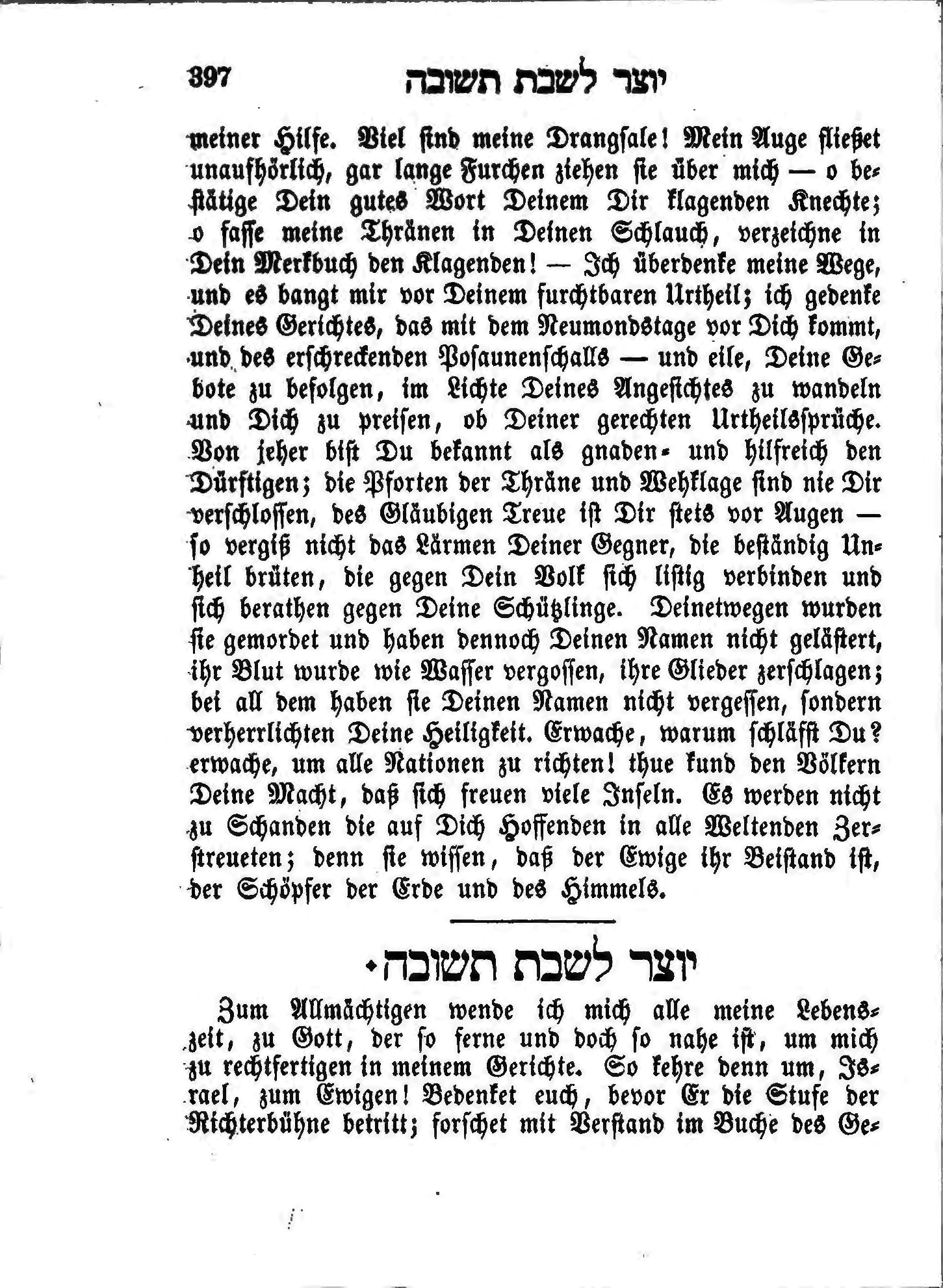
Zum Allmächtigen wende ich mich alle meine Lebenszeit, zu Gott, der so ferne und doch so nahe ist, um mich zu rechtfertigen in meinem Gerichte. So kehre denn um, Israel, zum Ewigen! | |
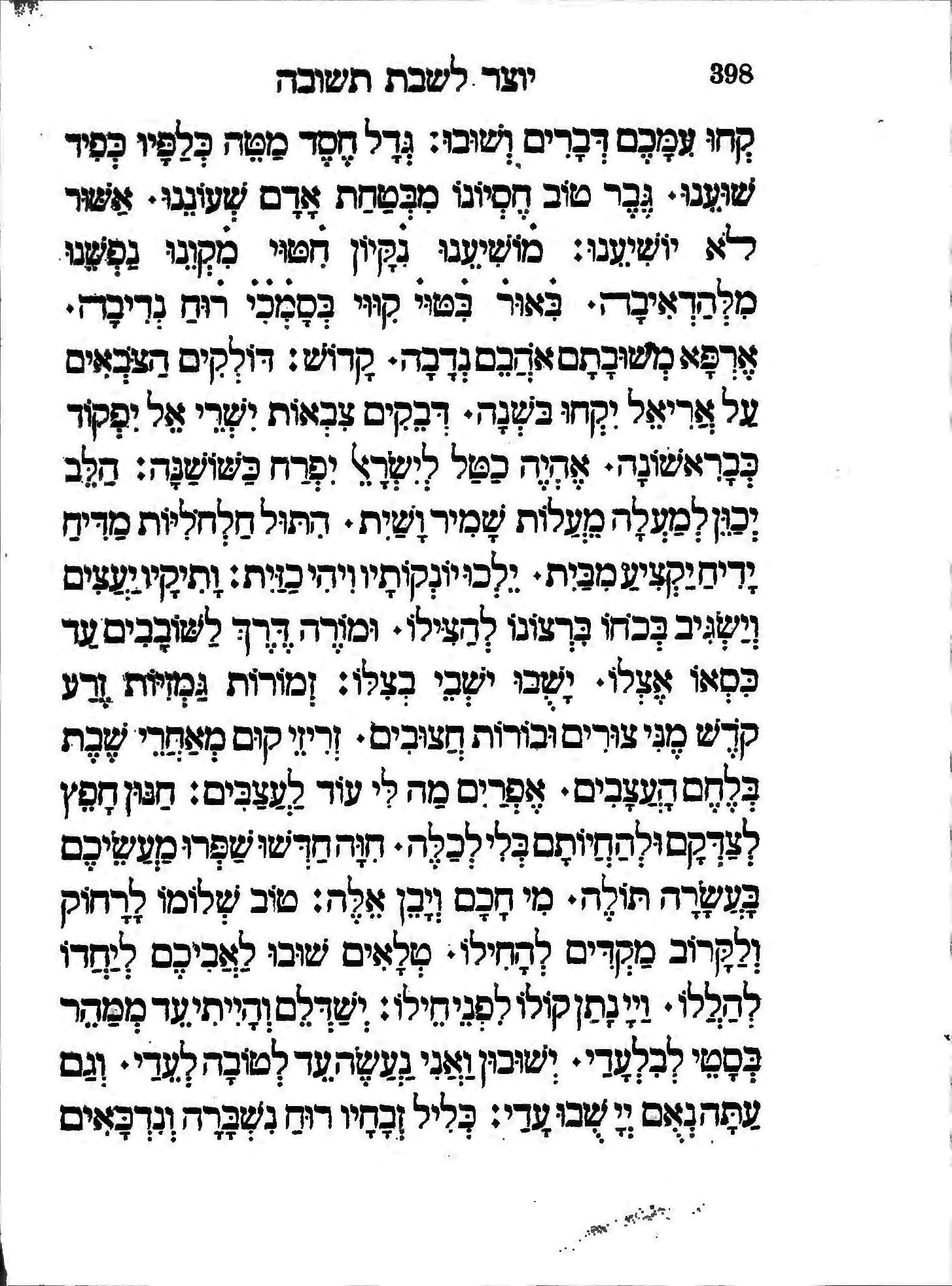
בְּטֶֽרֶם יַעֲלֶה הַבִּימָה לְגַרְדּוֹן[3] In some texts, such as the Wikimedia Commons transcription, לִגְרָדֹם or לְגַרְדּוֹם, all different spellings of the same word. לִדּוֹן הִתְחַשְּׁבוּ בִּֽינוּ דִּרְשׁוּ מֵעַל סֵֽפֶר וּבְצִלּוֹ שֵׁבוּ קְח֤וּ עִמָּכֶם֙ דְּבָרִ֔ים וְשׁ֖וּבוּ׃ (הושע יד:ג) |
Before going up to the high place, to the tribunal for judgment, consider, understand, and seek from the Book, sit in its shade; take matters with you and return. (Hosea 14:3) |
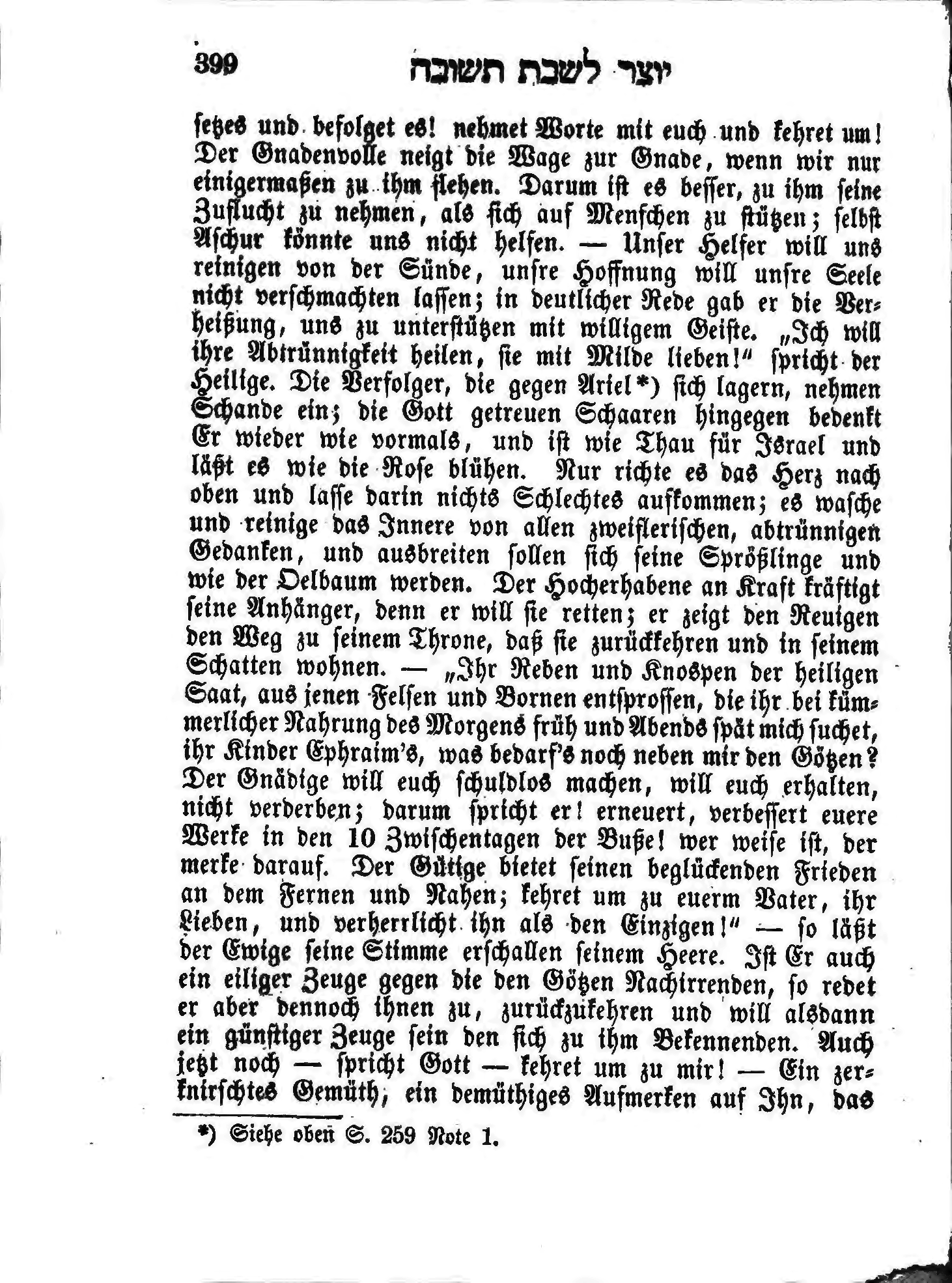
Bedenket euch, bevor Er die Stufe der Richterbühne betritt; forschet mit Verstand im Buche des Gesetzes und befolget es! nehmet Worte mit euch und kehret um! |
גְּדׇל־חֶֽסֶד מַטֵּה כְּלַפָּיו כְּפִיד שׁוּעֵֽנוּ גֶּֽבֶר טוֹב חֶסְיוֹנוֹ מִבִּטְחַת אָדָם שְׁעוֹנֵֽנוּ אַשּׁ֣וּר ׀ לֹ֣א יוֹשִׁיעֵ֗נוּ׃ (הושע יד:ד) |
Der Gnadenvolle neigt die Waage zur Gnade, wenn wir nur einigermaßen zu ihm flehen. Darum ist es besser, zu ihm seine Zuflucht zu nehmen, als sich auf Menschen zu stützen; selbst Aschur könnte uns nicht helfen. — | |
מׄוֹשִׁיעֵֽנוּ נִׄקָּיוֹן חִׄטּוּי מִׄקְוֵֽנוּ נַפְשֵֽׁנוּ מִלְּהַדְאִיבָה בֵּׄאוּרׄ בִּׄטּוּיׄ קִוְיוֹנֵֽנוּ בְּסׇמְׄכִׄיׄ רֽׄוּחַ נְדִיבָה אֶרְפָּא֙ מְשׁ֣וּבָתָ֔ם אֹהֲבֵ֖ם נְדָבָ֑ה׃ (הושע יד:ה) קָדוֹשׁ׃ |
Our savior, purifying sin, our souls’ hope from saddening; clarifying the words of our hope[6] In some texts, just קִוּוּי “hope” without the first-person. in sustaining me with a noble spirit: I will heal their backsliding, nobly love them. (Hosea 14:5) Holy! |
Unser Helfer will uns reinigen von der Sünde, unsre Hoffnung will unsre Seele nicht verschmachten lassen; in deutlicher Rede gab er die Verheißung, uns zu unterstützen mit willigem Geiste. „Ich will ihre Abtrünnigkeit heilen, sie mit Milde lieben!“ spricht der Heilige. |
דֹּלְקִים הַצֹּבְאִים עַל־אֲרִיאֵל יִקְחוּ בׇּשְׁנָה דְּבֵקִים צִבְאוֹת יִשְׁרֵי אֵל יִפְקֹד כְּבָרִאשׁוֹנָה אֶהְיֶ֤ה כַטַּל֙ לְיִשְׂרָאֵ֔ל יִפְרַ֖ח כַּשּׁוֹשַׁנָּ֑ה׃ (הושע יד:ו) |
Disgrace those warring on Ariel[7] A poetic name for Jerusalem, and the Temple specifically. For the use of the word “warring” find Isaiah 29:8. will take; the Deity will account for Their upright forces persistent[8] Literally: “sticking” as of old: I will be like dew to Israel, blossoming like a rose. (Hosea 14:6) |
Die Verfolger, die gegen Ariel sich lagern, nehmen Schande ein; die Gott getreuen Scharen hingegen bedenkt Er wieder wie vormals, und ist wie Tau für Israel und lässt es wie die Rose blühen. |
הַלֵּב יְכַוֵּן לְמַֽעְלָה מֵעֲלוֹת שָׁמִיר וָשַֽׁיִת הִתּוּל חַלְחֹלִיּוֹת מֵדִֽיחַ יָדִֽיחַ יַקְצִֽיעַ מִבַּֽיִת יֵֽלְכוּ֙ יֹֽנְקוֹתָ֔יו וִיהִ֥י כַזַּ֖יִת׃ (הושע יד:ז) |
Ere the heart is directed up over the thorns and thistles,[9] Find Isaiah 5:6. In this case, a metaphor for distracting thoughts in prayer. the fantasies are false, the seducer dismissed,[10] The same root in Hebrew. This refers to the evil impulse being banished. scraped from the house, its branches spread out like an olive-tree. (Hosea 14:7) |
Nur richte es das Herz nach oben und lasse darin nichts Schlechtes aufkommen; es wasche und reinige das Innere von allen zweiflerischen, abtrünnigen Gedanken, und ausbreiten sollen sich seine Sprösslinge und wie der Ölbaum werden. |
וָתִיקָיו יַעֲצִים וְיַשְׂגִּיב בְּכֹחוֹ בִּרְצוֹנוֹ לְהַצִּילוֹ וּמוֹרֶה דֶּֽרֶךְ לַשּׁוֹבָבִים עַד־כִּסְאוֹ אֶצְלוֹ יָשֻׁ֙בוּ֙ יֹשְׁבֵ֣י בְצִלּ֔וֹ׃ (הושע יד:ח) |
Ultimately Strong, They strengthen Their devoted ones, desiring to save them, and They show a path to the repentant to beside Their throne — let those sitting in Their shade rest! (Hosea 14:8) |
Der Hocherhabene an Kraft kräftigt seine Anhänger, denn er will sie retten; er zeigt den Reuigen den Weg zu seinem Throne, dass sie zurückkehren und in seinem Schatten wohnen. |
זְמוֹרוֹת גַּמְזִיּוֹת זֶֽרַע קֹֽדֶשׁ מִנִּי צוּרִים וּבוֹרוֹת חֲצוּבִים זְרִיזֵי קוּם מֵאַחֲרֵי שֶֽׁבֶת בְּלֶֽחֶם הָעֲצָבִים אֶפְרַ֕יִם מַה־לִּ֥י ע֖וֹד לָעֲצַבִּ֑ים׃ (הושע יד:ט) |
Zygote of sanctity’s plants and buds, sprung from the rocks and thorns, hurrying on meager bread when you rise and settle; Ephraim, with Me what more need for idols? (Hosea 14:9) |
„Ihr Reben und Knospen der heiligen Saat, aus jenen Felsen und Dornen entsprossen, die ihr bei kümmerlicher Nahrung des Morgens früh und Abends spät mich suchet, ihr Kinder Ephraim’s, was bedarf’s noch neben mir den Götzen? |
חַנּוּן חָפֵץ לְצַדְּקָם וּלְהַחֲיוֹתָם בְּלִי לְכַלֵּה חִוָּה חַדְּשׁוּ שַׁפְּרוּ מַעֲשֵׂיכֶם בַּעֲשָׂרָה תּוֹלֶה מִ֤י חָכָם֙ וְיָ֣בֵֽן אֵ֔לֶּה׃ (הושע יד:י) |
Hoping to justify you and grant you life without destruction, the Gracious One expressed: “Renew, improve your works hanging on the ten[11] i.e. the ten days of repentance !” Who is wise and understands this? (Hosea 14:10) |
Der Gnädige will euch schuldlos machen, will euch erhalten, nicht verderben; darum spricht er! erneuert, verbessert eure Werke in den 10 Zwischentagen der Buße! wer weise ist, der merke darauf. |
טוֹב שְׁלוֹמוֹ לָרָחוֹק וְלַקָּרוֹב מַקְדִּים לַהֲחִילוֹ טְלָאִים שֽׁוּבוּ לַאֲבִיכֶם לְיַחֲדוֹ לְהַלְלוֹ וַיהֹוָ֗ה נָתַ֤ן קוֹלוֹ֙ לִפְנֵ֣י חֵיל֔וֹ׃ (יואל ב:יא) |
To far and near the Good One>s[am? brings in to apply peace: “Lambs, return to your Parent to unify and praise Them!” Thus the Cause gave Their voice before Their force. (Joel 2:11) |
Der Gütige bietet seinen beglückenden Frieden an dem Fernen und Nahen; kehret um zu eurem Vater, ihr Lieben, und verherrlicht ihn als den Einzigen!“ — so lässt der Ewige seine Stimme erschallen seinem Heere. |
יְשַׁדְּלֵם וְהָיִֽיתִי עֵד מְמַהֵר בְּשָׂטֵי לְבִלְעָדָי יְשׁוּבוּן וַאֲנִי נַעֲשֶׂה עֵד לְטוֹבָה לְעֵדַי וְגַם־עַתָּה֙ נְאֻם־יְהֹוָ֔ה שֻׁ֥בוּ עָדַ֖י׃ (יואל ב:יב) |
“Insofar as I endeavor to be a speedy witness to those straying from Me, if they return, I Myself will be a good witness to those that witness Me. So too now“— declared the Cause — “return to Me!” (Joel 2:12) |
Ist Er auch ein eiliger Zeuge gegen die den Götzen Nachirrenden, so redet er aber dennoch ihnen zu, zurückzukehren und will alsdann ein günstiger Zeuge sein den sich zu ihm Bekennenden. Auch jetzt noch — spricht Gott — kehret um zu mir! |
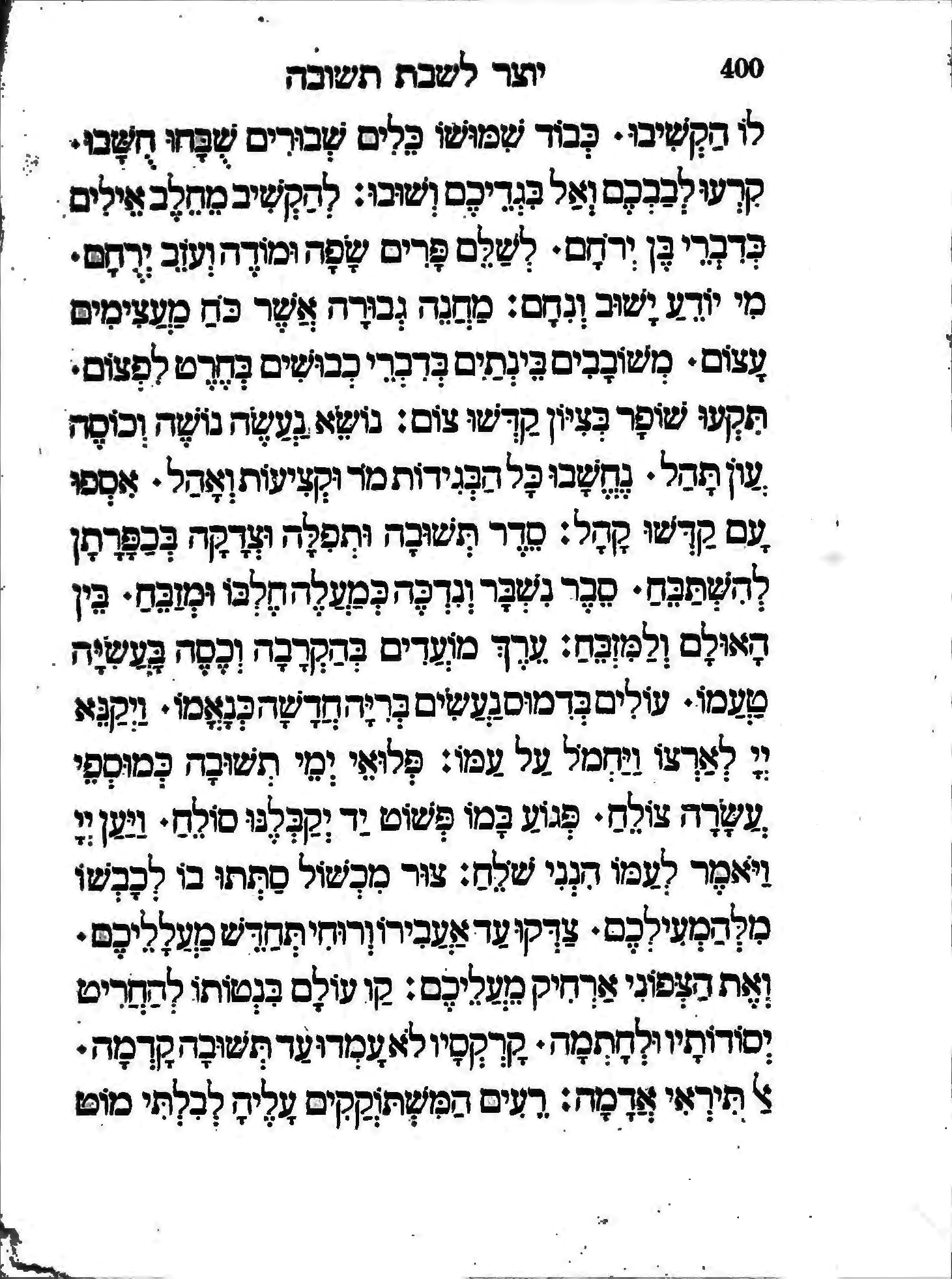
כְּלִיל זְבָחָיו רֽוּחַ נִשְׁבָּרָה וְנִדְכָּאִים לוֹ הַקְשִֽׁיבוּ כְּבוֹד שִׁמּוּשׁוֹ כֵּלִים שְׁבוּרִים שֻׁבְּחוּ חֻשָּֽׁבוּ וְקִרְע֤וּ לְבַבְכֶם֙ וְאַל־בִּגְדֵיכֶ֔ם וְשׁ֖וּבוּ׃ (יואל ב:יג) |
Contrite spirit is all the offerings; may the crushed listen to Them! An honor is Their use of crushed vessels, praised and though highly of. And tear your hearts and not your clothes and return! (Joel 2:13) |
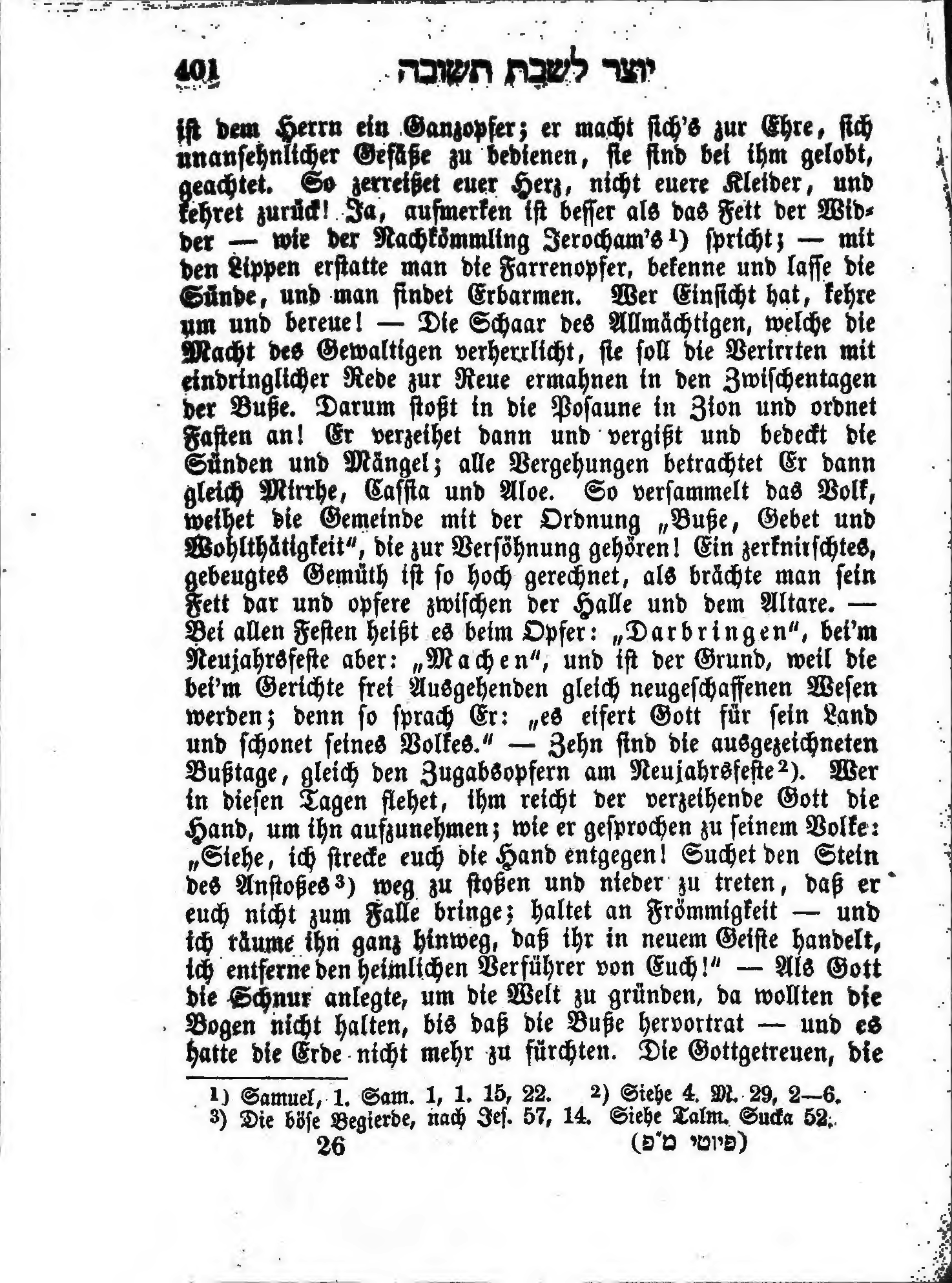
Ein zerknirschtes Gemüt, ein demütiges Aufmerken auf Ihn, das ist dem Herrn ein Ganzopfer; er macht sich’s zur Ehre, sich unansehnlicher Gefäße zu bedienen, sie sind bei ihm gelobt, geachtet. So zerreißet euer Herz, nicht eure Kleider, und kehret zurück! |
לְהַקְשִׁיב מֵחֵֽלֶב אֵילִים כְּדִבְרֵי בֶּן־יְרֹחָם לְשַׁלֵּם פָּרִים שָׂפָה וּמוֹדֶה וְעֹזֵב יְרֻחָם מִ֥י יוֹדֵ֖עַ יָשׁ֣וּב וְנִחָ֑ם׃ (יואל ב:יד) |
Listening is better than the suet of rams – as said Jeroḥam’s heir[12] Samuel. Find I Samuel 1:1, 15:22 – to fulfill rams your lips,[13] Find Hosea 14:3 one who confesses and forsakes[14] Sinful ways. will be graced. Who knows, They may return and renege![15] Joel 2:14. Alternatively, as translated in the German: One who knows should return and renege. |
Ja, aufmerken ist besser als das Fett der Widder – wie der Nachkömmling Jerocham’s spricht; – mit den Lippen erstatte man die Farrenopfer, bekenne und lasse die Sünde, und man findet Erbarmen. Wer Einsicht hat, kehre um und bereue! |
מַחֲנֵה גְּבוּרָה אֲשֶׁר כֹּחוֹ מַעֲצִימִים עָצוֹם מְשׁוֹבָבִים בֵּינְתַֽיִם בְּדִבְרֵי כְּבוּשִׁים בְּחֶֽרֶט לִפְצֹם תִּקְע֥וּ שׁוֹפָ֖ר בְּצִיּ֑וֹן קַדְּשׁוּ־צ֖וֹם׃ (יואל ב:טו) |
Die Schar des Allmächtigen, welche die Macht des Gewaltigen verherrlicht, sie soll die Verirrten mit eindringlicher Rede zur Reue ermahnen in den Zwischentagen der Buße. Darum stoßt in die Posaune in Zion und ordnet Fasten an! | |
נוֹשֵׂא נַעֲשֶׂה נוֹשֶׁה וְכֹסֶה עָוֺן תֹּהַל נֶחְשְׁבוּ כׇּל־הַבְּגִידוֹת מֹר וּקְצִיעוֹת וְאׇהָל אִסְפוּ־עָ֞ם קַדְּשׁ֤וּ קָהָל֙׃ (יואל ב:טז) |
Now They forgive and forget and cover iniquity and shortcoming; that all betrayals be seen as myrrh, cassia, and aloe.[18] Proverbial sweet-smelling nice things. Find Psalms 45:9 Gather the people, sanctify the community, (Joel 2:16) |
Er verzeihet dann und vergisst und bedeckt die Sünden und Mängel; alle Vergehen betrachtet Er dann gleich Mirrhe, Cassia und Aloe. So versammelt das Volk, weihet die Gemeinde |
סֵֽדֶר תְּשׁוּבָה וּתְפִלָּה וּצְדָקָה בְּכַפָּרָתָן לְהִשְׁתַּבֵּֽחַ סֵֽבֶר נִשְׁבָּר וְנִדְכֶּה כְּמַעֲלֶה חֶלְבּוֹ וּמְזַבֵּֽחַ בֵּ֤ין הָאוּלָם֙ וְלַמִּזְבֵּ֔חַ׃ (יואל ב:יז) |
setting the order of repentance and prayer and charity,[19] Find Yerushalmi Taanit 2:1:9, Midrash Tanchuma 8:2, and the piyyuṭ U-n’taneh Toqef. whose atonement is praiseworthy! A contrite bowed appearance is like burning suet and sacrificing between the hall and the altar. (Joel 2:17) |
mit der Ordnung „Buße, Gebet und Wohltätigkeit“, die zur Versöhnung gehören! Ein zerknirschtes, gebeugtes Gemüt ist so hoch gerechnet, als brächte man sein Fett dar und opfere zwischen der Halle und dem Altare. |
עֵֽרֶךְ מוֹעֲדִים בְּהַקְרָבָה וְכֶֽסֶה בָּעֲשִׂיָּה טַעֲמוֹ עוֹלִים בְּדִימוֹס נַעֲשִׂים בְּרִיָּה חֲדָשָׁה כְּנׇאֳמוֹ וַיְקַנֵּ֥א יְהֹוָ֖ה לְאַרְצ֑וֹ וַיַּחְמֹ֖ל עַל־עַמּֽוֹ׃ (יואל ב:יח) |
On other festivals, it’s called “offering,” but on the covered day, it’s “doing.” Why? Those who receive amnesty are created anew,[20] Find Vayikra Rabba 29:12 — “Rabbi Taḥlifa of Caesaria said…” as is proclaimed, And the Cause was zealous for Their land and had mercy on Their people. (Joel 2:18) |
Bei allen Festen heißt es beim Opfer: „Darbringen“, beim Neujahrsfeste aber: „Machen“, und ist der Grund, weil die beim Gerichte frei Ausgehenden gleich neugeschaffenen Wesen werden; denn so sprach Er: „es eifert Gott für sein Land und schonet seines Volkes.“ |
פְּלוּאֵי יְמֵי תְשׁוּבָה כְּמוּסְפֵי עֲשָׂרָה צוֹלֵֽחַ פְּגֽוֹע בָּֽמוֹ פְּשׁוֹט יָד יְקַבְּלֶֽנּוּ סוֹלֵֽחַ וַיַּ֨עַן יְהֹוָ֜ה וַיֹּ֣אמֶר לְעַמּ֗וֹ הִנְנִ֨י שֹׁלֵ֤חַ׃ (יואל ב:יט) |
Prominent[21] In some texts, for instance the Goldschmidt maḥzor, this word is written פִּלוּי, which literally means “delousing.” This is probably due to the medieval Hebrew tendency to drop alef, since “prominent” (or “wondrous”) makes more sense in context. days of repentance, like the additional sacrifices, are ten.[22] According to Numbers 29:2–6, the musaf offerings for the new year are one bull, one ram, seven lambs, and one goat, which makes ten. Find Pesikta Rabbati 40:1. Entreat Them; The Forgiver will stretch out Their hand to receive us! And the Cause answered and said, “Here I send.” (Joel 2:19) |
Zehn sind die ausgezeichneten Bußtage, gleich den Zugabsopfern am Neujahrsfeste. Wer in diesen Tagen flehet, ihm reicht der verzeihende Gott die Hand, um ihn aufzunehmen; wie er gesprochen zu seinem Volke: „Siehe, ich strecke euch die Hand entgegen! |
צוּר מִכְשׁוֹל סַתְּתוּ בּוֹ לְכׇבְשׁוֹ מִלְּהַמְעִילְכֶם צַדְּקוּ עַד אַעֲבִירוֹ וְרוּחִי תְּחַדֵּשׁ מַעַלְלֵיכֶם וְֽאֶת־הַצְּפוֹנִ֞י אַרְחִ֣יק מֵעֲלֵיכֶ֗ם׃ (יואל ב:כ) |
Chase away and trample the stumbling-stone[23] Referring to the evil impulse. Find Bavli Sukkah 52a:9. from misusing you; be just until I make it pass, and My spirit will renew your deeds, My hidden one I move far from you.” (Joel 2:20) |
Suchet den Stein des Anstoßes weg zu stoßen und nieder zu treten, dass er euch nicht zum Falle bringe; haltet an Frömmigkeit – und ich räume ihn ganz hinweg, dass ihr in neuem Geiste handelt, ich entferne den heimlichen Verführer von Euch!“ |
קַו עוֹלָם בִּנְטוֹתוֹ לְהַחְרִיט יְסוֹדוֹתָיו וּלְחׇתְמָה קֻרְקְסָיו לֹא־עָמְדוּ עַד־תְּשׁוּבָה קָדְמָה אַל־תִּֽירְאִ֖י אֲדָמָ֑ה׃ (יואל ב:כא) |
Als Gott die Schnur anlegte, die Welt zu gründen, da wollten die Bogen nicht halten, bis dass die Buße hervortrat – und es hatte die Erde nicht mehr zu fürchten. | |
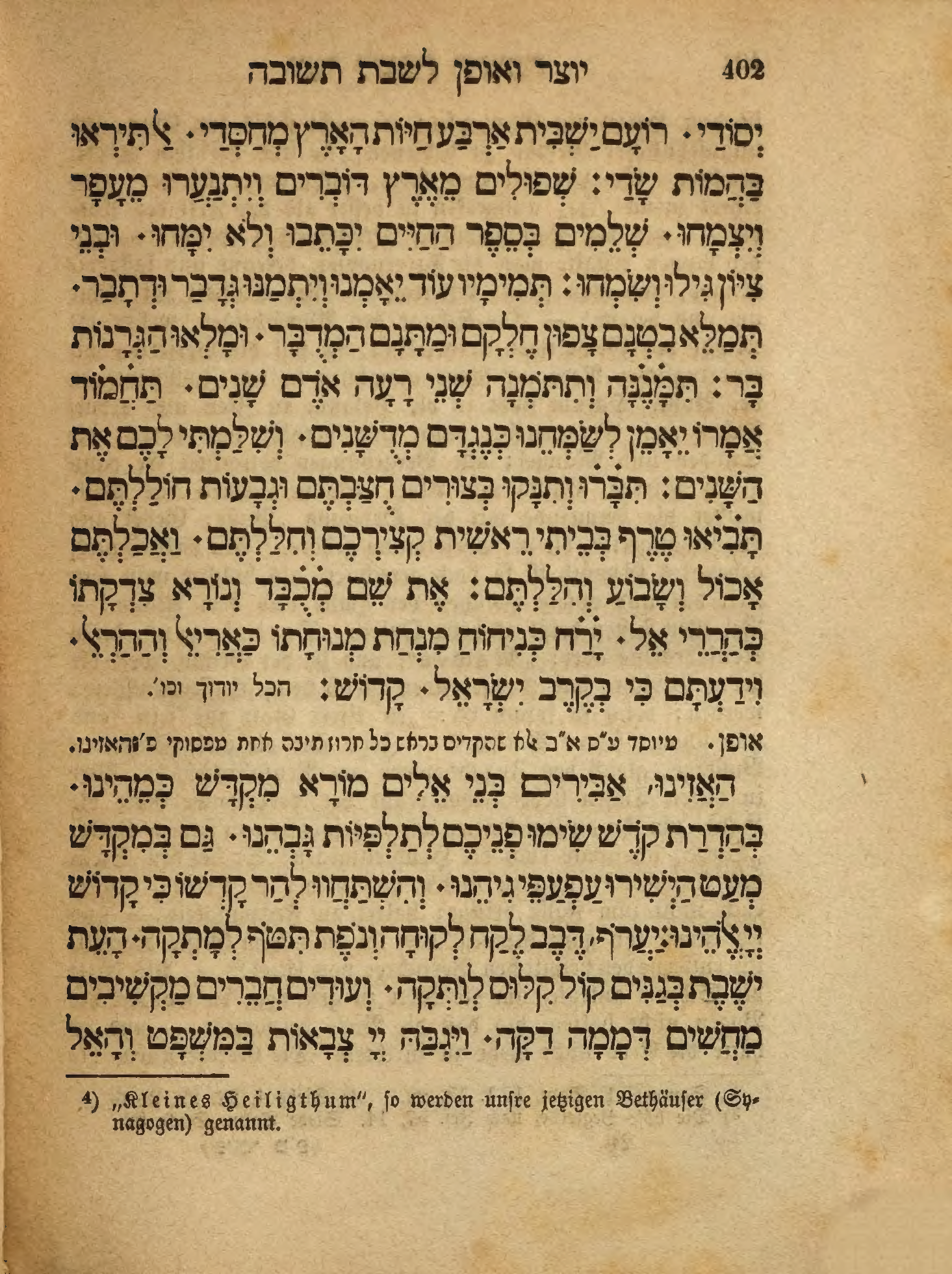
רֵעִים הַמִּשְׁתּוֹקְקִים עָלֶֽיהָ לְבִלְתִּי מוֹט יְסוּדַי רֹעָם יַשְׁבִּית אַרְבַּע חַיּוֹת הָאָֽרֶץ מְחַסְּדַי אַל־תִּֽירְאוּ֙ בַּהֲמ֣וֹת שָׂדַ֔י׃ (יואל ב:כב) |
Rejoicing in it are the comrades; my foundation will not slip. Their Shepherd drives off the four wild beasts of the land[26] A reference to the vision in Daniel 7. from my pious ones. Do not fear, tame beasts of the field! (Joel 2:22) |
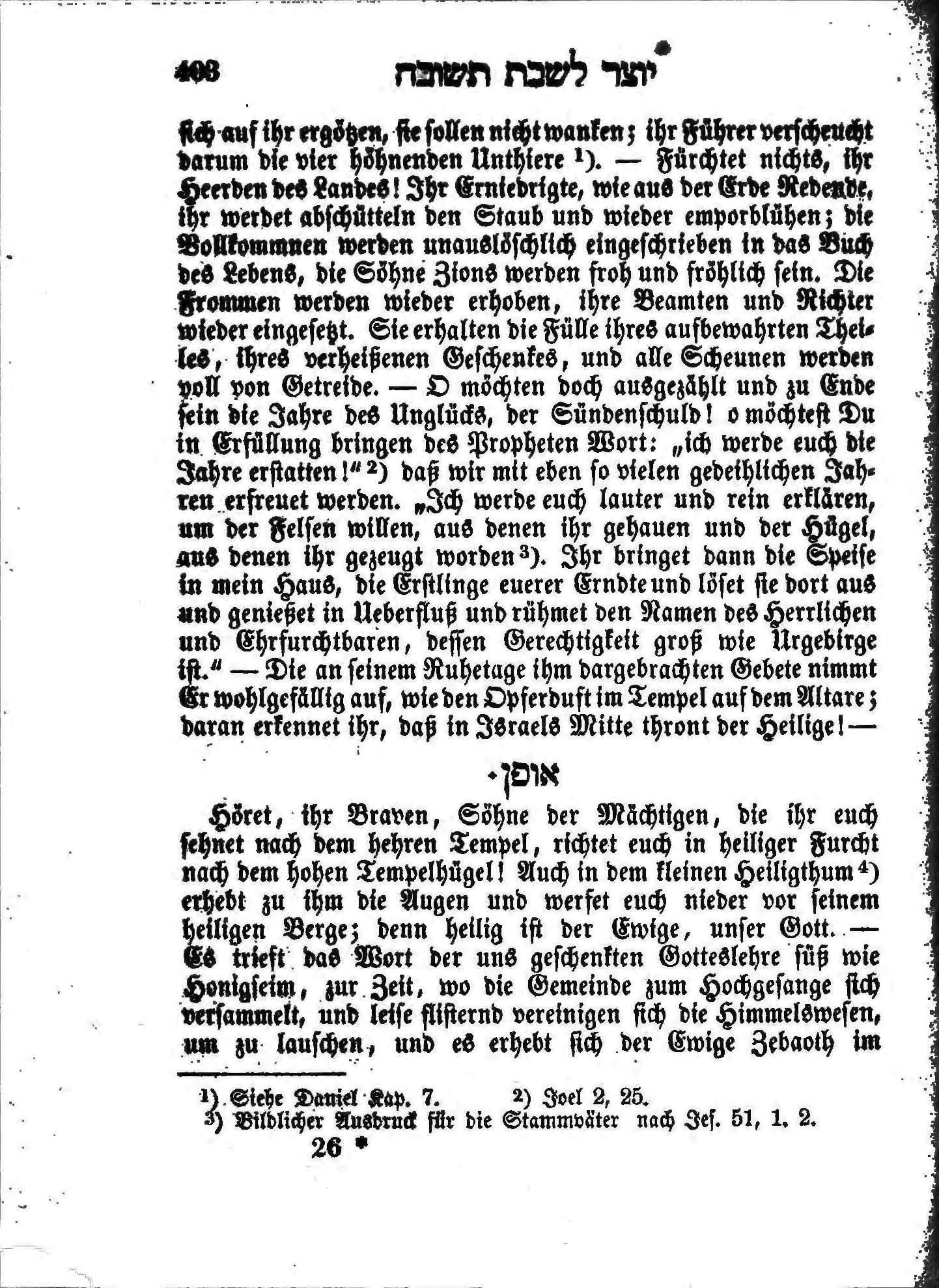
Die Gottgetreuen, die sich auf ihr ergötzen, sie sollen nicht wanken; ihr Führer verscheucht darum die vier höhnenden Untiere. – Fürchtet nichts, ihr Herden des Landes! |
שְׁפוּלִים מֵאֶֽרֶץ דּוֹבְרִים וְיִתְנַעֲרוּ מֵעָפָר וְיִצְמָֽחוּ שְׁלֵמִים בְּסֵֽפֶר הַחַיִּים יִכָּתֵֽבוּ וְלֹא־יִמָּֽחוּ וּבְנֵ֣י צִיּ֗וֹן גִּ֤ילוּ וְשִׂמְחוּ֙׃ (יואל ב:כג) |
Shoved down from on on earth, speaking, will awake and sprout from the earth. Fully in the book of life they will be written and not erased, and children of Zion, cheer and rejoice! (Joel 2:23) |
Ihr Erniedrigte, wie aus der Erde Redende, ihr werdet abschütteln den Staub und wieder emporblühen; die Vollkommenen werden unauslöschlich eingeschrieben in das Buch des Lebens, die Söhne Zions werden froh und fröhlich sein. |
תְּמִימָיו עוֹד יֵאָמְנוּ וְיִתְמַנּוּ גְּדָבַר וּדְתָבַר תְּמַלֵּא בִּטְנָם צָפוּן חֶלְקָם וּמַתָּנָם הַמְדֻבָּר וּמָלְא֥וּ הַגֳּרָנ֖וֹת בָּ֑ר׃ (יואל ב:כד) |
Their pure ones will again be restored, their comptrollers and legislators[27] Find Daniel 3:3 for these terms. reinstated. Their stomachs filled, their hidden portion given to them as said, And their threshing-floors will be filled with grain. (Joel 2:24) |
Die Frommen werden wieder erhoben, ihre Beamten und Richter wieder eingesetzt. Sie erhalten die Fülle ihres aufbewahrten Teiles, ihres verheißenen Geschenkes, und alle Scheunen werden voll von Getreide. |
תִּמָּנֶֽנָּה וְתִתֹּֽמְנָה שְׁנֵי רָעָה אֹֽדֶם שָׁנִים תַּחְמוּד אֲמָרוֹ יֵאָמֵן לְשַׂמְּחֵֽנוּ כְּנֶגְדָּם מְדֻשָּׁנִים וְשִׁלַּמְתִּ֤י לָכֶם֙ אֶת־הַשָּׁנִ֔ים׃ (יואל ב:ה) |
The bad years, red[28] The color of guilt, according to Isaiah 1:18. Also possibly an encoded reference to the era of Christian rule — red and Edom have the same root. years, should be filled out and finished; his[29] Joel’s pleasant saying should be made true that we may rejoice with corresponding fertile ones: “and I will fill for you the years.” (Joel 2:25) |
O möchten doch ausgezählt und zu Ende sein die Jahre des Unglücks, der Sündenschuld! o möchtest Du in Erfüllung bringen des Propheten Wort: „ich werde euch die Jahre erstatten!“ dass wir mit eben so vielen gedeihlichen Jahren erfreuet werden. |
תִּבָּֽרוּ וְתִנָּֽקוּ כְּצוּרִים חֻצַּבְתֶּם וּגְבָעוֹת חוֹלַלְתֶּם תָּבִֽיאוּ טֶֽרֶף בְּבֵיתִי רֵאשִׁית קְצִירְכֶם וְחִלַּלְתֶּם וַאֲכַלְתֶּ֤ם אָכוֹל֙ וְשָׂב֔וֹעַ וְהִלַּלְתֶּ֗ם׃ (יואל ב:כו) |
Through the rocks of your hewing and the hills of your conception[30] The patriarchs and matriarchs, according to a midrashic interpretation of Isaiah 51:1–2. I will consider you clean and pure. You will bring food into my house, your first fruits and harvest, and you will eat food and be sated and praise (Joel 2:26) |
„Ich werde euch lauter und rein erklären, um der Felsen willen, aus denen ihr gehauen und der Hügel, aus denen ihr gezeugt worden. Ihr bringet dann die Speise in mein Haus, die Erstlinge eurer Ernte und löset sie dort aus und genießet in Überfluss |
אֶת־שֵׁ֤ם מְׄכֻׄבָּד וְנוֹרָא צִדְקָתוֹ כְּהַרְרֵי אֵל יָׄרַׄח כְּנִיחֽוֹחַ מִנְחַת מְנוּחָתוֹ כַּאֲרִיאֵל וְהַהַרְאֵל וִידַעְתֶּ֗ם כִּ֣י בְקֶ֤רֶב יִשְׂרָאֵל֙׃ (יואל ב:כז) קָדוֹשׁ׃ |
und rühmet den Namen des Herrlichen und Ehrfurchtbaren, dessen Gerechtigkeit groß wie Urgebirge ist.“ — Die an seinem Ruhetage ihm dargebrachten Gebete nimmt Er wohlgefällig auf, wie den Opferduft im Tempel auf dem Altare; daran erkennet ihr, dass in Israels Mitte thront der Heilige! |
Source(s)
Die Piutim fur alle Sabbathe des Jahres, nach Polnischem Ritus (Seligman Baer 1862), p. 396 Die Piutim fur alle Sabbathe des Jahres, nach Polnischem Ritus (Seligman Baer 1862), p. 397 Die Piutim fur alle Sabbathe des Jahres, nach Polnischem Ritus (Seligman Baer 1862), p. 398 Die Piutim fur alle Sabbathe des Jahres, nach Polnischem Ritus (Seligman Baer 1862), p. 399 Die Piutim fur alle Sabbathe des Jahres, nach Polnischem Ritus (Seligman Baer 1862), p. 400 Die Piutim fur alle Sabbathe des Jahres, nach Polnischem Ritus (Seligman Baer 1862), p. 401 Die Piutim fur alle Sabbathe des Jahres, nach Polnischem Ritus (Seligman Baer 1862), p. 402 Die Piutim fur alle Sabbathe des Jahres, nach Polnischem Ritus (Seligman Baer 1862), p. 403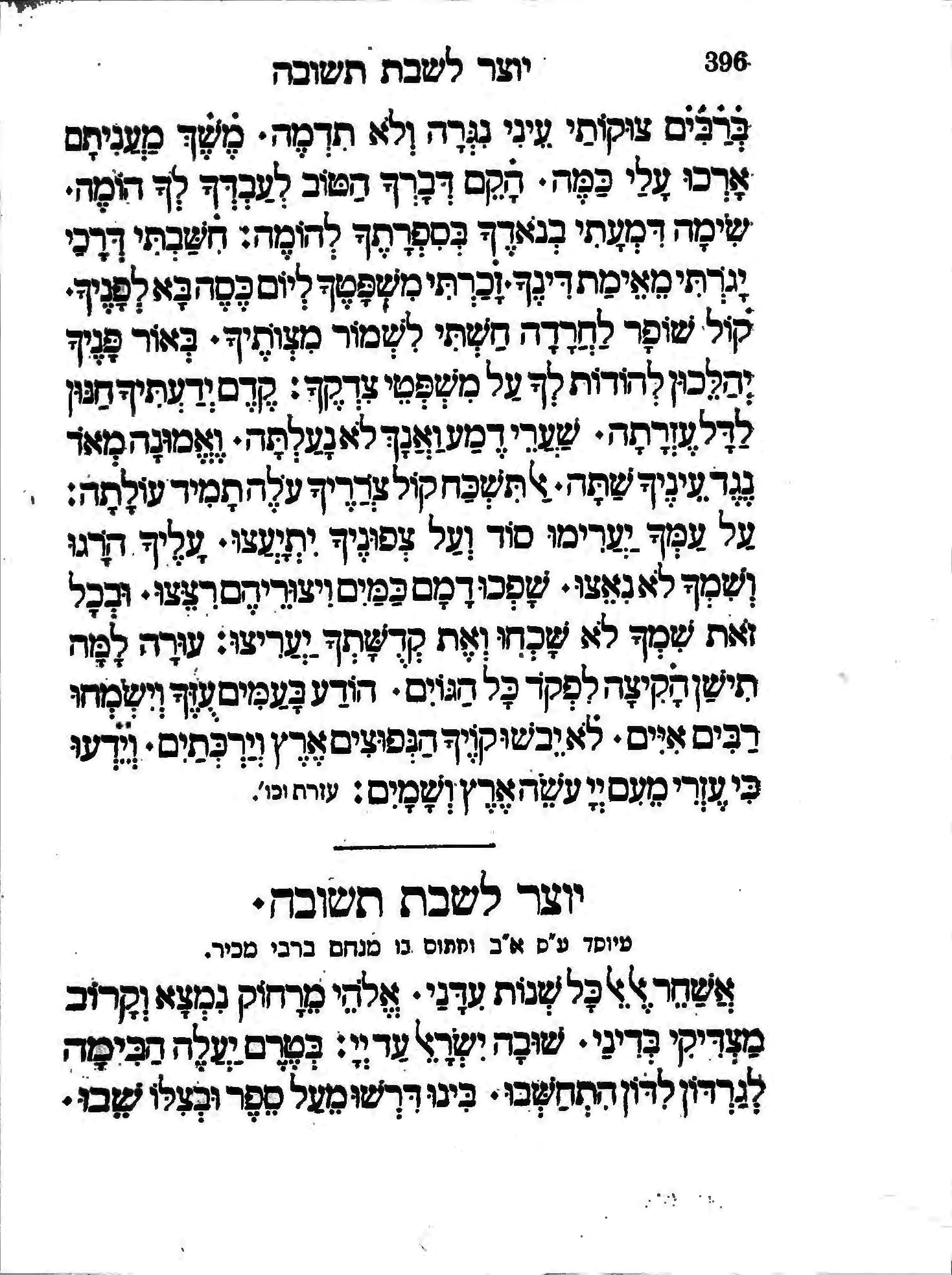
Notes
| 1 | Find Jeremiah 23:23 |
|---|---|
| 2 | Find Isaiah 50:8 |
| 3 | In some texts, such as the Wikimedia Commons transcription, לִגְרָדֹם or לְגַרְדּוֹם, all different spellings of the same word. |
| 4 | Find Bavli Rosh Hashanah 17a:12 |
| 5 | Find Bavli Avodah Zarah 4a:8 |
| 6 | In some texts, just קִוּוּי “hope” without the first-person. |
| 7 | A poetic name for Jerusalem, and the Temple specifically. For the use of the word “warring” find Isaiah 29:8. |
| 8 | Literally: “sticking” |
| 9 | Find Isaiah 5:6. In this case, a metaphor for distracting thoughts in prayer. |
| 10 | The same root in Hebrew. This refers to the evil impulse being banished. |
| 11 | i.e. the ten days of repentance |
| 12 | Samuel. Find I Samuel 1:1, 15:22 |
| 13 | Find Hosea 14:3 |
| 14 | Sinful ways. |
| 15 | Joel 2:14. Alternatively, as translated in the German: One who knows should return and renege. |
| 16 | Rosh haShanah and Yom Kippur |
| 17 | Find M. Taanit 2:1 |
| 18 | Proverbial sweet-smelling nice things. Find Psalms 45:9 |
| 19 | Find Yerushalmi Taanit 2:1:9, Midrash Tanchuma 8:2, and the piyyuṭ U-n’taneh Toqef. |
| 20 | Find Vayikra Rabba 29:12 — “Rabbi Taḥlifa of Caesaria said…” |
| 21 | In some texts, for instance the Goldschmidt maḥzor, this word is written פִּלוּי, which literally means “delousing.” This is probably due to the medieval Hebrew tendency to drop alef, since “prominent” (or “wondrous”) makes more sense in context. |
| 22 | According to Numbers 29:2–6, the musaf offerings for the new year are one bull, one ram, seven lambs, and one goat, which makes ten. Find Pesikta Rabbati 40:1. |
| 23 | Referring to the evil impulse. Find Bavli Sukkah 52a:9. |
| 24 | A rare word, probably from Greek κόραξ korax. In some texts vocalized as קׇרְקְסָיו or קְרַקְסָיו. |
| 25 | Find Pirkei d’Rabbi Eliezer 3:2 |
| 26 | A reference to the vision in Daniel 7. |
| 27 | Find Daniel 3:3 for these terms. |
| 28 | The color of guilt, according to Isaiah 1:18. Also possibly an encoded reference to the era of Christian rule — red and Edom have the same root. |
| 29 | Joel’s |
| 30 | The patriarchs and matriarchs, according to a midrashic interpretation of Isaiah 51:1–2. |
| 31 | Joel 2:26 |
| 32 | Find Psalms 36:7 |
| 33 | Find Ezekiel 43:15 |
“אֲשַׁחֵר אֶל אֵל | Ashaḥer el El — the yotser piyyuṭ for Shabbat Teshuvah (minhag Polin) by Menaḥem ben Makhir” is shared through the Open Siddur Project under the Creative Commons Attribution-ShareAlike (CC BY-SA) 4.0 International copyleft license.






Leave a Reply