![the Open Siddur Project [logo]](https://opensiddur.org/wp-content/uploads/2018/09/Open-Siddur-Project-Logo-2016.svg)
| Source (Hebrew) | Adaptation (German) | Translation of German (English) |
|---|---|---|
הַלְלוּ־יָהּ הַלְלוּ עַבְדֵי יְהֹוָה הַלְלוּ אֶת־שֵׁם יְהֹוָה׃ יְהִי שֵׁם יְהֹוָה מְבֹרָךְ מֵעַתָּה וְעַד־עוֹלָם׃ מִמִּזְרַח־שֶׁמֶשׁ עַד־מְבוֹאוֹ מְהֻלָּל שֵׁם יְהֹוָה׃ |
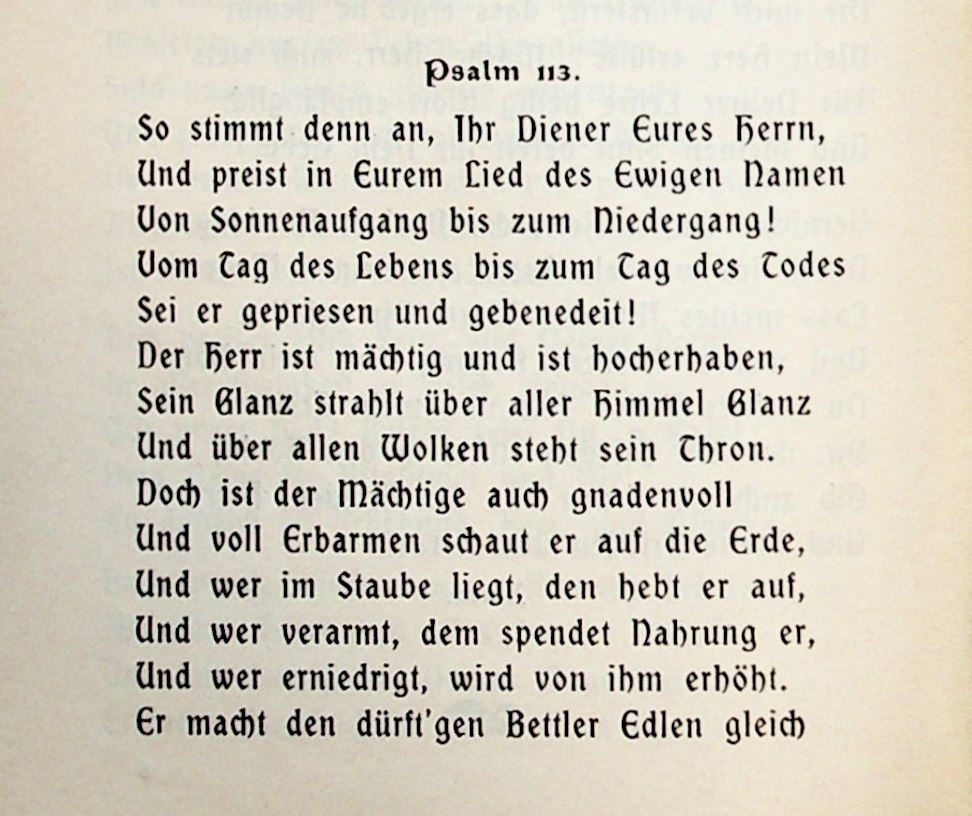
So stimmt denn an, Ihr Diener Eures Herrn, Und preist in Eurem Lied des Ewigen Namen Von Sonnenaufgang bis zum Niedergang! Vom Tag des Lebens bis zum Tag des Todes Sei er gepriesen und gebenedeit! |
Sing then, you servants of your Lord, and praise in your song the Eternal Name from the rising of the sun to its setting! From the day of life to the day of death May He be praised and blessed! |
רָם עַל־כׇּל־גּוֹיִם יְהֹוָה עַל הַשָּׁמַיִם כְּבוֹדוֹ׃ מִי כַּיהֹוָה אֱלֹהֵינוּ הַמַּגְבִּיהִי לָשָׁבֶת׃ |
Der Herr ist mächtig und ist hocherhaben, Sein Glanz strahlt über aller Himmel Glanz Und über allen Wolken steht sein Thron. |
The Lord is mighty and exalted, His splendor shines above all the heavens and above all the clouds stands his throne. |
הַמַּשְׁפִּילִי לִרְאוֹת בַּשָּׁמַיִם וּבָאָרֶץ׃ מְקִימִי מֵעָפָר דָּל מֵאַשְׁפֹּת יָרִים אֶבְיוֹן׃ |
Doch ist der Mächtige auch gnadenvoll Und voll Erbarmen schaut er auf die Erde, Und wer im Staube liegt, den hebt er auf, Und wer verarmt, dem spendet Nahrung er, Und wer erniedrigt, wird von ihm erhöht. |
Yet the Mighty One is also full of mercy and full of compassion he looks upon the earth, and he lifts up those who lie in the dust, and he gives food to those who are impoverished, and he exalts those who are humiliated. |
לְהוֹשִׁיבִי עִם־נְדִיבִים עִם נְדִיבֵי עַמּוֹ׃ מוֹשִׁיבִי עֲקֶרֶת הַבַּיִת אֵם־הַבָּנִים שְׂמֵחָה הַלְלוּ־יָהּ׃ |
Er macht den dürft’gen Bettler Edlen gleich Und setzt ihn neben seines Volkes Fürsten, Und in dem öden Haus die Trauernde, Die Kinderlose, die Verlassene, Die zu ihm ruft und ihre Hände hebt, Die wird zur Mutter starker, stolzer Söhne Und preist mit Jubellaut des Höchsten Macht. |
He makes the humble beggar like the noble and sets him beside his people’s princes, and in the desolate house the mourner, the childless, the forsaken, [the one] who calls to him and lifts up her hands, [the one] who becomes the mother of strong, proud sons praises with a shout of joy the power of the Most High. |
This adapted translation of Psalms 113 by Lisa Tarlau can be found in Rabbi Max Grunwald’s anthology of Jewish women’s prayer, Beruria: Gebet- und Andachtsbuch für jüdische Frauen und Mädchen (second revised edition 1909), pages 162-163.
The transcription of the German provided machine-readable text for machine translations by DeepL, which we then edited for accuracy and clarity. We welcome any/all corrections, improvements, and additional transcriptions and translations of this work’s contents. –Aharon Varady
Source(s)
Hallel (Lisa Tarlau, Beruria, 1909) p. 162 Hallel (Lisa Tarlau, Beruria, 1909) p. 163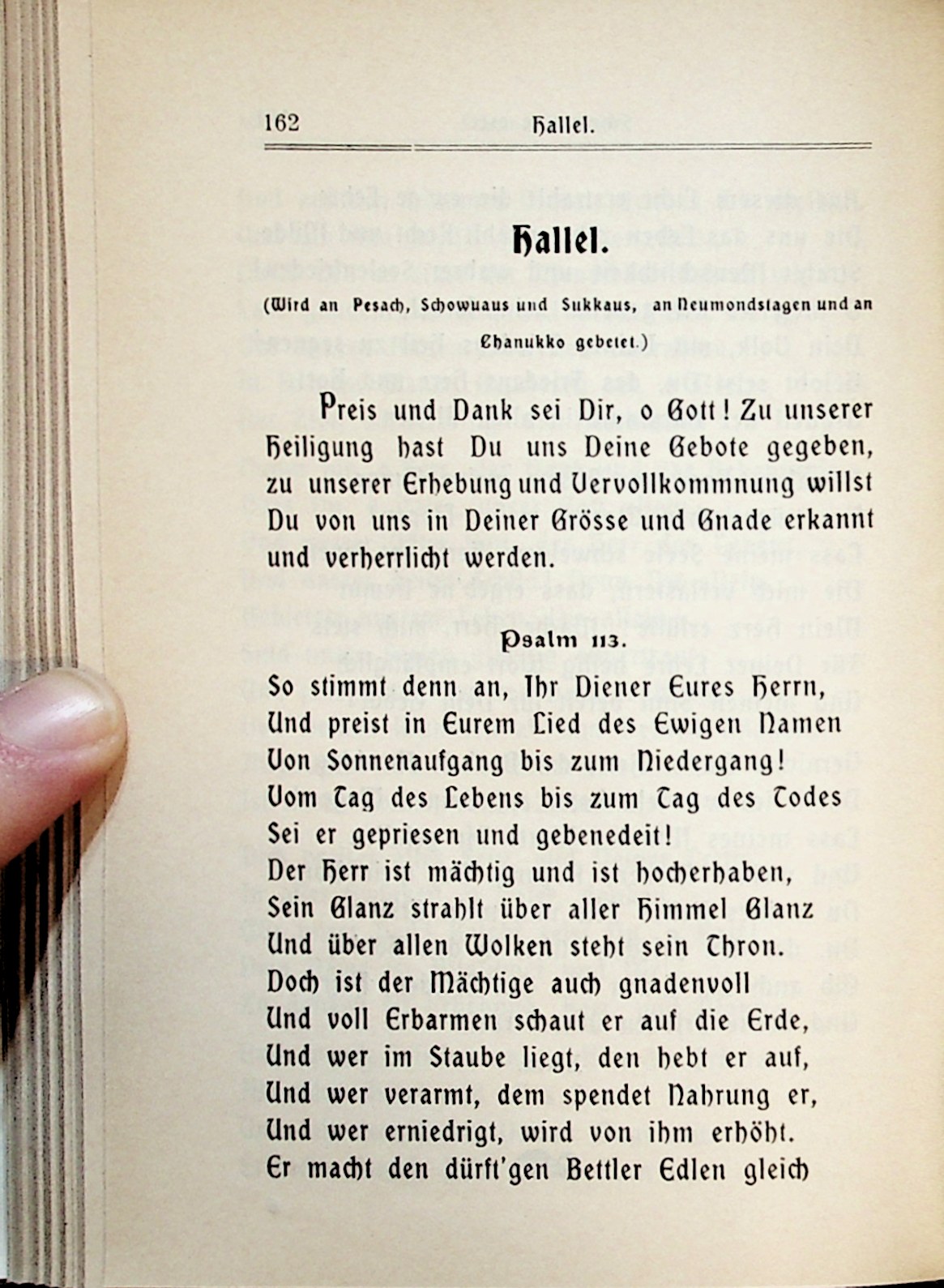

“תהלים קי״ג | Psalms 113, an adapted German translation for Hallel by Lisa Tarlau (1909)” is shared through the Open Siddur Project under the Creative Commons Attribution-ShareAlike (CC BY-SA) 4.0 International copyleft license.




Leave a Reply