![the Open Siddur Project [logo]](https://opensiddur.org/wp-content/uploads/2018/09/Open-Siddur-Project-Logo-2016.svg)
Note: For clarity, we have replace the use of the Solidus (a/k/a “forward slash”) as found in the Fraktur script of the printed work, with its equivalent — the comma.
| Source (Hebrew) | Translation (German) | Translation (Modern German) | Translation (English) |
|---|---|---|---|
אֶחָד מִי יוֹדֵעַ אֶחָד אֲנִי יוֹדֵעַ. אֶחָד אֱלֹהֵינוּ שֶׁבַּשָּׁמַיִם וּבָאָרֶץ׃ |
Eines weiß ich, eines iſt unſer GOtt, der da lebt und ſtrebt, wie im Himmel alſo auch auf Erden. |
Eines weiß ich, eines ist unser Gott, der da lebt und strebt, wie im Himmel also auch auf Erden. |
One I know: one is our God who lives and strives, on earth as in heaven. |
שְׁנַיִם מִי יוֹדֵעַ. שְׁנַיִם אֲנִי יוֹדֵעַ. שְׁנֵי לֻחוֹת הַבְּרִית. אֶחָד אֱלֹהֵינוּ שֶׁבַּשָּׁמַיִם וּבָאָרֶץ׃ |
Zwey iſt aber mehr, das weiß ich, zwey Tafeln Moſe, einig ist unser GOtt etc. |
Zwei ist aber mehr, das weiß ich, zwei Tafeln Mose, einig ist unser Gott, usw. |
But two is more, that I know! Two tablets of Moses, our God is one, etc. |
שְׁלֹשָׁה מִי יוֹדֵעַ. שְׁלֹשָׁה אֲנִי יוֹדֵעַ. שְׁלֹשָׁה אָבוֹת. שְׁנֵי לֻחוֹת הַבְּרִית. אֶחָד אֱלֹהֵינוּ שֶׁבַּשָּׁמַיִם וּבָאָרֶץ׃ |
Drey iſt aber mehr, das weiß ich, 3. ſind die Vätter, 2. Tafeln Moſe, einig ist unser GOtt etc. |
Drei ist aber mehr, das weiß ich, 3 sind die Väter, 2 Tafeln Mose, einig ist unser Gott, usw. |
But three is more, that I know! Three are the Forefathers, two tablets of Moses, our God is one, etc. |
אַרְבַּע מִי יוֹדֵעַ. אַרְבַּע אֲנִי יוֹדֵעַ. אַרְבַּע אִמָּהוֹת. שְׁלֹשָׁה אָבוֹת. שְׁנֵי לֻחוֹת הַבְּרִית. אֶחָד אֱלֹהֵינוּ שֶׁבַּשָּׁמַיִם וּבָאָרֶץ׃ |
Vier iſt aber mehr, das weiß ich, 4. ſind die Mütter nemblich Sara, Rebecca, Rachel u. Lea, 3. ſind die Vätter Abraham, Iſaac u. Jacob, 2. Tafeln Moſe, einig ist unser GOtt etc. |
Vier ist aber mehr, das weiß ich, 4 sind die Mütter nämlich Sara, Rebecca, Rachel und Lea, 3 sind die Väter Abraham, Isaac und Jacob, 2 Tafeln Mose, einig ist unser Gott, usw. |
But four is more, that I know! Four are the Foremothers, namely, Sara, Rebecca, Rachel and Leah; three are the Forefathers Abraham, Isaac, and Jacob, two tablets of Moses, our God is one, etc. |
חֲמִשָּׁה מִי יוֹדֵעַ. חֲמִשָּׁה אֲנִי יוֹדֵעַ. חֲמִשָּׁה חֻמְשֵׁי תוֹרָה. אַרְבַּע אִמָּהוֹת. שְׁלֹשָׁה אָבוֹת. שְׁנֵי לֻחוֹת הַבְּרִית. אֶחָד אֱלֹהֵינוּ שֶׁבַּשָּׁמַיִם וּבָאָרֶץ׃ |
Fünff iſt aber mehr, das weiß ich, fünff ſind die Bücher, 4. ſind die Mütter, 3. ſind die Vätter, zwey Tafeln Moſe, einig ist unser GOtt etc. |
Fünf ist aber mehr, das weiß ich, fünf sind die Bücher, 4 sind die Mütter, 3 sind die Väter, zwei Tafeln Mose, einig ist unser Gott, usw. |
But five is more, that I know! Five are the books, four are the Foremothers, three are the Forefathers, two tablets of Moses, our God is one, etc. |
שִׁשָּׁה מִי יוֹדֵעַ. שִׁשָּׁה אֲנִי יוֹדֵעַ. שִׁשָּׁה סִדְרֵי מִשְׁנָה. חֲמִשָּׁה חֻמְשֵׁי תוֹרָה. אַרְבַּע אִמָּהוֹת. שְׁלֹשָׁה אָבוֹת. שְׁנֵי לֻחוֹת הַבְּרִית. אֶחָד אֱלֹהֵינוּ שֶׁבַּשָּׁמַיִם וּבָאָרֶץ׃ |
Sechs iſt aber mehr, das weiß ich, 6. ſind die Lehrer, 5. ſind die Bücher, 4. ſind die Mütter, 3. ſind die Vätter, 2. Tafeln Moſe, einig ist unser GOtt etc. |
Sechs ist aber mehr, das weiß ich, 6 sind die Lehrer, 5 sind die Bücher, 4 sind die Mütter, 3 sind die Väter, 2 Tafeln Mose, einig ist unser Gott, usw. |
But six is more, that I know! Six are the teachers,[1] It is unclear what “the teachers” refers to. The Hebrew refers to the orders of the Mishnah, and some translations refer to the secular days of the week. five are the books, four are the Foremothers, three are the Forefathers, two tablets of Moses, our God is one, etc. |
שִׁבְעָה מִי יוֹדֵעַ. שִׁבְעָה אֲנִי יוֹדֵעַ. שִׁבְעָה יְמֵי שַׁבְּתָא. שִׁשָּׁה סִדְרֵי מִשְׁנָה. חֲמִשָּׁה חֻמְשֵׁי תוֹרָה. אַרְבַּע אִמָּהוֹת. שְׁלֹשָׁה אָבוֹת. שְׁנֵי לֻחוֹת הַבְּרִית. אֶחָד אֱלֹהֵינוּ שֶׁבַּשָּׁמַיִם וּבָאָרֶץ׃ |
Sieben iſt aber mehr das weiß ich, 7. ſind die Feyrung, 6. ſind die Lehrer, 5. ſind die Bücher, 4. ſind die Mütter, 3. ſind die Vätter, 2. Tafeln Moſe, einig ist unser GOtt etc. |
Sieben ist aber mehr, das weiß ich, 7 sind die Feiern, 6 sind die Lehrer, 5 sind die Bücher, 4 sind die Mütter, 3 sind die Väter, 2 Tafeln Mose, einig ist unser Gott, usw. |
But seven is more, that I know! Seven are the holidays,[2] It is also unclear what “the holidays” refers to. The idea of the “seven feasts,” while popular in Messianic circles, has little to no authentic Jewish history — not least of which because one of them is Yom Kippur which is definitely not a feast. This could also be referring to the seven days of Pesaḥ, but in diaspora it’s eight days. In the Hebrew, as well as in most translations, this verse refers to the seven days of the week. six are the teachers, five are the books, four are the Foremothers, three are the Forefathers, two tablets of Moses, our God is one, etc. |
שְׁמוֹנָה מִי יוֹדֵעַ. שְׁמוֹנָה אֲנִי יוֹדֵעַ. שְׁמוֹנָה יְמֵי מִילָה. שִׁבְעָה יְמֵי שַׁבְּתָא. שִׁשָּׁה סִדְרֵי מִשְׁנָה. חֲמִשָּׁה חֻמְשֵׁי תוֹרָה. אַרְבַּע אִמָּהוֹת. שְׁלֹשָׁה אָבוֹת. שְׁנֵי לֻחוֹת הַבְּרִית. אֶחָד אֱלֹהֵינוּ שֶׁבַּשָּׁמַיִם וּבָאָרֶץ׃ |
Acht iſt aber mehr das weiß ich, 8. ſind die Beſchneidung, 7. ſind die Feyrung, 6. ſind die Lehrer, 5. ſind die Bücher, 4. ſind die Mütter, 3. ſind die Vätter, 2. Tafeln Moſe, einig ist unser GOtt etc. |
Acht ist aber mehr das weiß ich, 8 sind die Beschneidung, 7 sind die Feiern, 6 sind die Lehrer, 5 sind die Bücher, 4 sind die Mütter, 3 sind die Väter, 2 Tafeln Mose, einig ist unser Gott, usw. |
But eight is more, that I know! Eight is the circumcision, seven are the holidays, six are the teachers, five are the books, four are the Foremothers, three are the Forefathers, two tablets of Moses, our God is one, etc. |
תִּשְׁעָה מִי יוֹדֵעַ. תִּשְׁעָה אֲנִי יוֹדֵעַ. תִּשְׁעָה יַרְחֵי לֵידָה. שְׁמוֹנָה יְמֵי מִילָה. שִׁבְעָה יְמֵי שַׁבְּתָא. שִׁשָּׁה סִדְרֵי מִשְׁנָה. חֲמִשָּׁה חֻמְשֵׁי תוֹרָה. אַרְבַּע אִמָּהוֹת. שְׁלֹשָׁה אָבוֹת. שְׁנֵי לֻחוֹת הַבְּרִית. אֶחָד אֱלֹהֵינוּ שֶׁבַּשָּׁמַיִם וּבָאָרֶץ׃ |
Neun iſt aber mehr, das weiß ich, 9. ſind die ſchwangeren Weiber, 8. acht die Beſchneidung, 7. die Feyrung, 6. die Lehrer, 5. Bücher Moſe, 4. Mütter, 3. Vätter, 2. Tafeln Moſe, einig ist unser GOtt etc. |
Neun ist aber mehr, das weiß ich, 9 sind die schwangeren Weiber, 8 acht die Beschneidung, 7 die Feiern, 6 die Lehrer, 5 Bücher Mose, 4 Mütter, 3 Väter, 2 Tafeln Mose, einig ist unser Gott, usw. |
But nine is more, that I know! Nine is pregnant women, eight is the circumcision, seven are the holidays, six are the teachers, five are the books, four are the Foremothers, three are the Forefathers, two tablets of Moses, our God is one, etc. |
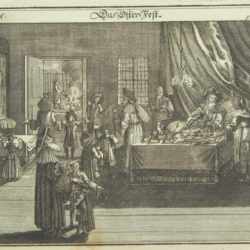
This is a German translation of the Pesah table-song Ḥad Gadya by Paul Christian Kirchner from his Jüdisches Ceremoniel (1717),
The earliest known appearance of “Ḥad Gadya,” by an unknown author, can be found, handwritten, in the Prague Haggadah (1526). The uncorrected source Aramaic has been vocalized according to the Prague Haggadah (1590). –Aharon N. Varady
Source(s)
Jüdisches Ceremoniel (Paul Christian Kirchner, 1717), p. 128 Jüdisches Ceremoniel (Paul Christian Kirchner, 1717), p. 129

Notes
| 1 | It is unclear what “the teachers” refers to. The Hebrew refers to the orders of the Mishnah, and some translations refer to the secular days of the week. |
|---|---|
| 2 | It is also unclear what “the holidays” refers to. The idea of the “seven feasts,” while popular in Messianic circles, has little to no authentic Jewish history — not least of which because one of them is Yom Kippur which is definitely not a feast. This could also be referring to the seven days of Pesaḥ, but in diaspora it’s eight days. In the Hebrew, as well as in most translations, this verse refers to the seven days of the week. |
“אֶחָד מִי יוֹדֵעַ | Eḥad Mi Yodéa (One I Know), a German translation of stanzas 1-9 by Paul Christian Kirchner in his Jüdisches Ceremoniel (Nuremberg, 1717)” is shared through the Open Siddur Project under the Creative Commons Attribution-ShareAlike (CC BY-SA) 4.0 International copyleft license.






Leave a Reply