![the Open Siddur Project [logo]](https://opensiddur.org/wp-content/uploads/2018/09/Open-Siddur-Project-Logo-2016.svg)
| Source (Hebrew) | Translation (English) |
|---|---|
יְיָ בּוֹקֶר אֶעֱרוֹךְ לְךָ גַם בוֹקֶר תִּשְּׁמַע קוֹלִי בְּחַסְדְךָ׃ |
Lord, in Thy mercy deign to hear my pray’r, Which in the early morn I address unto Thee.[1] Cf. Psalms 5:4 |
שְׁמַע קוֹלִי יוֹשֵּׁב שָּׁמַיִם עֶרֶב וָבוֹקֶר וְצָהֳרָיִם לְךָ נָשָׁאתִי לֵב גַם עֵינַיִם וּבְרוֹב חֲסָדֶיךָ אָבֹא בֵיתֶיךָ׃ |
Hear my prayer, O Thou who dwellest in heaven, When morn, even, and noon I address it unto Thee; When my heart, as well as my eyes, is raised towards Thee; And when, “in the greatness of Thy mercy, I enter Thine house.”[2] from the prayer, “Mah Tovu” |
לִבִּי סְחַרְחַר עֲזַבַנִי כֹּחִי כִּי אֶזְכְּרָה חַטָּאתִי בְרוּחִי לָכֵן יָרֵאתִי אֵן אָבוֹא בְּאָרְחִי אֶשְׁתַּחֲוֶה אֶל הֵיכַל בֵיתֶךָ׃ |
My heart panteth, my strength faileth me, When my soul reminds me of my trespass; Therefore do I dread to direct my steps, “To prostrate myself in Thy holy temple.”[3] ibid. |
מִי יִתֵּן לִי אֵבֶר כַּיוֹנָה מִפַחְדְךָ אָעוּפָּה וְאֶשְׁכּוֹנָה אִם אֶסַּק שַׁמַיִם שָׁם אַתָּה מְעוֹנָה יְיָ נְחֵנִי בְּצִדְקָתֶיךָ׃ |
Oh! that I had wings like the dove, I would fly and (perhaps) dwell secure; But were I to ascend the heavens, there, too, is Thy dread presence. Then “Lord guide me according to Thy righteousness.”[4] Cf. David Kimhi (1160–1235), Radak on Isaiah 58:11 |
הַלְּלִי נַפְשִׁי אֱלֹהִים תָּמִיד לֵב לָשּׁוֹן קָשׁוּר כִפְתִיל צָמִיד הוּא יוֹצֵר הַכׇּל וְהַכׇּל מַעַמִיד הוּא עָשְׂךָ וַיְכוֹנְנֶךָ׃ (דברים לב:ו) |
Oh! my soul, constantly praise thy God, With heart and tongue intimately conjoined; For He is the Creator and Supporter of all, It was “he who made and established thee.” (Deuteronomy 32:6) |
This translation of “Adonai boker e’erokh lekha” by Rabbi David Aaron de Sola of a piyyut by an unknown paytan was first published in his Ancient Melodies of the Spanish and Portuguese Jews (1857). The Hebrew text of this piyyut was found in a Siddur published in Venice in 1598, found at Hebrewbooks.org by Abe Katz (Burei haTefila Institute) where it appears on the recto and verso of page 8. (Thank you!) –Aharon Varady
Source(s)
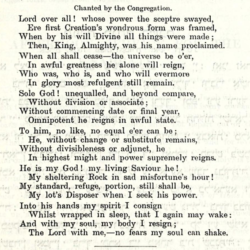
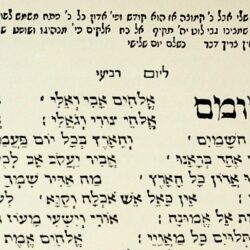
Hashem boker (Siddur Venice 1598) p. 8 recto Hashem boker (Siddur Venice 1598) p. 8 verso


Notes
“יְיָ בּוֹקֶר אֶעֱרוֹךְ לְךָ | Hashem Boqer E’erokh Lakh (Hear my voice at dawn), a reshut by an unknown paytan (trans. Rabbi David Aaron de Sola, 1857)” is shared through the Open Siddur Project under the Creative Commons Zero (CC 0) Universal license a Public Domain dedication.






Leave a Reply