![the Open Siddur Project [logo]](https://opensiddur.org/wp-content/uploads/2018/09/Open-Siddur-Project-Logo-2016.svg)
| Source (Hebrew) | Translation (English) |
|---|---|
יִגְדַּל אֱלֹהִים חַי וְיִשְׁתַּבַּח נִמְצָא וְאֵין עֵת אֶל מְצִיאוּתוֹ׃ |
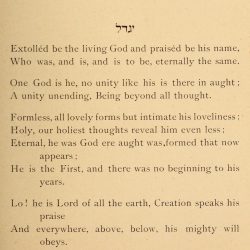
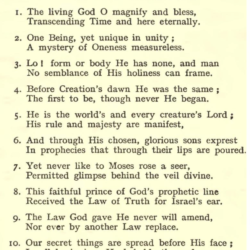
Praise to the living God! All praised be his Name, Who was, and is, and is to be, For aye the same! |
אֶחָד וְאֵין יָחִיד כְּיִחוּדוֹ נֶעְלָם וְגַם אֵין סוֹף לְאַחְדּוּתוֹ׃ |
The One Eternal God Ere aught that now appears: The First, the Last, beyond all thought His timeless years! |
אֵין לוֹ דְמוּת הַגּוּף וְאֵינוֹ גּוּף לֹא נַעֲרֹךְ אֵלָיו קְדֻשָּׁתוֹ׃ |
Formless, all lovely forms Declare his loveliness; Holy, no holiness of earth Can his express. |
קַדְמוֹן לְכׇל־דָּבָר אֲשֶׁר נִבְרָא רִאשׁוֹן וְאֵין רֵאשִׁית לְרֵאשִׁיתוֹ׃ | |
הִנּוֹ אֲדוֹן עוֹלָם לְכׇל־נוֹצָר יוֹרֶה גְּדֻלָּתוֹ וּמַלְכוּתוֹ׃ |
Lo, he is Lord of all! Creation speaks his praise, And everywhere, above, below, His will obeys. |
שֶֽׁפַע נְבוּאָתוֹ נְתָנוֹ אֶל אַנְשֵׁי סְגֻלָּתוֹ וְתִפְאַרְתּוֹ׃ |
His Spirit floweth free, High surging where it will: In prophet’s word he spake of old, — He speaketh still. |
לֹא קָם בְּיִשְׂרָאֵל כְּמֹשֶׁה עוֹד נָבִיא וּמַבִּיט אֶת־תְּמוּנָתוֹ׃ | |
תּוֹרַת אֱמֶת נָתַן לְעַמּוֹ אֵל עַל־יַד נְבִיאוֹ נֶאֱמַן בֵּיתוֹ׃ |
Established is his law, And changeless it shall stand, Deep writ upon the human heart, On sea, on land. |
לֹא יַחֲלִיף הָאֵל וְלֹא יָמִיר דָּתוֹ. לְעוֹלָמִים לְזוּלָתוֹ׃ | |
צוֹפֶה וְיוֹדֵעַ סְתָרֵֽינוּ מַבִּיט לְסוֹף דָּבָר בְּקַדְמָתוֹ׃ |
He knoweth every thought, Our secrets open lie, End as beginning clear to his All-seeing eye. |
גּוֹמֵל לְאִישׁ חֶֽסֶד כְּמִפְעָלוֹ נוֹתֵן לְרָשָׁע רָע כְּרִשְׁעָתוֹ׃ |
With perfect poise he binds, Accordant to the deed, To wrong the doom, to right the joy, In measured meed. |
יִשְׁלַח לְקֵץ יָמִים מְשִׁיחֵֽנוּ לִפְדּוֹת מְחַכֵּי קֵץ יְשׁוּעָתוֹ׃ | |
מֵתִים יְחַיֶּה אֵל בְּרֹב חַסְדּוֹ בָּרוּךְ עֲדֵי־עַד שֵׁם תְּהִלָּתוֹ׃ |
Eternal life hath he Implanted in the soul; His love shall be our strength and stay, While ages roll. |
יִגְדַּל אֱלֹהִים חַי וְיִשְׁתַּבַּח נִמְצָא וְאֵין עֵת אֶל מְצִיאוּתוֹ׃ |
Praise to the living God! All praised be his Name, Who was, and is, and is to be, For aye the same! |
This is the abridged rhyming English translation of Yigdal by Rev. William Channing Gannett (1840-1923) made at the request of Rabbi Max Landsberg. Rabbi Landsberg had years earlier requested the same of Gannet’s predecessor, Rev. Newton Mann, at the Unity Church in Rochester, New York in 1884, and Gannet’s version can be considered an update of Mann’s translation. Mann’s translation notably lacked the three final stanzas of Yigdal, possibly at the request of Landsberg in conformance with Reform Jewish theology, but possibly also in order to conform to the ecumenical spirit of collaboration with a Unitarian minister by hewing to agreed principles between Judaism and Unitarianism. Gannet’s update includes translations of 2/3 of these missing stanzas, but also removes two that Mann had translated. In setting Gannett’s translation opposite the Hebrew text, I have retained the Hebrew of the stanzas lacking translation in order to more clearly indicate their absence. Gannet’s translation was first published in his Unity hymns and chorals (1911), pp. 2-3. Gannett’s translation was adopted into the Union Hymnal (1914). Many thanks to Chris Fenner at the Hymnology Archive for researching and informing us of Mann and Gannett’s Yigdal translations. –Aharon Varady
Source(s)


“יִגְדַּל (אשכנז) | Yigdal, by Daniel ben Yehudah Dayyan (abridged translation by Rev. William Channing Gannett, 1911)” is shared through the Open Siddur Project under the Creative Commons Attribution-ShareAlike (CC BY-SA) 4.0 International copyleft license.






Leave a Reply