![the Open Siddur Project [logo]](https://opensiddur.org/wp-content/uploads/2018/09/Open-Siddur-Project-Logo-2016.svg)
| Source (Hebrew) | Translation (English) |
|---|---|
יִגְדַּל אֱלֹהִים חַי וְיִשְׁתַּבַּח נִמְצָא וְאֵין עֵת אֶל מְצִיאוּתוֹ׃ |
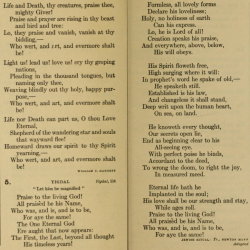
Extolléd be the living God and praiséd be his name, Who was, and is, and is to be, eternally the same. |
אֶחָד וְאֵין יָחִיד כְּיִחוּדוֹ נֶעְלָם וְגַם אֵין סוֹף לְאַחְדּוּתוֹ׃ |
One God is he, no unity like his is there in aught; A unity unending, Being beyond all thought. |
אֵין לוֹ דְמוּת הַגּוּף וְאֵינוֹ גּוּף לֹא נַעֲרֹךְ אֵלָיו קְדֻשָּׁתוֹ׃ |
Formless, all lovely forms but intimate his loveliness; Holy, our holiest thoughts reveal him even less; |
קַדְמוֹן לְכׇל־דָּבָר אֲשֶׁר נִבְרָא רִאשׁוֹן וְאֵין רֵאשִׁית לְרֵאשִׁיתוֹ׃ |
Eternal, he was God ere aught was formed that now appears; He is the First, and there was no beginning to his years. |
הִנּוֹ אֲדוֹן עוֹלָם לְכׇל־נוֹצָר יוֹרֶה גְּדֻלָּתוֹ וּמַלְכוּתוֹ׃ |
Lo! he is Lord of all the earth, Creation speaks his praise And everywhere, above, below, his mighty will obeys. |
שֶֽׁפַע נְבוּאָתוֹ נְתָנוֹ אֶל אַנְשֵׁי סְגֻלָּתוֹ וְתִפְאַרְתּוֹ׃ |
His word by ancient prophets came to Israel, chosen face, The first of whom was Moses, who beheld God face to face. |
לֹא קָם בְּיִשְׂרָאֵל כְּמֹשֶׁה עוֹד נָבִיא וּמַבִּיט אֶת־תְּמוּנָתוֹ׃ |
His word he gave his people by the prophet of his choice, Whose faithfulness we celebrate with heart and soul and voice. |
תּוֹרַת אֱמֶת נָתַן לְעַמּוֹ אֵל עַל־יַד נְבִיאוֹ נֶאֱמַן בֵּיתוֹ׃ |
Established is his law, and changeless it must stand, Written upon our human hearts and on the sea and land. |
לֹא יַחֲלִיף הָאֵל וְלֹא יָמִיר דָּתוֹ. לְעוֹלָמִים לְזוּלָתוֹ׃ | |
צוֹפֶה וְיוֹדֵעַ סְתָרֵֽינוּ מַבִּיט לְסוֹף דָּבָר בְּקַדְמָתוֹ׃ |
He knoweth all our secret thoughts, naught from him is concealed, The end from the beginning stands to him alone revealed. |
גּוֹמֵל לְאִישׁ חֶֽסֶד כְּמִפְעָלוֹ נוֹתֵן לְרָשָׁע רָע כְּרִשְׁעָתוֹ׃ | |
יִשְׁלַח לְקֵץ יָמִים מְשִׁיחֵֽנוּ לִפְדּוֹת מְחַכֵּי קֵץ יְשׁוּעָתוֹ׃ | |
מֵתִים יְחַיֶּה אֵל בְּרֹב חַסְדּוֹ בָּרוּךְ עֲדֵי־עַד שֵׁם תְּהִלָּתוֹ׃ |
This is Rev. Newton Mann’s slightly abridged rhymed English translation of Daniel ben Yehudah Dayyan’s “Yigdal” as first published in Rabbi Max Landsberg’s Ritual for Jewish Worship (1884), pp. 13-14. Mann, a Unitarian minister, had made the translation at the request of Rabbi Landsberg. Over at the Hymnology Archive, Chris Fenner writes,
When Max Landsberg (1845–1927), rabbi of the B’rith Kodesh Congregation in Rochester, New York, was assembling his Ritual of Jewish Worship (1884), he approached his friend Newton Mann, pastor of the Unity Church (Unitarian) in Rochester, about creating a version of the Yigdal in English rhyme. This appeared in the book, beginning “Extollèd be the living God and praisèd be his name,” in 9 rhyming couplets, effectively 8.6.8.6 (Common Meter). This text, unfortunately, did not have the same meter as the Hebrew and could not be used with existing Hebrew tunes. In his preface, Landsberg acknowledged Mann: “I cannot find adequate terms to express my obligations to my dear friend Rev. N.M. Mann, Pastor of Unity Church, for the kind interest he has taken in the preparation of Part First of this Ritual, and the valuable services he has rendered in making the English more idiomatic and perfect.”
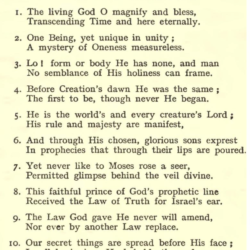
Later on, at Rabbi Landsberg’s request, William Channing Gannet (Mann’s successor at Unity Church) revised Mann’s translation. That derived work was published in Unity Hymns and Chorals (1911). Many thanks to the Hymnology Archive and to Chris Fenner for his research.
I have set the text of Mann’s English translation side-by-side with the Hebrew source text of Yigdal indicating several of the verses left untranslated, likely a testament to the ideological differences of the Reform Judaism of Rabbi Landsberg. –Aharon Varady
Source(s)


“יִגְדַּל (אשכנז) | Yigdal, by Daniel ben Yehudah Dayyan (abridged translation by Rev. Newton Mann, 1884)” is shared through the Open Siddur Project under the Creative Commons Attribution-ShareAlike (CC BY-SA) 4.0 International copyleft license.






Leave a Reply