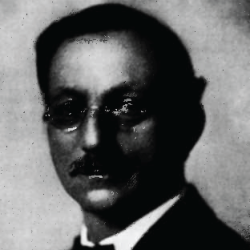
Rabbi Joseph Stolz (1861–1941), born in Syracuse, New York, was an Reform movement rabbi in the United States. He was part of the first graduating class of Hebrew Union College, graduating in 1884. He received a D.D. from Hebrew Union College in 1890, and in 1931 he received an honorary D.H.L. degree from there. Following his ordination, he worked as rabbi in B'nai Israel Temple in Little Rock, Arkansas, from 1884 to 1887. He then assisted Bernhard Felsenthal at Zion Temple in Chicago, Illinois, from 1887 to 1895. In 1895, when Chicago Jews were moving to the South Side, he was elected rabbi of Isaiah Temple. He served as rabbi there until 1929, when he retired and became rabbi emeritus. Concerned that Reform Judaism was closing itself off from middle-class Jews, he introduced a Sunday service in 1887 and believed that the synagogue, the Jewish community's cornerstone, should be a democratic institution. Active in Chicago civic affairs, Stolz served on the Chicago Board of Education from 1899 to 1905 and on the Chicago Crime Commission from 1910 until his death. He served as president of the Central Conference of American Rabbis from 1905 to 1907, after which he served on its executive committee. He was also an executive committee member of the Union of American Hebrew Congregations and the American Jewish Committee, and served on the publication committee of the Jewish Publication Society of America. In 1897, he wrote Funeral Agenda of Jews. He was president of the Chicago Rabbinical Association from 1920 to 1925 and of the Chicago Federation of Synagogues.
Filter resources by Category
Filter resources by Tag
Filter resources by Name
Filter resources by Language
Filter resources by Date Range
Contributed by:
Aharon N. Varady (transcription), Joseph Stolz
The prayer offered on the second day of the Republican National Convention by Rabbi Joseph Stolz as transcribed from, “Republican National Convention” in The Reform Advocate (22 June 1912), reporting on the invocation offered on the second day of the convention at the Chicago Coliseum in Chicago, Illinois on 19 June 1912.
![the Open Siddur Project [logo]](https://opensiddur.org/wp-content/uploads/2018/09/Open-Siddur-Project-Logo-2016.svg)


