![the Open Siddur Project [logo]](https://opensiddur.org/wp-content/uploads/2018/09/Open-Siddur-Project-Logo-2016.svg)
| Source (Hebrew) | Translation (English) |
|---|---|
”מכשפה לא תחיה“ (שמות כב:יז), ”כל שוכב עם בהמה“ (שמות כב:יח). |
“You shall not suffer a sorceress to live” (Exodus 22:17), “Whoever lies with a (tame/domesticated) animal shall surely be put to death” (Exodus 22:18). |
מעשה היה במכשף אחד, כשראה יהודיות יפות ביום הכיפורים היה מכשפן ומהפכן לאתונות, ומביאן לתוך ביתו, ובלילה מהפכן לנשים ושוכב עמהן. |
Once there was a sorcerer who, whenever he saw beautiful Jewish girls on Yom haKippurim, would turn them into jennies[1] female donkeys and bring them to his home. At night, he would restore them to womanhood and sleep with them. |
היה אחד בעל שמות ושמו ר׳ יוסף, והיה מאותו העיר מהלך שלשה חדשים. שלחו אחריו אדם חסיד וסיפר לו כל המאורע. אמ׳ לו: שב אתי עד יום הכיפורים. התחיל אותו אדם לבכות. אמ״ל ר׳ יוסף: מה מזיק לך, למה תבכה? אמ׳ ליה: יתגנבו הנשים היפות. |
There was a master of the Holy Names[2] Joseph Dan notes that this story “is probably one of the earliest places in European Hebrew literature” where the term בעל שמות is used. whose name was Rabbi Yosef. He lived at a distance of three months’ journey from the sorcerer’s town. The townspeople sent a pious man to tell him what was happening in their town. Rabbi Yosef told him: “Stay with me till Yom haKippurim.” The pious man, upon hearing this, began to cry. Rabbi Yosef asked him: “What is bothering you! Why are you crying?” The Jew answered: “The beautiful girls will be kidnapped again.”[3] The distance of Rabbi Yosef from the sorceror here implies, I think, a magical act of qefitsat ha-derekh (lit. “jumping/forshortening the road”) was involved in shortening the length of travel for the needed intervention –ANV. |
הכניסו לבית המרחץ ורחצו שניהם וכן כולן (?), ובשעה קלו באו למקום שהיה שם מכשף. |
When Yom haKippurim arrived, Rabbi Yosef brought him to the public baths, and very soon they came to the place where the sorcerer was. |
אמ׳ ר׳ יוסף: אמ׳ מי גנבם, אמרו: אין אנו יודעין מה היה להם. הזכיר השם, בא ועמד על פתח המכשף. קרא לו, והציץ המכשף והשם ראשו בעד החלון. הזכיר השם, ונמתחו הכתלים שסביב צוארו עד שרצו לחנקו. א״ל המכשף, התירני ואומ׳ לך מה עשיתי. א״ל: ביום שילכו בנות ישר׳ היפות יחיפות בלא מנעלים ומקושטות הייתי מכשפן לאתונות, ובלילה הייתי מכשפן לכמות שהיו. א״ל ר׳ יוסף: אנה המשקה ואנה בנות ישר׳? א״ל: במקום פלוני. |
Rabbi Yosef asked the people: “Who stole the girls” They answered: “We don’t know anything, we don’t know what happened to them.” So Rabbi Yosef pronounced a Holy Name, and came and stood at the front door of the sorcerer’s house. Rabbi Yosef then called for the sorcerer, who looked out and put his head out of the window. Rabbi Yosef pronounced a Holy Name, and the walls of the house stretched and closed around the sorcerer’s head, almost choking him. The sorcerer then said to Rabbi Yosef: “If you loosen the walls around my head, I shall tell you what I did to the women.” Rabbi Yosef did so, and the sorcerer told him: “On Yom haKippurim, when the beautiful daughters of Israel walked with bare feet and wore beautiful clothes, I would turn them into jennies by magic, and later, at night, return them to their original shape.” Rabbi Yosef then asked: “Where is the magical potion [you used] and where are the girls?” The sorcerer answered: “At such and such a place.” |
והוציא את המשקה ואת בנות ישר׳ והזכיר השם ונדבקו הכתלים ונפל הראש לרשות הרבים. |
So Rabbi Yosef extracted the potion and the girls [from that place], and then he pronounced another Holy Name, and the walls closed, and the sorcerer’s head fell into the street. |
ובא ר׳ יוסף זצ״ל לבית הכנסת ואמ׳: פתחו לי שערי ארון הקודש. פתחו לו והלך ועמד בארון וסגר בעדו, ואחר כך פתחו ולא מצאוהו, כי פרח למקומו. |
Rabbi Yosef, blessed be his memory, came then to the synagogue, and said: “Open the doors of the Holy Ark for me.” The people opened the doors, and he went and stood inside the Ark and closed the doors behind him. Later, the people opened the doors and failed to find him there, for he had flown back to his place.[4] A detail of the procedure used for the qefitsat haderekh, which presages C.S. Lewis’s wardrobe portal to Narnia by about 800 years. |
הרי למדת שעל ידי כישוף אדם שוכב עם בהמה ועם נשים, לכך סמך ”כי יפתה“ (שמות כב:טו) סמוך ”מכשפה“ (שמות כב:יז) ו”כל שוכב עם בהמה“ (שמות כב:יח). |
By this story you have learned that magic enables a man to sleep with (tame/domesticated) animals and with women, and that is the reason that the Holy Scripture put the verses “And if a man entice a virgin that is not betrothed and lie with her” (Exodus 22:15), “You shall not suffer a sorceress to live” (Exodus 22:17), and “Whoever lies with a (tame/domesticated) animal” (Exodus 22:18) close to each other. |
This is an early wizard battle tale found in RSL Ms. Guenzburg 82, fol. 78b-79a, first transcribed by Joseph Dan in his article סיפורים דימונולוגיים מכתבי יהודה החסיד (“Demonological stories from the writings of Yehudah he-Ḥasid”) and published in Tarbits (vol. 30, 1961), as story #29 on pp. 288-289. The English translation by Dan, was re-printed in chapter 15 of Jewish Mysticism vol. 2: The Middle Ages, pp. 359-360, and first published in “An Early Source of the Yiddish Akdamot Story,” in Hebrew University Studies in Literature, vol. 1 (1993), pp. 39-46. I’ve slightly modified Dr. Dan’s translation in places, replacing “asses” with “jennies” for itanot (female donkeys), “broth” with “potion” for mashqeh, and re-hebraicizing popular names.
Source(s)
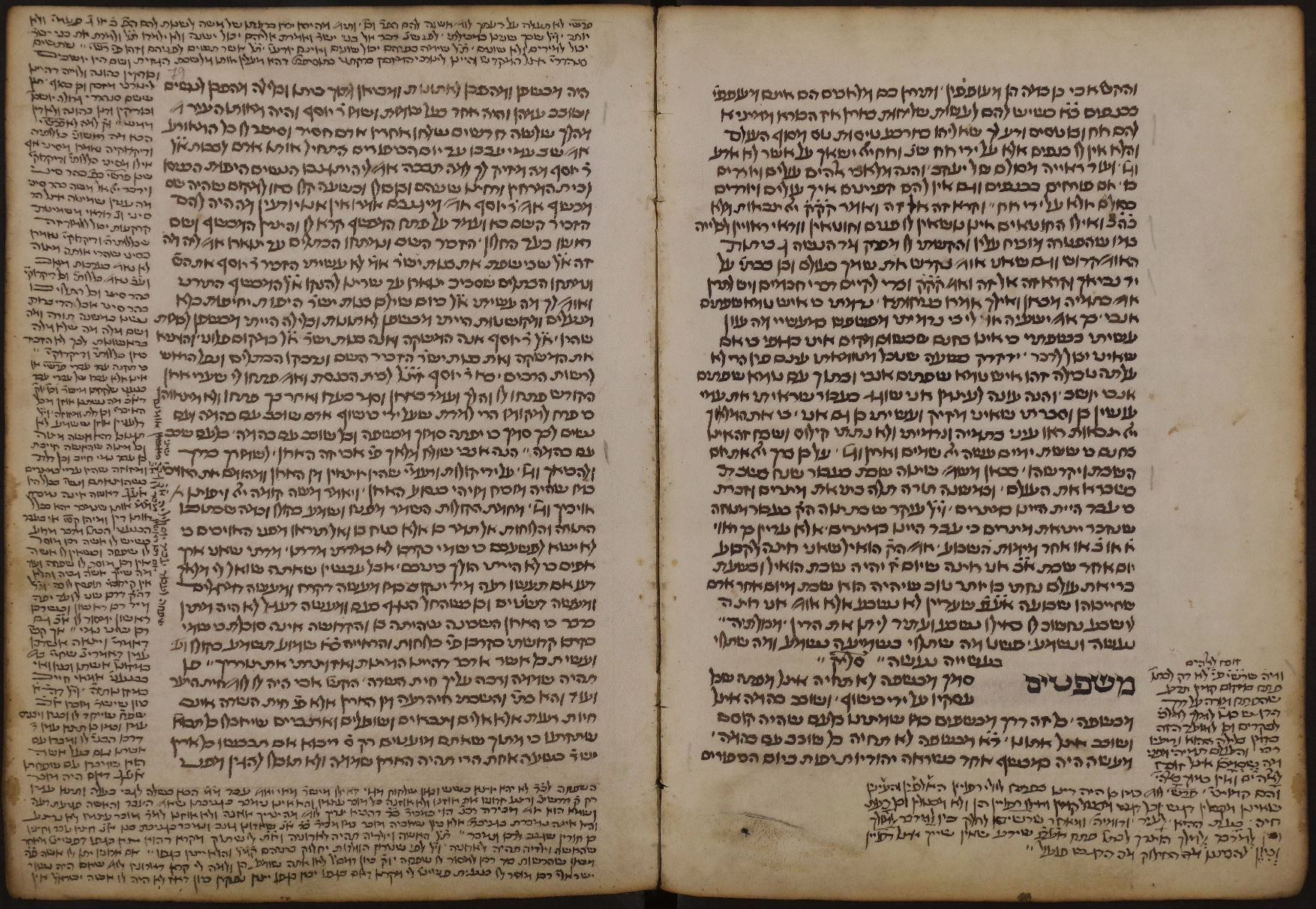
RSL Ms. Guenzburg 82 fol. 78b-79a
Notes
| 1 | female donkeys |
|---|---|
| 2 | Joseph Dan notes that this story “is probably one of the earliest places in European Hebrew literature” where the term בעל שמות is used. |
| 3 | The distance of Rabbi Yosef from the sorceror here implies, I think, a magical act of qefitsat ha-derekh (lit. “jumping/forshortening the road”) was involved in shortening the length of travel for the needed intervention –ANV. |
| 4 | A detail of the procedure used for the qefitsat haderekh, which presages C.S. Lewis’s wardrobe portal to Narnia by about 800 years. |
“📃 Rabbi Yosef vs. the Sorceror, a tale of a miraculous rescue on erev Yom Kippur retold by Rabbi Yehudah heḤasid in RSL Ms. Guenzburg 82 (ca. 12th c.)” is shared through the Open Siddur Project under the Fair Use Right (17 U.S. Code §107 - Limitations on exclusive rights: Fair use).






Leave a Reply