![the Open Siddur Project [logo]](https://opensiddur.org/wp-content/uploads/2018/09/Open-Siddur-Project-Logo-2016.svg)
| Source (Hebrew) | Translation (English) | Translation (French) |
|---|---|---|
עוּרִי עוּרִי יוֹרֶדֶת יָם שְׂאִי בַת צִיּוֹן יְקָרָה קוֹל כִּשְׂאֵת נְהָרוֹת דָּכְיָם בְּשִׁירַת מִרְיָם וּדְבוֹרָה |
Rise up, O traveller on high seas! Daughter of Ẓion, raise your voice Like a river flow – As did Miriam and Deborah! |
Dresse-toi ô voyageuse en haute mer, Fille de Sion, et porte ta voix Tel un fleuve son cours – Tel que le firent Myriam et Déborah. |
יוֹם חֵיל פַּרְעֹה יָרֹה יָרָה אֵל נֶאֱמָן בִּמְצוּלוֹת יָם בְּתֻפִּים שִׁירוּ לוֹ שִׁירָה וַתַּעַן מִרְיָם עוּרִי… |
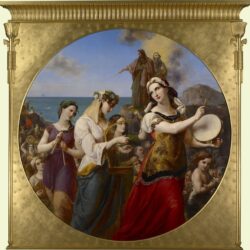
On this day, when God sank Pharaoh’s army into the abyss of the seas, Play a praise on the tambourine – So exclaimed Miriam! Rise up… |
En ce jour où Dieu fît sombrer L’armée du Pharaon dans l’abime des mers, Jouez une louange au tambourin! Ainsi s’exclama Myriam Dresse-toi… |
צִדְקוֹת מֶלֶךְ חַי וְקַיָּם אָשִׁירָה גַּם אֲזַמֵּרָה לְצָרֵינוּ אָמַר דַּיָּם וַתָּשַׁר דְּבוֹרָה עוּרִי… |
I sing and celebrate The justice of the eternal King Who has put an end to our evildoers – So sang Deborah! Rise up… |
Je chante et célèbre La justice du Roi éternel; Il mit une fin à nos malfaiteurs! Ainsi chanta Déborah Dresse-toi… |
הֶעֱבִיר עַמּוֹ בִגְבוּרָה בַּיַּבָּשָׁה בְתוֹךְ הַיָּם לָכֵן הוֹדוּ לוֹ בְזִמְרָה וַתַּעַן מִרְיָם עוּרִי… |
For leading His people with might Through sea on dry land, Sing a song of gratitude – Thus exclaimed Miriam! Rise up… |
Pour avoir fait traverser Son peuple Une mer sur la terre ferme, Entonnez un chant de reconnaissance! Ainsi s’exclama Myriam Dresse-toi… |
אֵל נוֹטֵר לִילָדָיו פִּרְיָם מִכָּל פְּרָעוֹת וְצָרָה מְהֵרָה יָשִׁיב אֶת שִׁבְיָם וַתָּשַׁר דְּבוֹרָה עוּרִי… |
May He who protects the fruit of His children From persecution and affliction Hasten the return of their captives – Thus sang Deborah! Rise up… |
Puisse Celui qui de Ses enfants protège les fruits Contre chaos et malheurs Hâtivement ramener leurs captifs – Ainsi chanta Déborah Dresse-toi… |
“Shirat Miriam and Devorah / Uri, Uri” (Song of Miriam, Song of Deborah / Rise up, Rise Up) was first published in 2024, as the second of four piyyutim published through the Diwan Ashira Project by Ephraim Kahn. Each piyyut is focused around a different biblical heroine, and sung in relation to a Jewish festival: 1) Hannah’s Prayer (El asher hasdo) for Rosh Hashanah, 2) Song of Miriam, Song of Deborah (Uri Uri) for Shabbat Shirah, 3) Queen Esther’s Prayer (‘Et sha’are armon) for Purim, 4) Ruth and Neomi (Biti ‘arvot) for Shavuot.
Recordings
“עוּרִי עוּרִי – שִׁירַת מִרְיָם וּדְבוֹרָה | Uri Uri – Song of Miriam and Devorah, a piyyuṭ for Shabbat Shirah by the Diwan Ashira Project” is shared through the Open Siddur Project under the Creative Commons Attribution-ShareAlike (CC BY-SA) 4.0 International copyleft license.







Leave a Reply