![the Open Siddur Project [logo]](https://opensiddur.org/wp-content/uploads/2018/09/Open-Siddur-Project-Logo-2016.svg)
| Source (Hebrew) | Translation (Portuguese) |
|---|---|
אֲדוֹן עוֹלָם אֲשֶׁר מָלַךְ בְּטֶֽרֶם כׇּל־יְצִיר נִבְרָא׃ לְעֵת נַֽעֲשָׂה כְּחֶפְצוֹ כֹּל אֲזַי מֶֽלֶךְ שְׁמוֹ נִקְרָא׃ |
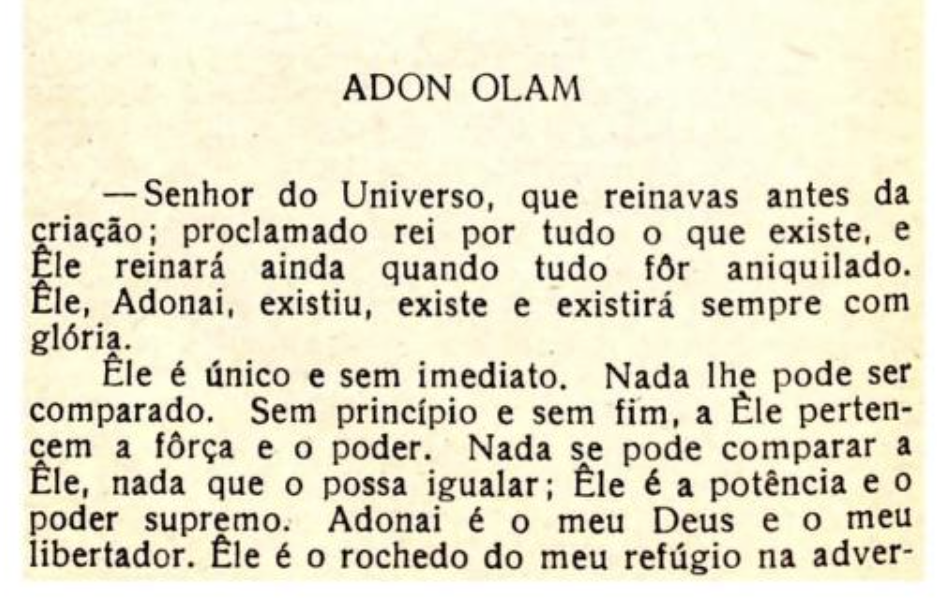
Senhor do Universo, que reinavas antes da criação; proclamado rei por tudo o que existe, Êle reinará ainda |
וְאַֽחֲרֵי כִּכְלּוֹת הַכֹּל לְבַדּוֹ יִמְלֹךְ נוֹרָא׃ וְהוּא הָיָה וְהוּא הֹוֶה וְהוּא יִֽהְיֶה בְּתִפְאֲרָה׃ |
quando tudo fôr aniquilado. Êle, Adonai, existiu, existe e existirá sempre com glória. |
וְהוּא אֶחָד וְאֵין שֵׁנִי לְהַמְשִׁיל לוֹ לְהַחְבִּירָה׃ בְּלִי רֵאשִׁית בְּלִי תַּכְלִית וְלוֹ הָעֹז וְהַמִּשְׂרָה׃ |
Êle é único e sem imediato. Nada lhe pode ser comparado. Sem princípio e sem fim, a Êle pertencem a fôrça e o poder. |
בְּלִי עֵֽרֶךְ בְּלִי דִמְיוֹן בְּלִי שִׁנּוּי וְהַתְּמוּרָה׃ בְּלִי חִבּוּר בְּלִי פֵרוּד גְּדׇל־כֹּחַ וְהַגְּבוּרָה׃ |
Nada se pode comparar à Êle, nada que o possa igualar; Êle é a potência e o poder supremo. |
וְהוּא אֵלִי וְחַי גּֽוֹאֲלִי וְצוּר חֶבְלִי בְּיוֹם צָרָה׃ וְהוּא נִסִּי וּמָנוֹס לִי מְנָת כּוֹסִי בְּיוֹם אֶקְרָא׃ |
Adonai é o meu Deus e o meu libertador. Êle é o rochedo do meu refúgio na adversidade. Êle é a minha bandeira, a minha salvação, o meu protector quando eu o invoco. |
בְּיָדוֹ אַפְקִיד רוּחִי בְּעֵת אִישַׁן וְאָעִֽירָה׃ וְעִם־רוּחִי גְּוִיָּתִי אֲדֹנָי לִי וְלֹא אִירָא׃ |
Eu lhe recomendo a minha alma, ao adormecer e ao despertar, e com a minha alma o meu corpo; Adonai está comigo e nada receio. |
This is Artur Carlos de Barros Bastos’s Portuguese translation of Adon Olam from his prayer-pamphlet, Oração Matinal de Shabbath (1939), p. 52-53. I have set the translation side-by-side with the Hebrew text from which it was derived.
Adon Olam is a piyyut that became popular in the 15th century and is often attributed to Solomon ibn Gabirol (1021–1058) and less often to Sherira Gaon (900-1001), or his son, Hai ben Sherira Gaon (939-1038). The variation of the piyyut appearing here is the six stanzas version familiar to Sepharadi congregations. (There are also some slightly longer variants found in other Sepharadi siddurim. The Ashkenazi version has five stanzas/ten lines.)
Source(s)


“אֲדוֹן עוֹלָם (מנהג הספרדים) | Adōn Olam (Portuguese translation by Artur Carlos de Barros Basto, 1939)” is shared through the Open Siddur Project under the Creative Commons Zero (CC 0) Universal license a Public Domain dedication.






Leave a Reply