![the Open Siddur Project [logo]](https://opensiddur.org/wp-content/uploads/2018/09/Open-Siddur-Project-Logo-2016.svg)
| Source (Aramaic) | Translation (English) |
|---|---|
יָהּ רִבּוֹן עָלַם וְעָלְמַיָא אַנְתְּ בָּרָאתָ בְּשִׁית יוֹמַיָא שְׁמַיָא וְאַרְעָא וְכָל יְצִיבָא בְּעֶשֶׂר אֲמָרַיָא׃ וּבַשְׁבִיעִי נַחֲתָּ מִכּוּלְהוֹן אֲמָרַיָא וּפָּקַדְתָּא לְעַמָא קַדִשָׁא דִלְהוֹן נַחְתָא מִכָּל דִבְּרַיָא בְּרַם יַתְהוֹן עַסְקִין בְּחָפְצֵי שְׁמַיָא וְרָזֵי סְחָרַיָא׃ וְעַמַיָא דְאַרְעָא וּנְשַׁיָא יְהוֹן עַסְקִין בְּדָרֵיהוֹן בְּלִישְׁנָא קְלִילַיָא מַה דְחַייְבִין בְּפּקוּרַיָא |
Yahʰ, master of the world and all worlds, in six days you created the heaven, the earth and everything residing therein with ten pronouncements.[1] Mishnah Avot 5:1, and many other places in rabbinic literature. And on the seventh day you ceased from all speech. You commanded the holy nation that they should refrain from all talking except for that concerning matters of heaven and the hidden secrets;[2] ‘If you call the sabbath “delight”, the Lord’s holy day “honoured”; and if you honour it and go not your ways, nor look to your affairs, nor speak idly [daber davar]’ (Isa. 58:13). Various rabbinic sources interpreted this to mean that talking on the sabbath should be minimized or directed only to holy subjects (e.g. BT Shab. 113a; JT Shab. 15:3; Vayikra rabah, 34; Yalkut shimoni, ‘Isaiah’, 496). and that the unlearned and the women,[3] The phrase, nashim ve’amei ha’arets (women and unlearned men), first appeared in BT Meg. 18a, in the context of people who did not understand the text of Esther when it was read publicly on Purim. By the Middle Ages this phrase had become a cliché denoting those who do not understand Hebrew and are not conversant with learned texts. See M. Rosman, ‘The History of Jewish Women in Early Modern Poland: An Assessment’, Polin, 18 (2005), 44–46. in their homes, should consider in colloquial language their obligations under the commandments.[4] Rashi and other medieval authorities emphasized that ‘women and unlearned men’ should be provided with translations in their own vernacular so that they could understand the commandments (Rashi on BT Meg. 21b). Here Leah substitutes lishna kelilya (‘easy’ or ‘colloquial’ language), for la’az (‘vernacular’; lit. ‘language of a foreign nation’), but in essence she is continuing the assertion that unlearned people also need to understand their religious obligations. See Yiddish Tkhine, Section M. |
וְכֵן יְהַבְתָּ לָן מוֹעֲדַיָא לְשִׂמְחַיָא וְירַחֲיָא לְדוּכְרָנַיָא וְכַּד הֲוֵינָה בִּירוּשָׁלַיִם קַרְתָּא דְשׁוּפְרַיָא׃ אֲחַר בֵּית מוֹתְבָנָא דְאִמְנָא שְׁכִינְתָּא דְכָל שׁוּפְרַיָא וְעֵינִי הָעֵדָה הַוִין מְקַדְשִׁין לְפִי רְאוֹת עֵנַיָא וּבָעִידְנָא דְגָלִינָא לָא אִשְׁתָּאַר לָן בְּרַם לְבָרֵךְ יַרְחַיָא וְעֵת לְחָנְנָה כִּי בָא מוֹעֵד לְבָרֵךְ יַרְחַיָא׃ |
Moreover, you gave us holidays for rejoicing and new moons for remembrance.[5] See Num. 10:10. Leah apparently understood the central passage of the musaf prayer service for Rosh Ḥodesh thus: ‘You have given your people new moon festivals as a time of atonement for all their generations. They would sacrifice before you loving sacrifices and sin-offerings to make atonement. [May our current Rosh Ḥodesh celebrations] be a memorial for all of these.’ For Leah, the core significance of the new moon festival in post-Temple times was to recall the service of the Temple; hence she averred: ‘and new moons for remembrance’. When we were in Jerusalem the beautiful city, the location of the residence of our Mother, the Shekhinah, in all its beauty, the leaders of the people would sanctify [the new month] according to what they saw. Now, in exile, the only thing left for us is to bless the new moon. A time of grace; the time of blessing the new moon is here.[6] See Ps. 102:14. |
אֲנַן מְפָרְשִׁין כַּפַּיָא לְאָבוּנָא רַחֲמָנָא דְבִּשְׁמַיָא תִּיב לָן כִּימֵי קֶדֶם כִּי כָּשַׁל כֹּחַ הַסַבָּל לְגַרְיָא רְכִּיכָה כְּחוֹם צַהֲרַיָא שָׁבַת מְשׂוֹשֵׂנוּ חַגֵינוּ וְחָדְשֵׁנוּ אֲנַן כְּיַתְמֵי בְּלָא אָבוּהָ וּכְעָנָא בְּלָא רַעֲיָא יָדוֹ פָּרַשׁ צַר עַל כָּל מַחֲמַדֵי עַיִן וְאֵין אוֹמֵר הָשֵׁב |
We spread our hands to our merciful Father in heaven, return to us as in days of yore; for ‘the strength of the labourers has failed’[7] Neh. 4:4 , [we are] as a tender kid at the hottest part of the day. Our joy, our holidays, our new moon festivals have gone. We are like orphans with no father; like sheep without a shepherd. ‘The enemy laid hands on all her treasures’[8] Lam. 1:10 ‘with no one to say:[9] Isa. 42:22 “Restore them!”’. |
אֵל נְקָמוֹת יְיָ הוֹפִיַא מֵהַר פָּארָן מַאן דְעָנָה לְאַבְהָתָנָא הוּא יַעֲנֶה אוֹתָנָא בְּיַרְחַיָא דָא בִּזְכוּתָא דְהַרְרֵי קֶדֶם וּגְבָעוֹת׃ |
‘El of vengeance! Hashem, appear from Mount Paran.’[10] Cf. Ps. 94:1; Deut. 33:2; Yalkut shimoni, ‘Psalms’, 849. He who answered our fathers will answer us this month by the merit of the mountains of old and the hills.[11] This is an allusion to the blessing Moses gave to the tribe(s) of Joseph (see Deut. 33:15; cf. Ephraim Solomon of Luntshits, Keli yakar (Lublin, 1602), ‘Vezot haberakhah’). |
שָׂרָה דְפַקִיַת עָלֶיהָ אַל תִּגְעוּ בִּמְשִׁיחָי (תהלים קה:טו) כֵּן צֶאֱצָאֶיהָ כָּל דְנָגַע בְּחוּ יִדְמוּ׃ |
Sarah,[12] This cataloguing of the merits of the matriarchs as the basis for Israel deserving divine favour is a standard trope in tkhines (see NLI R8°894501: Eyn gor sheyne tkhine; cf. the various tkhines in Klirs et al. (eds.), The Merit of Our Mothers; see also n. 102 below). concerning whom you ordered, ‘Touch not my anointed ones!’ (Psalms 105:15):[13] God did not allow either Pharaoh (Gen. 12:17) or Avimelekh (Gen. 20:3) to touch Sarah (cf. Yalkut shimoni, ‘Psalms’, 863; see Yiddish Tkhine, Section O). indeed all who touch her descendants will be silenced. |
רִבְקָה דְגָמַרְתָּ לָן בִּרְכָתָא בַּעֲגָלָא תִּתְקַיֵים כֵּן׃ |
Rivqah, whose blessing you imparted to us:[14] This is the blessing Rebecca received from her mother and brother: ‘O sister! May you grow into thousands of myriads; may your offspring seize the gates of their foes’ (Gen. 24:60). Compare the blessing associated with Rebecca (Yiddish Tkhine, Section O) and analysis below. indeed soon will it be fulfilled. |
רָחֵל דְאַבְטַחֲתָּא וְשׁוּבוּ בָּנִים לִגְבוּלָם׃ (ירמיה לא:טז) הָשֵׁב שְׁבוּתֵינוּ מַהֵר בְּדִילָה׃ |
Raḥel, whom you promised, ‘The children will return to their land’ (Jeremiah 31:16); speed our return for her sake. |
לֵאָה דְהַווּן עֵינַיָא רְכִּיכָא דְלָא תִּפּוֹל בְּגוֹרָלָא דִרְשִׁיעֲיָא בִּזְכוּתָא הֵאִיר עֵינַיָא מֵחֲשׁוֹכָא דְגָלוּתָא |
Léah, who had weak eyes[15] Gen. 29:17 that she not be fated to be with the wicked one;[16] According to Bereshit rabah, 70, Leah’s eyes were weakened by her copious weeping at the prospect that she might wind up having to marry Esau (‘the wicked one’). by her merit brighten eyes from the darkness of exile. |
יוֹנָה פִּיתָּה בְּחֶרֶב רַוְתָה כָּל הַיוֹם רְצוּצָה וַחֲמוּסָה׃ בַּת אַבְרָהָם אָבִינוּ בְּרַתָּא׃ דְגָלוּתָא דְנַחֲתָא בַּת אַבְרָהָם אָבִינוּ יוֹשֶׁבֶת תַּחַת בַּעֲלִים קָשִׁים זֶה אוֹמֵר הַךְ וְזֶה אוֹמֵר אַף אֲנִי כָּמוֹהוּ׃ הֶרֶב כַּבְּסֵנוּ כִּי כְּבַר לָקִינוּ כִּפְלַיִם בְּמֶרְיֵינוּ׃ וְחַדֵשׁ וְהָבֵא לָן חוֹדֶשׁ הַזֶה לְחֶדְוָה יוֹמַיָא יַרְחַייָא דִמִתְהַפְּכִין מִבִּישָׁא לְטָבָא׃ |
Innocent dove,[17] Hos. 7:11. the sword drinks its fill,[18] Cf. Isa. 34:5. crushed and violated the whole day long. Daughter of our father Avraham;[19] Calling Israel the daughter of Abraham is a rare metaphor in classic Jewish texts (see Shir hashirim zuta, 7:2; Tseror hamor, ‘Bemidbar’ (lemma: beshem); see also Yiddish Tkhine, Section O; Liberman, ‘“Tkhine imohos”’, 437). fallen daughter of the exile; daughter of our father Avraham dwelling under harsh masters. This one says, ‘Strike her!’ and that one says, ‘Me too!’ Wash us thoroughly because we have already been doubly lashed for our disobedience,[20] Both temples were destroyed. and renew and bring us this month for joy; that days and months change from ill to well. |
גְאוֹן עוּזֵינוּ הֲרֵם קַרְנֵינוּ הַב לָן מוֹהַר מַתָּנָתָא טַבְתָא בְּלִי צָרָה וְעַקְתָא בִּזְכוּת יַעֲקֹב בְּחִיר שֶׁבְּאָבוֹת בִּזְכוּתוֹ הַטוֹבָה לְרַבּוֹת׃ |
Pride of our strength,[21] Cf. Ezek. 24:21; 30:6, 18; 33:28. give us strength. Dower us with a bountiful gift, free of trouble and distress; by the merit of Yaaqov, choice among the Patriarchs,[22] See Bereshit rabah, 76; cf. Yalkut shimoni, ‘Vayishlah’, 131; ‘Psalms’, 865. by virtue of his merit increase the good. |
סְגוּלָתִי קָרָאתָ לָן וַאֲנָן קָרְאָן לָךְ דוֹדִי וְלָךְ אֲנַן מַצְלִין צְלוּתָא דְתֵּיתַב לָן וּלְכָל מוֹרָנָא מֵחַבְרַיָא סַפְרַיָא קַדִישַׁיָא׃ וּמְסַדְרִין צְלוּתַיָא וּבְעוּתַיָא בְּנִין דוּכְרִין מֵעַלְמָא דִדְבוּרָא מִסִיטְרָא דְיַמִינָא חֲכִּימַיָא בּאוֹרַיְתָא וְנֶעֱבְדִין רְעוּתָא דַאֲהָבוּתָא דְבִּשְׁמַיָא׃ בָּדְחִילָא וּרְחִימָא עִילָאָה דְעִילָאָה כְּמֹשֶׁה רַעֲיָא מְהֶמְנַיָא בְּרָא רְחִימָא דְאַבָּא דְאִימָא עִילָאִי אָמֵן כֵּן יְהִי רָצוֹן׃ |
You called us, ‘my treasure’;[23] Heb.: segulati (see Exod. 9:5; Deut. 7:6; 14:2; 26:18; Mal. 3:17). we called you, ‘my beloved’.[24] According to rabbinic tradition the term dodi (‘my beloved’), which appears repeatedly in the Song of Songs, refers to God. We pray to you a prayer that you will grant us, and to all sages of the scholarly fellowship, holy scribes, as well as those who present prayers and supplications, male children,[25] On the preference for male children, see Fram, My Dear Daughter, 40–41. from the upper world, from the right side,[26] In many cultures the right is associated with positive characteristics and the good in general (e.g. dexterous), while the left is associated with the negative and evil (e.g. sinister). scholars of Torah, doing the will of our beloved in heaven, with the utmost reverence and love; like Mosheh, the faithful shepherd, the beloved son of the supernal father and mother.[27] This is a precis of a theme in the zoharic work Ra’aya meheimna, where Moses the ‘faithful shepherd’ (ra’aya meheimna) is the son of his divine father and mother who represent respectively [the sefirot of] wisdom (ḥokhmah) and understanding (binah). My thanks to Daniel Abrams for pointing this out to me. Amen, let it be his will. |
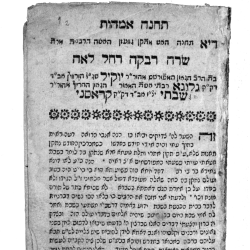
This is the Aramaic source of Leah Horowitz’s teḥinah imahot, a teḥinah for Shabbat Mevorkhim, also known in its Yiddish translation (also by Leah Horowitz) as the “Teḥinah fun Sarah, Rivqah, Raḥel, vəLéah” as found in the manuscript: National Library of Israel (NLI), R41A460, vol. 6, no. 2.
The English translation was provided by Dr. Moshe Rosman as published in “Leah Horowitz’s Tkhine Imohos A Proto-Feminist Demand to Increase Jewish Women’s Religious Capital,” Polin 33 (2020), pp. 27-29, with minor amendments. (There, Rosman refers to the Aramaic form of the teḥinah as a piyyut.) I have parsed the Aramaic text and set each phrase side-by-side with its English translation. I have re-Hebraized names and divine names and omitted Rosman’s descriptive section titles. I have also changed Rosman’s translation from “supreme father and mother” to “supernal father and mother” in order to make the reference to the sefirot of Ḥokhmah and Binah clear in the translation.
The annotation is copied directly from Dr. Rosman’s footnotes. For the original footnote numbers, as well as a full analysis of the tekhinah in Aramaic, its Yiddish translation, and its Hebrew introduction, please consult the original article. –Aharon Varady
Source(s)
Tehinah Imahot (NLI R41A460, v.6, n.2), p. 3 Tehinah Imahot (NLI R41A460, v.6, n.2), p. 4 Tehinah Imahot (NLI R41A460, v.6, n.2), p. 5


Notes
| 1 | Mishnah Avot 5:1, and many other places in rabbinic literature. |
|---|---|
| 2 | ‘If you call the sabbath “delight”, the Lord’s holy day “honoured”; and if you honour it and go not your ways, nor look to your affairs, nor speak idly [daber davar]’ (Isa. 58:13). Various rabbinic sources interpreted this to mean that talking on the sabbath should be minimized or directed only to holy subjects (e.g. BT Shab. 113a; JT Shab. 15:3; Vayikra rabah, 34; Yalkut shimoni, ‘Isaiah’, 496). |
| 3 | The phrase, nashim ve’amei ha’arets (women and unlearned men), first appeared in BT Meg. 18a, in the context of people who did not understand the text of Esther when it was read publicly on Purim. By the Middle Ages this phrase had become a cliché denoting those who do not understand Hebrew and are not conversant with learned texts. See M. Rosman, ‘The History of Jewish Women in Early Modern Poland: An Assessment’, Polin, 18 (2005), 44–46. |
| 4 | Rashi and other medieval authorities emphasized that ‘women and unlearned men’ should be provided with translations in their own vernacular so that they could understand the commandments (Rashi on BT Meg. 21b). Here Leah substitutes lishna kelilya (‘easy’ or ‘colloquial’ language), for la’az (‘vernacular’; lit. ‘language of a foreign nation’), but in essence she is continuing the assertion that unlearned people also need to understand their religious obligations. See Yiddish Tkhine, Section M. |
| 5 | See Num. 10:10. Leah apparently understood the central passage of the musaf prayer service for Rosh Ḥodesh thus: ‘You have given your people new moon festivals as a time of atonement for all their generations. They would sacrifice before you loving sacrifices and sin-offerings to make atonement. [May our current Rosh Ḥodesh celebrations] be a memorial for all of these.’ For Leah, the core significance of the new moon festival in post-Temple times was to recall the service of the Temple; hence she averred: ‘and new moons for remembrance’. |
| 6 | See Ps. 102:14. |
| 7 | Neh. 4:4 |
| 8 | Lam. 1:10 |
| 9 | Isa. 42:22 |
| 10 | Cf. Ps. 94:1; Deut. 33:2; Yalkut shimoni, ‘Psalms’, 849. |
| 11 | This is an allusion to the blessing Moses gave to the tribe(s) of Joseph (see Deut. 33:15; cf. Ephraim Solomon of Luntshits, Keli yakar (Lublin, 1602), ‘Vezot haberakhah’). |
| 12 | This cataloguing of the merits of the matriarchs as the basis for Israel deserving divine favour is a standard trope in tkhines (see NLI R8°894501: Eyn gor sheyne tkhine; cf. the various tkhines in Klirs et al. (eds.), The Merit of Our Mothers; see also n. 102 below). |
| 13 | God did not allow either Pharaoh (Gen. 12:17) or Avimelekh (Gen. 20:3) to touch Sarah (cf. Yalkut shimoni, ‘Psalms’, 863; see Yiddish Tkhine, Section O). |
| 14 | This is the blessing Rebecca received from her mother and brother: ‘O sister! May you grow into thousands of myriads; may your offspring seize the gates of their foes’ (Gen. 24:60). Compare the blessing associated with Rebecca (Yiddish Tkhine, Section O) and analysis below. |
| 15 | Gen. 29:17 |
| 16 | According to Bereshit rabah, 70, Leah’s eyes were weakened by her copious weeping at the prospect that she might wind up having to marry Esau (‘the wicked one’). |
| 17 | Hos. 7:11. |
| 18 | Cf. Isa. 34:5. |
| 19 | Calling Israel the daughter of Abraham is a rare metaphor in classic Jewish texts (see Shir hashirim zuta, 7:2; Tseror hamor, ‘Bemidbar’ (lemma: beshem); see also Yiddish Tkhine, Section O; Liberman, ‘“Tkhine imohos”’, 437). |
| 20 | Both temples were destroyed. |
| 21 | Cf. Ezek. 24:21; 30:6, 18; 33:28. |
| 22 | See Bereshit rabah, 76; cf. Yalkut shimoni, ‘Vayishlah’, 131; ‘Psalms’, 865. |
| 23 | Heb.: segulati (see Exod. 9:5; Deut. 7:6; 14:2; 26:18; Mal. 3:17). |
| 24 | According to rabbinic tradition the term dodi (‘my beloved’), which appears repeatedly in the Song of Songs, refers to God. |
| 25 | On the preference for male children, see Fram, My Dear Daughter, 40–41. |
| 26 | In many cultures the right is associated with positive characteristics and the good in general (e.g. dexterous), while the left is associated with the negative and evil (e.g. sinister). |
| 27 | This is a precis of a theme in the zoharic work Ra’aya meheimna, where Moses the ‘faithful shepherd’ (ra’aya meheimna) is the son of his divine father and mother who represent respectively [the sefirot of] wisdom (ḥokhmah) and understanding (binah). My thanks to Daniel Abrams for pointing this out to me. |
“תחנה אמהות | Teḥinah Imahot for Shabbat Mevorkhim by Leah Horowitz in its original Aramaic (ca. 1790)” is shared through the Open Siddur Project under the Creative Commons Attribution-ShareAlike (CC BY-SA) 4.0 International copyleft license.






Leave a Reply