![the Open Siddur Project [logo]](https://opensiddur.org/wp-content/uploads/2018/09/Open-Siddur-Project-Logo-2016.svg)
| Contribute a translation | Source (English) |
|---|---|
Almighty God! Sovereign and Governor of the universe! we praise, glorify, and extol thy name. In meekness and submission, and with hearts filled with a just sense of gratitude for thy mercies and blessings, we approach thy presence! With reverence and humility, do we pour forth our thanksgivings unto thee, as the Author of our earthly existence, as our only hope of happiness here, and of salvation hereafter. | |
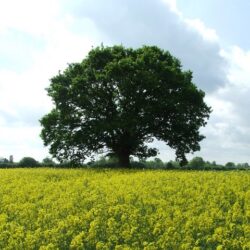
With thine outstretched arm, hast thou sent forth worlds, and by thine all-powerful will, thou hast created “years and seasons.” Even now at thy command the frosts and gloom of winter, yield to the opening buds of spring. | |
Thou hast delivered us from the inclemencies of cold, and hast called forth around thy creatures, as it were, a new creation. Thou hast sent down the gentle and refreshing rains of heaven to revive and beautify the field and the garden. Thou hast sent thy nourishing dews to moisten the earth, and in due season thou wilt send forth thine abundant fruits to bless, and reward the labours of man. | |
The sun, obedient to thy will, has shone with friendly beams to give new life and strength to the young and tender trees. Thy waters, thy fountains, thy mists and thy springs, are daily renewed by thine abounding and never failing resources; while myriads of plants and herbs come forth in their beauty and loveliness, with a profusion beyond the skill of man to number. | |
All this thou hadst done, even before thou didst create man to enjoy thy goodness. We should be, therefore, altogether unworthy of thy love and protection, as dependent beings; we should be defiled by ingratitude and blind to our duty as moral agents, did we fail to give thanks, to bless, and adore thy holy name. In thee do we constantly behold a Father, sustaining by his power and nourishing by his manifold goodness, his helpless and imperfect children. | |
O, may we then be grateful unto thee, O Lord our God! for thy numberless blessings. May we ever be obedient unto thy precepts, and keep in memory thy covenant with Abraham. May we ever be mindful of thy signal mercies on Mount Moriah, and of the salvation of thy people, when their enemies were swallowed up by the deep. May we never rise unmindful of thy goodness, nor lie down, before we bow gratefully unto thee. | |
All the inhabitants of the earth shall sing praises unto thy name, for thou art the Father of all mankind, and thy bounty is over all thy creatures. They shall all lift up their voice to pronounce thy name, O mightiest of the mighty! for thou only canst create and canst destroy. The rich shall bow down with submission before thee, for to thee alone shall they look for endless blessings. The poor shall bend the knee to thee, for from thee only shall spring great riches. The upright shall repose confidence in thee, for by thy will they shall be made mighty. The weak and infirm shall bless thee, O Lord! for from thee only, can they receive strength and fortitude. | |
Around thine altars shall the righteous of the earth assemble throughout the earth; for to praise, and glorify, and love thee, Almighty and benevolent Father, to walk in thy ways of pleasantness and peace, is the perfection of all virtue and happiness, from henceforth unto all eternity. Amen. |
“A Prayer for Pentecost” by the Reformed Society of Israelites is found in The Sabbath service and miscellaneous prayers, adopted by the Reformed Society of Israelites, founded in Charleston, S. C., November 21, 1825 (1830), as reprinted by Barnett A. Elzas in The Sabbath Service and Miscellaneous Prayers (1916), pp. 51-52. The prayer does not appear with any further attribution.
The theme of the prayer echoes those of lines from a poem by Goethe, Reinecke Fuchs (1793), which illustrate Pentecost in the context of Spring’s renewal. The opening lines of the poem “speaks of Pentecost as a time of vernal bloom, “idealizing the Pentecost holidays in the German-speaking lands”[1] From the article on Pentecost, at [English] Wikipedia).
| Source (German) | Translation (English) |
|---|---|
Pfingsten, das liebliche Fest, war gekommen; es grünten und blühten Feld und Wald; auf Hügeln und Höhn, in Büschen und Hecken Übten ein fröhliches Lied die neuermunterten Vögel; Jede Wiese sprosste von Blumen in duftenden Gründen, Festlich heiter glänzte der Himmel und farbig die Erde. |
Pentecost, that lovely feast, had arrived; fields and forests were green and in bloom; on hills and heights, in bushes and hedges, the birds, newly revived, sang a joyful song; every meadow was sprouting with flowers in fragrant glades, festively bright shone the sky, and colorful the earth. |
In his 1817 poem, Sankt-Rochus-Fest zu Bingen attests to the old German proverb, “Reife Erdbeeren um Pfingsten bedeuten einen guten Wein” (“Ripe strawberries at Pentecost mean a good wine crop”).
Source(s)


“A Prayer for Pentecost, by the Reformed Society of Israelites (Charleston, South Carolina, ca. 1825)” is shared through the Open Siddur Project under the Creative Commons Zero (CC 0) Universal license a Public Domain dedication.






Leave a Reply