Contributor(s): Shared on: 14 June 2026 under the Creative Commons Zero (CC 0) Universal license a Public Domain dedication Categories: Tags:
Guest Chaplain: Rabbi Abram Simon, Ph.D. Washington, D.C.
Sponsor: n/a
Date of Prayer: 25 February 1918
| Contribute a translation | Source (English) |
|---|
|
Deeply conscious
that Thy presence consecrates every place
where Thy name is called upon in humility and sincerity,
we fervently invoke Thy abiding grace,
our God and Father. | |
Profoundly grateful for our noble past,
we are earnestly prayerful
for the continued prosperity
of an equally worthy present. | |
Reliant on Thy everlasting arms
we pray that our thoughts and labors for our country
may be worthy of Thy acceptance,
even as they have the approval of our conscience. | |
We ask for insight to see our duty,
for courage to carry it to a successful issue,
for faith in the ultimate triumph of our cause,
conceived in justice
and dedicated to Thy name
and the happiness of Thy children. | |
Bless the dauntless loyalty or our men,
the matchless steadfastness of our women,
and the invincible fortitude of our sons
here and abroad. | |
Thou art the Ally of every just cause.
Therefore we trust in Thee and despair not. | |
Teach us to read Thy will aright,
to follow it bravely and honorably,
and thus to make it our own. | |
To Thee be all the glory,
now and evermore.
Amen. |
This prayer of the guest chaplain was offered in the third month of the second session of the 65th US House of Representatives, and published in the Congressional Record, vol. 56 part 3 (25 February 1918), page 2628. Source(s)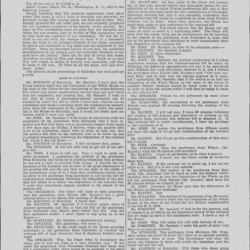 Prayer of the Guest Chaplain – Abram Simon (House of Representatives, 25 February 1918), p. 2628 “Prayer of the Guest Chaplain of the U.S. House of Representatives: Rabbi Abram Simon on 25 February 1918” is shared through the Open Siddur Project under the Creative Commons Zero (CC 0) Universal license a Public Domain dedication.
Aharon Varady (M.A.J.Ed./JTSA Davidson) is a volunteer transcriber for the Open Siddur Project. If you find any mistakes in his transcriptions, please let him know. Shgiyot mi yavin; Ministarot naqeni שְׁגִיאוֹת מִי־יָבִין; מִנִּסְתָּרוֹת נַקֵּנִי "Who can know all one's flaws? From hidden errors, correct me" (Psalms 19:13). If you'd like to directly support his work, please consider donating via his Patreon account. (Varady also translates prayers and contributes his own original work besides serving as the primary shammes of the Open Siddur Project and its website, opensiddur.org.)  Abram Simon (1872–1938), born in Nashville, Tennessee, was a rabbi and leader in the Reform movement in the early 20th century. He was educated at the University of Cincinnati where he earned his B.A. in 1894, the same year he was ordained by Hebrew Union College. Upon ordination he served as rabbi of B'nai Israel Congregation in Sacramento and then as rabbi of Temple Israel in Omaha, Nebraska (1899–1904). In 1903 he was elected as the first rabbi of Washington Hebrew Congregation in Washington DC. In Washington, Simon became a communal leader. In addition to the Board of Education he was a trustee and later president of the Columbia Hospital for Women and also president of the Public Library of Washington. Rabbi Simon was a member of the Red Cross during World War I, broadcast radio lectures, and was president of both the Board of Education in Washington as well as the Conference of Christians and Jews. He was a founding member of the Reform movement's Committee on Jewish Education. Simon launched the National Committee on Religion, which boosted synagogue attendance and set up Hebrew schools. In 1917, Simon earned a Ph.D. from George Washington University, writing on the "The Constructive Character and Function of Religious Progress." He was president of the Central Conference of American Rabbi from 1923 to 1925, a founder and later president of the Synagogue Council of America. He was an early enthusiast of women's participation in the synagogue. Fay Sonnenreich recalled that in 1920, with his permission, she and another young girl sat in the pulpit, held the Torah and read from it. "I still remember the shocked expressions on the faces of the congregation," she recalled many years later. "Dr. Simon told us afterwards that the board of trustees was angry with him for permitting girls to participate in what traditionally belonged to the men. But he believed in developing the potential of each individual, and his encouragement made a lasting impact upon our lives." The Congressional Record is the official record of the proceedings and debates of the United States Congress, published by the United States Government Printing Office and issued when Congress is in session. Indexes are issued approximately every two weeks. At the end of a session of Congress, the daily editions are compiled in bound volumes constituting the permanent edition. Statutory authorization for the Congressional Record is found in Chapter 9 of Title 44 of the United States Code. ( wikipedia) Read a comment / Leave a comment (moderated) Works of related interest: |
![the Open Siddur Project [logo]](https://opensiddur.org/wp-content/uploads/2018/09/Open-Siddur-Project-Logo-2016.svg)




Leave a Reply