Contributor(s): Shared on: 15 June 2026 under the Creative Commons Zero (CC 0) Universal license a Public Domain dedication Categories: Tags:
Guest Chaplain: Rabbi Julius Mark, Vine Street Temple, Nashville, Tennessee
Sponsor: n/a
Date of Prayer: 16 January 1931
| Contribute a translation | Source (English) |
|---|
|
Humbly, reverently, fervently do we approach Thee,
O Father of us all,
to invoke Thy blessing upon the Members of this House,
chosen by millions of their fellow citizens
to guide and guard this great Republic.
Cognizant of their heavy responsibilities
and recognizing their human limitations,
they turn their hearts to Thee for inspiration
and their minds for wisdom.
In the spirit of the glorious traditions of our blessed country,
may they, true to their ideals,
dauntless in their battle against injustice and wrong,
ever be guided by this twofold motive—
the welfare of the people of the United States
and amity and good will toward all the nations on earth. | |
Earnestly we ask Thy blessing upon him
who by virtue of his exalted office
is the symbol of American ideals,
the President of the United States.
Bless Thou his counselors and advisers;
bless all who have won the confidence of their fellow citizens
and been intrusted with the sacred obligations of public office.
May they deal honorably,
legislate wisely,
and labor unselfishly,
so that justice may never be withheld or delayed,
truth may ever be our goal,
and love unite the hearts of all Americans
into a glorious bond of brotherhood.
For to-day, as ever,
“righteousness exalteth a nation” (Proverbs 14:34) | |
Bless Thou our country, O God,
that it may ever be a land in which a free people
is worthy of a free government, a government which,
in the words of the immortal Father of our Country,
“gives to bigotry no sanction
and to persecution no assistance,”
a government loyally supported by a law-abiding citizenry.
Guided by leaders with strength of character,
breadth of vision, unbounded love,
and unimpeachable integrity,
may our Republic go from strength to strength,
a blessing to ourselves,
a shining example of liberty and democracy
to all the world.
Amen. |
This prayer of the guest chaplain was offered in the second month of the first session of the 72nd US House of Representatives, and published in the Congressional Record, vol. 74 part 3 (16 January 1931), page 2370. Source(s)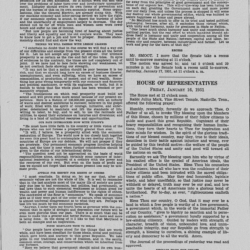 Prayer of the Guest Chaplain – Julius Mark (House of Representatives, 16 January 1931), p. 2370 “Prayer of the Guest Chaplain of the U.S. House of Representatives: Rabbi Julius Mark on 16 January 1931” is shared through the Open Siddur Project under the Creative Commons Zero (CC 0) Universal license a Public Domain dedication.
Aharon Varady (M.A.J.Ed./JTSA Davidson) is a volunteer transcriber for the Open Siddur Project. If you find any mistakes in his transcriptions, please let him know. Shgiyot mi yavin; Ministarot naqeni שְׁגִיאוֹת מִי־יָבִין; מִנִּסְתָּרוֹת נַקֵּנִי "Who can know all one's flaws? From hidden errors, correct me" (Psalms 19:13). If you'd like to directly support his work, please consider donating via his Patreon account. (Varady also translates prayers and contributes his own original work besides serving as the primary shammes of the Open Siddur Project and its website, opensiddur.org.)  Rabbi Dr. Julius Mark (1899-1977), from Cincinnati, Ohio, was a prominent Reform movement rabbi in the United States, leading Temple Emanu‐El in New York City. A graduate of the University of Cincinnati, he was ordained at HUC. He served two terms as president of the Synagogue Council of America, the national coordinating agency of the rabbinical and congregational bodies of Reform, Conservative and Orthodox Judaism. Before arriving at Temple Emanu-El, he served Temple Beth El (South Bend, Indiana, from 1922 to 1926), and the Vine Street Temple (Nashville, Tennessee, from 1926 to 1948). After Pearl Harbor in 1941, he volunteered as a military chaplain and served the US Navy. He became Jewish chaplain to the Pacific Fleet, rising to the rank of lieutenant commander on the staff of Fleet Adm. Chester W. Nimitz. During the war, Rabbi Mark wrote more than 10,000 letters to relatives of military personnel, both Jewish and non‐Jewish, whom he had met, reassuring those at home that their loved ones were fine. From 1949 to 1963, he was visiting professor of homiletics and practical theology at the New York School of the Hebrew Union College‐Jewish Institute of Religion. Five colleges and universities awarded Rabbi Mark honorary doctorates in law, divinity, humanities, sacred theology and humane letters. In addition, he received the Human Relations Award of the Methodist Church in 1963, the Gold Medallion for Courageous Leadership of the National Conference of Christians and Jews in 1966, the Clergyman of the Year award in 1969 from Religious Heritage of America and was awarded plaques by the Israel Bond organization in recognition of devoted support of Israel” in 1967, 1968 and 1970. Among his many posts through the years were life trustee of the Federation of Jewish Philanthropies, membership on the executive committee of the United States Commission for U.N.E.S.C.O., on the board of the National Conference of Christians and Jews, on the Eastern board of the Anti‐Defamation League, on the governing board of the World Union for Progressive Judaism, honorary vice chairman of the Lighthouse for the Blind, honorary president of the American Jewish Encyclopedia Society and member of the Council on Foreign Relations. His books included Behaviorism and Religion, The Rabbi Faces Some Big Dilemmas, The Art of Preaching and Reaching for the Moon. The Congressional Record is the official record of the proceedings and debates of the United States Congress, published by the United States Government Printing Office and issued when Congress is in session. Indexes are issued approximately every two weeks. At the end of a session of Congress, the daily editions are compiled in bound volumes constituting the permanent edition. Statutory authorization for the Congressional Record is found in Chapter 9 of Title 44 of the United States Code. ( wikipedia) Read a comment / Leave a comment (moderated) Works of related interest: |
![the Open Siddur Project [logo]](https://opensiddur.org/wp-content/uploads/2018/09/Open-Siddur-Project-Logo-2016.svg)




Leave a Reply