![the Open Siddur Project [logo]](https://opensiddur.org/wp-content/uploads/2018/09/Open-Siddur-Project-Logo-2016.svg)
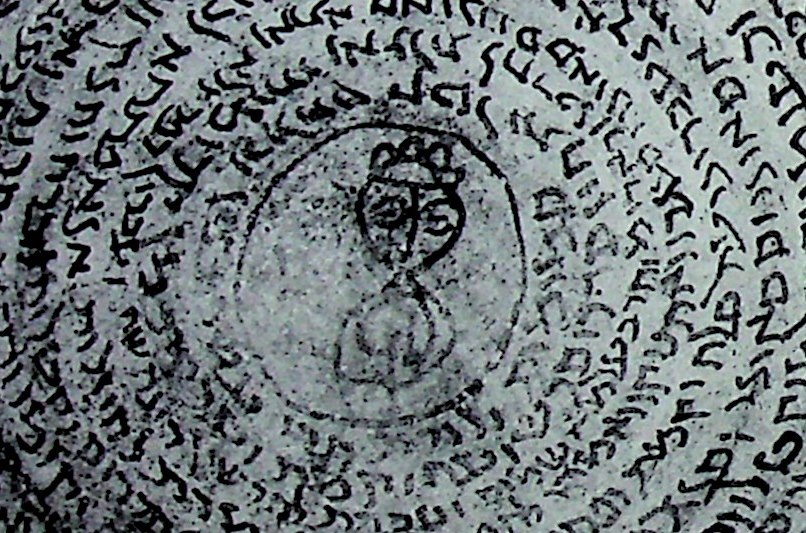
A friend of mine moving into a new apartment complained that his washing machine was infested by demons. So I made this amulet in the style of the Babylonian magic bowl corpus (specifically, mostly based on the form of JBA 26 (MS 1928/43)) to help him. Then I was asked to upload my amulet text here so I generalized it a bit, vocalized it, and added gender instructions. For maximum efficacy, the text should be written in a spiral pattern in the concave side of an unglazed ceramic bowl and buried face-down at the threshold of your apartment. That being said, my friend just printed the included image out, and the technician managed to find the problem pretty quickly.
Note: I’m using my original system for non-binary Aramaic declension.
| Source (Jewish Babylonian Aramaic) | Source (English) |
|---|---|
אָסוּתָא מִן־שְׁמַיָּא לְבֵיתֵיהּ / לְבֵיתַהּ / לְבֵיתוֹהוֹי |
Healing from heaven to the home, |
אִתְּתֵיהּ / אִתְּתַהּ / אִתְּתוֹהוֹי אִינְשֵׁיהּ / אִינְשַׁהּ / אִינְשׁוֹהוֹי זוּגֵיהּ / זוּגַהּ / זוּגוֹהוֹי |
Married: to a man: wife, to a woman: husband, to non-binary: partner, |
בְּרַתֵּיה / בְּרַתַּהּ / בְּרַתּוֹהוֹי בְּנָתֵיהּ / בְּנָתָהָא / בְּנָתוֹהוֹי בְּרֵיהּ / בְּרַהּ / בְּרוֹהוֹי בְּנוֹהִי / בְּנָהָא / בְּנוֹהוֹי |
with kids: one girl: daughter, multiple girls: daughters, one boy: son, multiple, not all girls: children,[1] Literally: sons, but in the plural used to refer to all children |
קִנְיָנֵיהּ / קִנְיָנַהּ / קִנְיָנוֹהוֹי |
possessions, |
וּמַכְבְּסֵיהּ / וּמַכְבְּסַהּ / וּמַכְבְּסוֹהוֹי וּמַחְשְׁבֵיהּ / וּמַחְשְׁבַהּ / וּמַחְשְׁבוֹהוֹי וּמַזְגְּנֵיהּ / וּמַזְגְּנַהּ / וּמַזְגְּנוֹהוֹי וּרְחִיקָּלֵיהּ / וּרְחִיקָּלַהּ / וּרְחִיקָּלוֹהוֹי וְתַנּוּרֵיהּ / וְתַנּוּרַהּ / וְתַנּוּרוֹהוֹי וּמַדְּפְסֵיהּ / וּמַדְּפְסַהּ / וּמַדְּפְסוֹהוֹי |
broken or malfunctioning appliance: laundry unit: and washer computer or wifi: and computer air conditioner: and AC phone: and telephone[2] The word for “telephone” here, רְחִיקָּל, is an original coinage, combining רְחִיק far and קָל sound, as a calque of telephone (literally: far-sound). The words for washer, computer, and AC are adapted from modern Hebrew, since they are all in forms with Aramaic parallels. Ovens existed in ancient Babylon too so I just usted the same word for that one. oven, stove, microwave: and oven printer, copier, scanner: and printer |
דְּפלוני בַּר־פלוני / בַּת־פלוני / בֵּי־פלוני |
of [name] son / daughter / house of [father’s name] |
חֲתִימָא וּמְחַתְּמָא בְּעִיזְקְתָא דְּיקוק צְבָאוֹת רָזָא כִּיסִי הָדָא חַד רָזָא וְחַד גְּזָרָא דְּגָזַר עֲלַיְכִי רִבִּי יְהוֹשֻׁעַ בֶּן־פְּרַחְיָא קְבֵלַת שַׁמְתָּא דִּתְשַׁמְּתֵי וּתְהוֹן בְּשַׁמְתָּא דְּרִבִּי יְהוֹשֻׁעַ בַּר־פְּרַחְיָא וְתֶהֱוֵי בְּשַׁמְתָּא בִּשְׁמֵיהּ דְּאַשְׁמְדַי מַלְכָּא דְשֵׁדֵי וְתֶהֱוֵי בְּשַׁמְתָּא בִּשְׁמֵיהּ דְּהוֹרְמִיז בַּר־לִילִּית וְתֶהֱוֵי בְּשַׁמְתָּא בִּשְׁמֵיהּ דְּרַב יוֹסֵף שֵׁדָא וְתֶהֱוֵי בְּשַׁמְתָּא בִּשְׁמֵיהּ דְּשִׁיבְתָּא וְתֶהֱוֵי בְּשַׁמְתָּא בִּשְׁמֵיהּ דְּמִשַּׁבְרִירֵי שַׁבְרִירֵי בְּרִירֵי רִירֵי יְרֵי רֵי וְתֶהֱוֵי בְּשַׁמְתָּא דְּכָל שֵׁדֵי וְחִישִּׁיכֵי לִילִין וְלֵילְיָתָא דּאִית בְּאַרְעָא דְּיִשְׂרָאֵל וּדְאִית בְּבָבֶל |
Sealed and signed with the signet of YQWQ of Hosts, this hidden secret is one secret and one decree that Rabbi Yehoshua ben Peraḥya decreed against you. You have received the ban that you will be banned, and ye will be in the ban of Rabbi Yehoshua bar Peraḥya, and you will be in the ban in the name of Asmodeus king of demons,[3] Referred to as such in Pesachim 110a and Gittin 68a, this demon is first mentioned in the book of Tobit, and probably derives from the Avestan phrase aēšma-daēva = wrath-demon. and you will be in the ban in the name of Hormiz son of Lilith,[4] See Bava Batra 73a:11. The name “Hormiz” probably derives from the Zoroastrian deity Ahura Mazda. This deity is, in Zoroastrian contet, seen as a good deity. Some texts of the Gemara read “Hormin,” which may derive from the Zoroastrian evil deity Ahriman. Lilith is in this context simply the primordial mother-demon. and you will be in the ban in the name of Rav Yosef the Demon,[5] See Pesachim 110a and Eruvin 43a. Yosef the Demon, who used his mystical powers to go from study hall to study hall, is not referred to as a rabbi in the Gemara but is so in the magic bowl literature, perhaps on account of being mixed up with the human Rav Yosef. and you will be in the ban in the name of Shivta,[6] See Taanit 20b, Yoma 77b, and Chullin 107b. Shivta is the demon that infests unwashed hands. and you will be in the ban in the name of Mishavriri Shavriri Briri Riri Iri Ri,[7] See Pesachim 112a and Avodah Zarah 12b. Mishavriri Shavriri Briri Riri Iri Ri, also known as Shavriri for short, is the demon of blindness. This is the source of the video game Elden Ring’s “Shabriri.” and you will be in the ban of all demons and darknesses, lilin and liliths, that are in the land of Israel and that are in Babylonia.[8] Here a synecdoche for the diaspora as a whole. |
חֲתִימָא וּמְחַתְּמָא אַסְקוּפָתַי דִּילִי פלוני בַּר־פלוני / פלונית בַּת־פלוני / פלונו בֵּי־פלוני דַּד בְּשֵׁיר שֵׁירָא בְּזוֹם זִימְרָא בְּעִיזְקְתָא דְּיׄוׄכׄבׄרׄ זׄיׄוׄאׄ מׄצׄפׄץׄ הׄשׄתׄפׄאׄ אׄכׄתׄרׄיׄאׄלׄ מִן־שֵׁדִין וּמִן־דֵּוִין וּמִין־לִלִּין כּוּלְּהוֹן מִן־שְׂעָרְהוֹן פלוני בַּר־פלוני / פלונית בַּת־פלוני / פלונו בֵּי־פלוני מִן־דְּמֵיהוֹן שַׁקְלִית לְחַתְּמְהוֹן וּמִן־גְּלֵדְהוֹן שַׁקְלִית לְרַקְּעָה בְּהוֹן שְׁבָע שְׁבָע נְקִיט צוּצִיתֵיהּ |
Sealed and signed, my threshold, [name] son / daughter / house of [father’s name] pulled, bound with binding, chained with chain, with the signet of YWKBR ZYWʾ[9] A common divine name in the magic bowl literature. MṢPṢ HŠTPʾ[10] The divine name יהוה צבאות “The Cause of Hosts” in atbash cypher ʾKTRYʾL[11] See Berakhot 7a from demons and daevas and lilin all. From their hair — for [name] son / daughter / house of [father’s name] — from their blood I take for sealing them, and from their skin I take for patching them, seven, seven, its tendril seized! |
Source(s)


Notes
| 1 | Literally: sons, but in the plural used to refer to all children |
|---|---|
| 2 | The word for “telephone” here, רְחִיקָּל, is an original coinage, combining רְחִיק far and קָל sound, as a calque of telephone (literally: far-sound). The words for washer, computer, and AC are adapted from modern Hebrew, since they are all in forms with Aramaic parallels. Ovens existed in ancient Babylon too so I just usted the same word for that one. |
| 3 | Referred to as such in Pesachim 110a and Gittin 68a, this demon is first mentioned in the book of Tobit, and probably derives from the Avestan phrase aēšma-daēva = wrath-demon. |
| 4 | See Bava Batra 73a:11. The name “Hormiz” probably derives from the Zoroastrian deity Ahura Mazda. This deity is, in Zoroastrian contet, seen as a good deity. Some texts of the Gemara read “Hormin,” which may derive from the Zoroastrian evil deity Ahriman. Lilith is in this context simply the primordial mother-demon. |
| 5 | See Pesachim 110a and Eruvin 43a. Yosef the Demon, who used his mystical powers to go from study hall to study hall, is not referred to as a rabbi in the Gemara but is so in the magic bowl literature, perhaps on account of being mixed up with the human Rav Yosef. |
| 6 | See Taanit 20b, Yoma 77b, and Chullin 107b. Shivta is the demon that infests unwashed hands. |
| 7 | See Pesachim 112a and Avodah Zarah 12b. Mishavriri Shavriri Briri Riri Iri Ri, also known as Shavriri for short, is the demon of blindness. This is the source of the video game Elden Ring’s “Shabriri.” |
| 8 | Here a synecdoche for the diaspora as a whole. |
| 9 | A common divine name in the magic bowl literature. |
| 10 | The divine name יהוה צבאות “The Cause of Hosts” in atbash cypher |
| 11 | See Berakhot 7a |
“קמע למכשירים שבורים | Amulet bowl formula for exorcising broken or malfunctioning electrical appliances” is shared through the Open Siddur Project under the Creative Commons Attribution-ShareAlike (CC BY-SA) 4.0 International copyleft license.






Leave a Reply