![the Open Siddur Project [logo]](https://opensiddur.org/wp-content/uploads/2018/09/Open-Siddur-Project-Logo-2016.svg)
Note: This translation also uses the plural pronouns They/Their/Them to refer to God as a pluralis majestatis, and to avoid the implications of God being assigned a gender. (Find Ibn Ezra’s commentary on Genesis 1:1 for a discussion of the pluralis majestatis when referring to God.) All divine referents (pronouns, epithets, names) are rendered in unicase.
| Source (Hebrew) | Translation (German) | Translation (English) |
|---|---|---|
לְבַֽעַל הַתִּפְאֶֽרֶת | מְתַכֵּן רוֹם בַּזֶּֽרֶת מַעֲצִימִים אַדֶּֽרֶת | מַלְאֲכֵי הַשָּׁרֵת נוֹחִים לוֹ לְתִשְׁחֹֽרֶת | כַּהֲלָכָה וּמַסֹּֽרֶת וַאֲנִי שְׁחַרְחֹֽרֶת | תְּהִלָּה בְּפִי סוֹדָֽרֶת׃ |
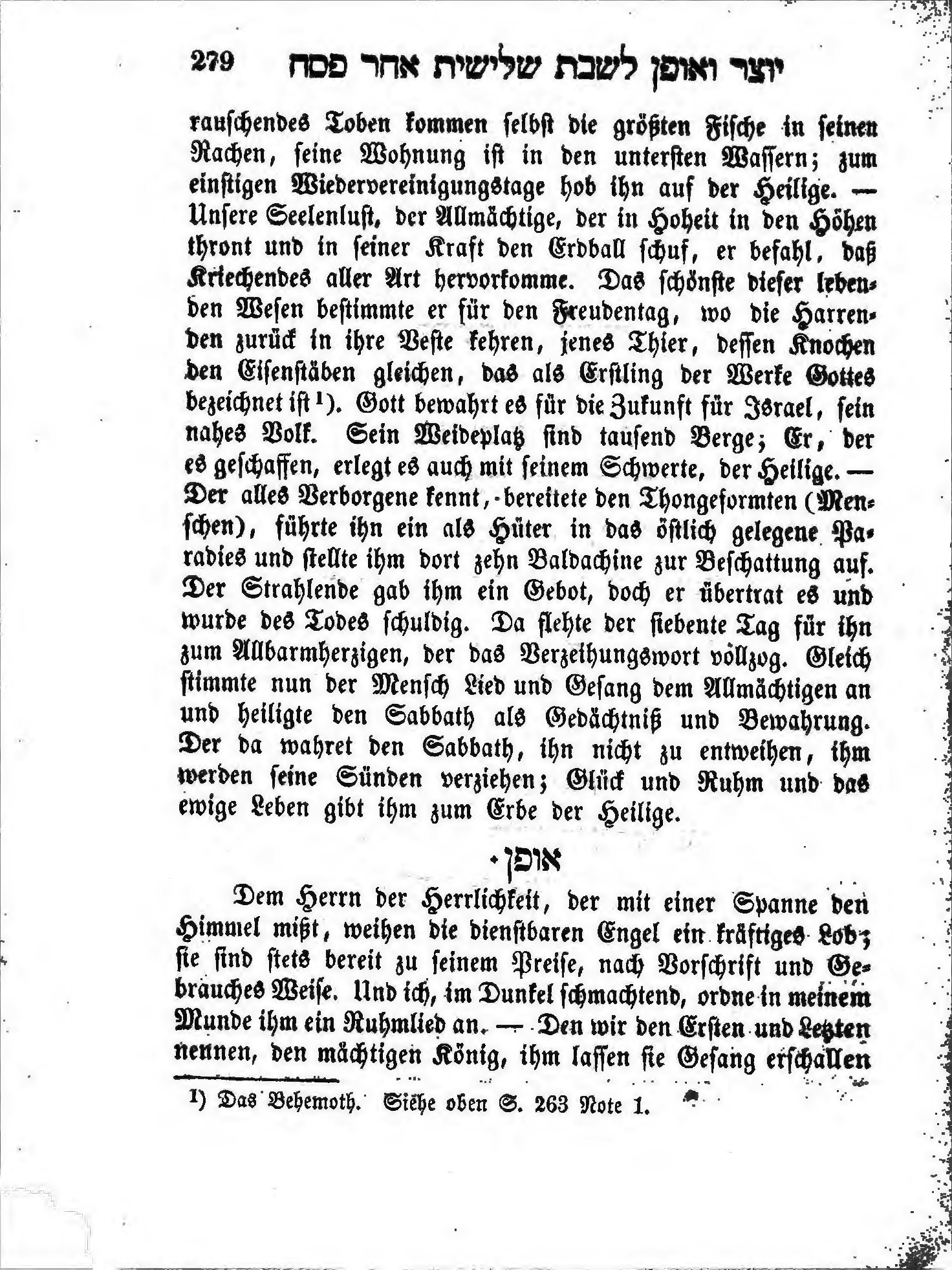
Dem Herrn der Herrlichkeit, der mit einer Spanne den Himmel mißt, weihen die dienstbaren Engel ein kräftiges Lob; sie sind stets bereit zu seinem Preise, nach Vorschrift und Gebrauches Weise. Und ich, im Dunkel schmachtend, ordne in meinem Munde ihm ein Ruhmlied an. |
To the Brilliant Master, by span measuring heights, mighty praise is offered by the ministering wights, ever ready to serve by law and by rites. And I, the dusky one,[1] Find Song of Songs 1:6. Each stanza ends with a reference to a self-description in Song of Songs. order praise that my mouth cites. |
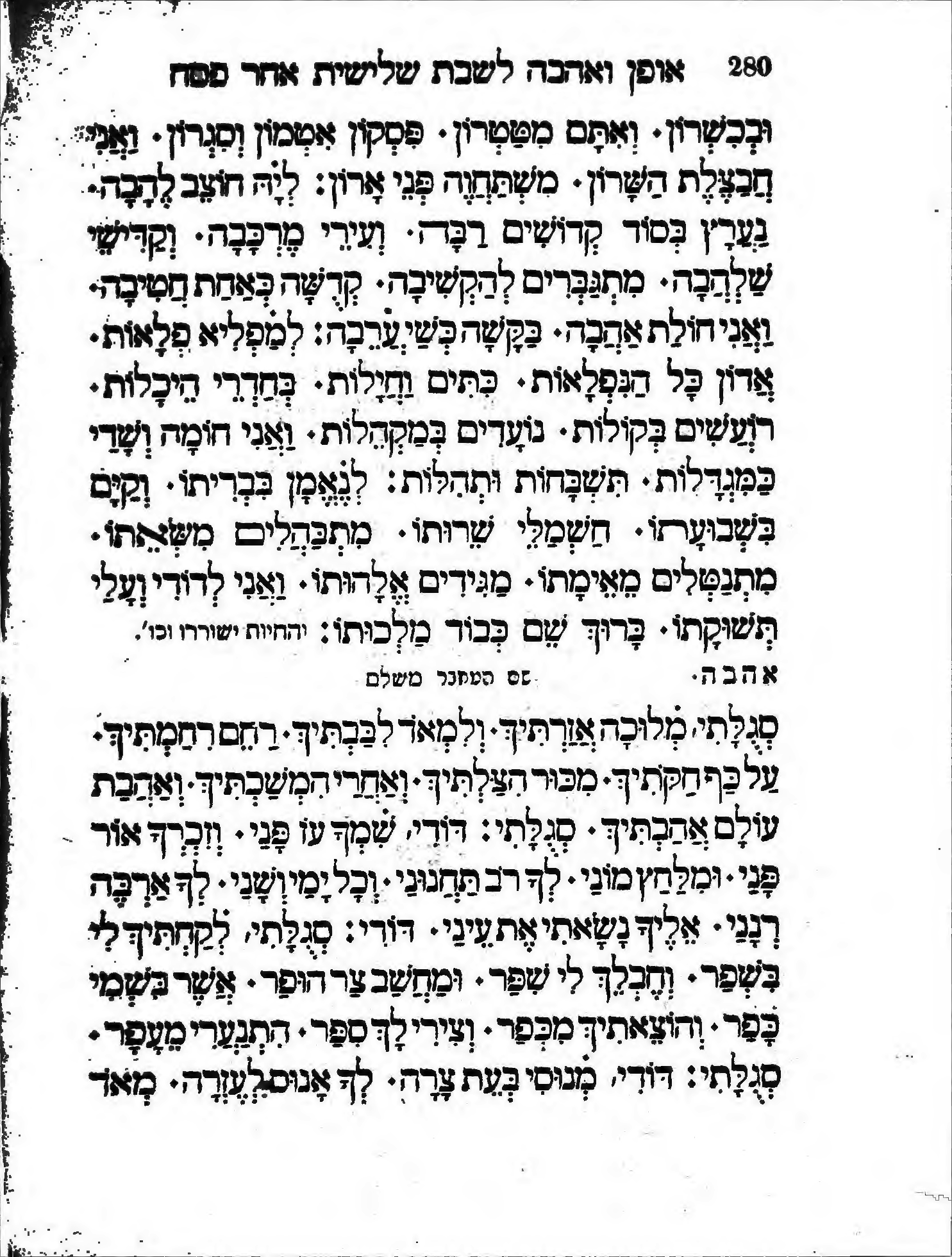
לְנִקְרָא רִאשׁוֹן וְאַחֲרוֹן | מֶֽלֶךְ אַדִּירִירוֹן מַבִּיעִים סֶֽלֶד וָרֹן | בְּיֹֽשֶׁר וּבְכִשְׁרוֹן וְאִתָּם מִטַּטְרוֹן | פִּסְקוֹן אִטְמוֹן וְסִגְרוֹן וַאֲנִי חֲבַצֶּֽלֶת הַשָּׁרוֹן | מִשְׁתַּחֲוֶה פְּנֵי אָרוֹן׃ |
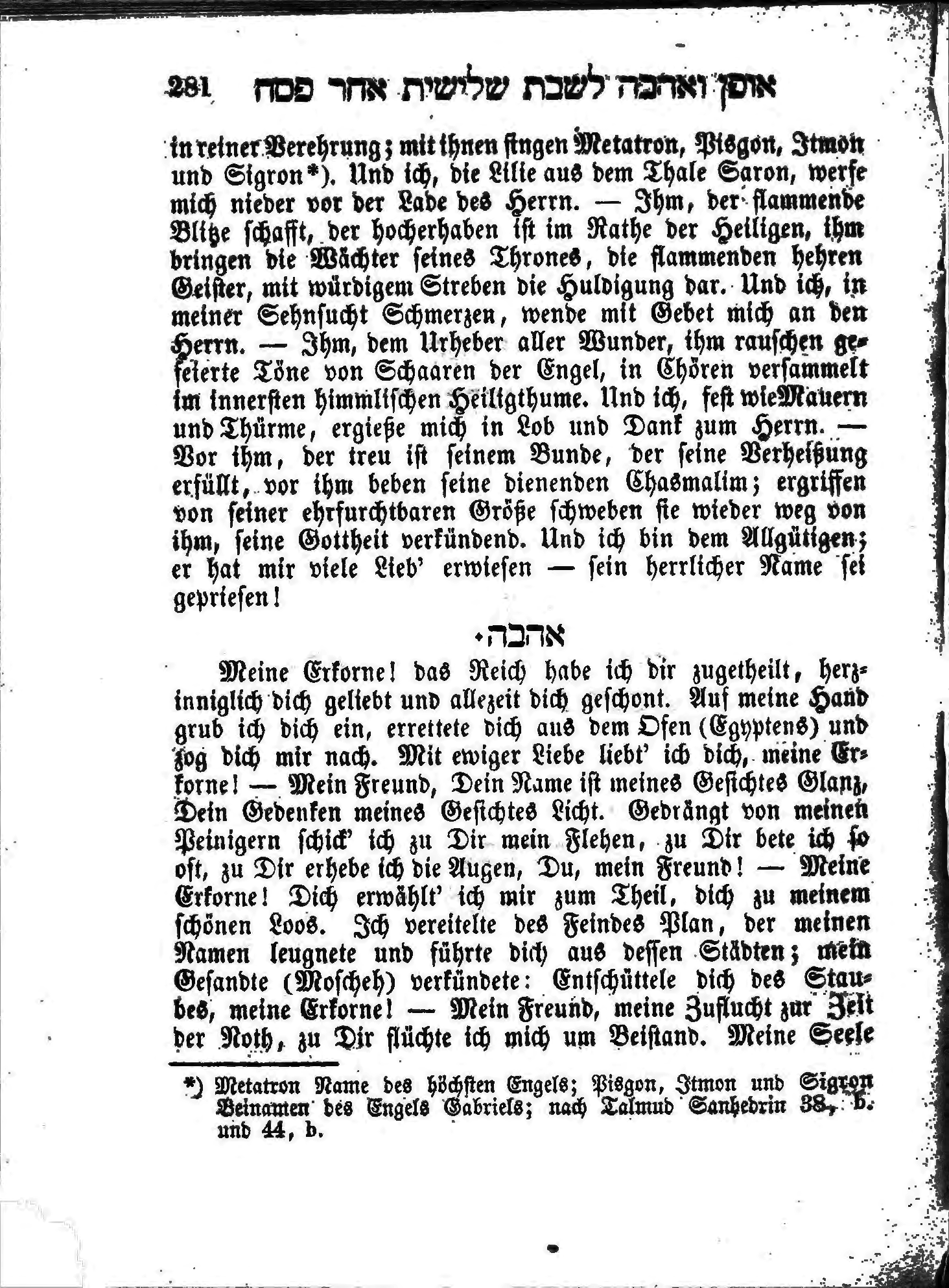
Den wir den Ersten und Letzten nennen, den mächtigen König, ihm lassen sie Gesang erschallen in reiner Verehrung; mit ihnen singen Metatron, Pisgon, Itmon und Sigron. Und ich, die Lilie aus dem Thale Saron, werfe mich nieder vor der Lade des Herrn. |
To the Named First and Last, the splendiferous King, they burst with melody, uprightly and properly they ring. And with them the Metatron, Splitter, Concealer, and Closer[2] Three names for Gabriel, listed in Sanhedrin 44b. sing. And I, the rose of Sharon,[3] Find Song of Songs 2:1 before the ark am bowing. |
לְיָהּ חוֹצֵב לֶהָבָה | נַ֭עֲרָץ בְּסוֹד־קְדֹשִׁ֣ים רַבָּ֑ה (תהלים פט:ח) וְעִירֵי מֶרְכָּבָה | וְקַדִּישֵׁי שַׁלְהֵבָה מִתְגַּבְּרִים לְהַקְשִׁיבָה | קְדֻשָּׁה כְּאַחַת חֲטִיבָה וַאֲנִי חוֹלַת אַהֲבָה | בַּקָּשָׁה כְּשַׁי עֲרֵבָה׃ |
Ihm, der flammende Blize schafft, der hocherhaben ist im Rathe der Heiligen, ihm bringen die Wächter seines Thrones, die flammenden Hehren Geister, mit würdigem Streben die Huldigung dar. Und ich, in meiner Sehnsucht Schmerzen, wende mit Gebet mich an den Herrn. |
To Yah, the Flame-Hewer, awesome in the holy council great (Psalms 89:8), and the watchers of the Chariot, and sanctifiers that conflagrate, mightily so that they be heard, sanctity as one they dictate. And I, love-sick,[4] Find Song of Songs 2:5 and Song of Songs 5:8 may my plea, like a gift, elate! |
לְמַפְלִיא פְלָאוֹת | אֲדוֹן כׇּל־הַנִּפְלָאוֹת כִּתִּים וַחֲיָלוֹת | בְּחַדְרֵי הֵיכָלוֹת רוֹעֲשִׁים בְּקוֹלוֹת | נוֹעָדִים בְּמַקְהֵלוֹת וַאֲנִי חוֹמָה וְשָׁדַי כַּמִּגְדָּלוֹת | תִּשְׁבָּחוֹת וּתְהִלּוֹת׃ |
Ihm, dem Urheber aller Wunder, ihm rauschen gefeierte Töne von Schaaren der Engel, in Chören versammelt im innersten himmlischen Heiligthume. Und ich, fest wie Mauern und Thürme, ergieße mich in Lob und Dank zum Herrn. |
To the Maker of Wonders, Master of all wondrous feats, troops and forces in the palaces’ suites, raise a great call, in choirs accrete. And I, a wall with breasts like towers,[5] Find Song of Songs 8:1 with praises and psalms entreat. |
לְנֶאֱמָן בִּבְרִיתוֹ | וְקַיָּם בִּשְׁבוּעָתוֹ חַשְׁמַלֵּי שֵׁרוּתוֹ | מִתְבַּהֲלִים מִשְּׂאֵתוֹ מִתְנַטְּלִים מֵאֵימָתוֹ | וּמַגִּידִים אֱלָהוּתוֹ וַאֲנִי לְדוֹדִי וְעָלַי תְּשׁוּקָתוֹ | בָּרוּךְ שֵׁם כְּבוֹד מַלְכוּתוֹ׃ |
Vor ihm, der treu ist seinem Bunde, der seine Verheißung erfüllt, vor ihm beben seine dienenden Chasmalim; ergriffen von seiner ehrfurchtbaren Größe schweben sie wieder weg von ihm, seine Gottheit verkündend. Und ich bin dem Allgütigen; er hat mir viele Lieb’ erwiesen — sein herrlicher Name sei gepriesen! |
To the never failing in Their covenant, fulfilling Their vow, the amber-angels serving Them tremble from going and kowtow. Seized by awe of Them, Their divinity they avow. And I, who is my Lover’s, who desires me:[6] Find Song of Songs 7:11 blessed be the glorious majestic name! |
Source(s)
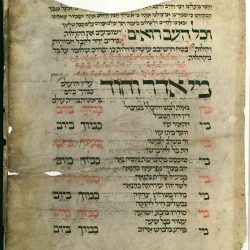
l’baal hatiferet (trans. Seligman Baer, Die Piyutim 1862), p. 280 l’baal hatiferet (trans. Seligman Baer, Die Piyutim 1862), p. 281 l’baal hatiferet (trans. Seligman Baer, Die Piyutim 1862), p. 282 l’baal hatiferet (trans. Seligman Baer, Die Piyutim 1862), p. 283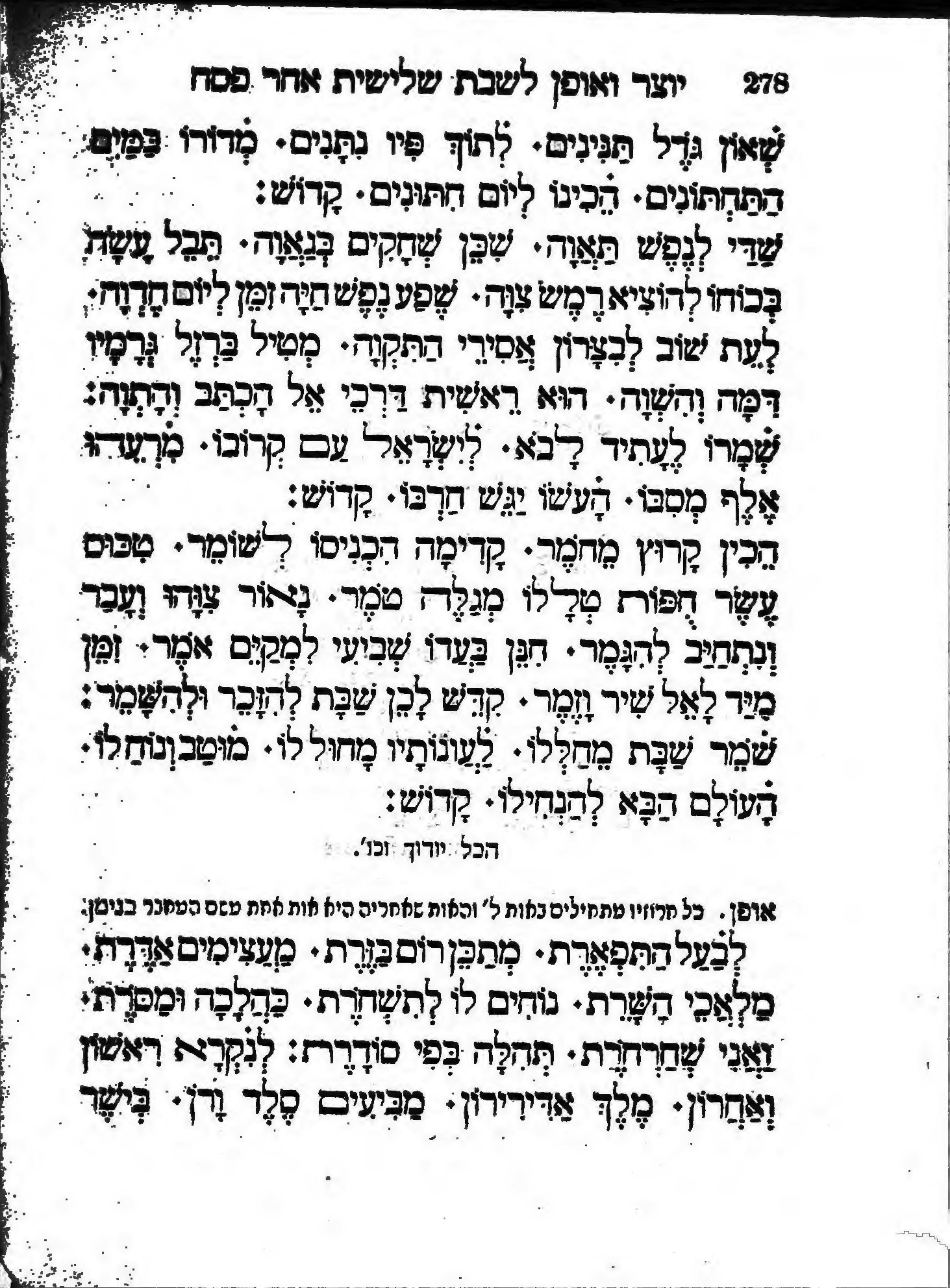
Notes
“לְבַֽעַל הַתִּפְאֶֽרֶת | Ləva’al haTiferet — an ofan piyyuṭ for Shabbat Bereshit (most commonly recited in Minhag Polin), by Rabbi Binyamin bar Zeraḥ” is shared through the Open Siddur Project under the Creative Commons Attribution-ShareAlike (CC BY-SA) 4.0 International copyleft license.







Leave a Reply