![the Open Siddur Project [logo]](https://opensiddur.org/wp-content/uploads/2018/09/Open-Siddur-Project-Logo-2016.svg)
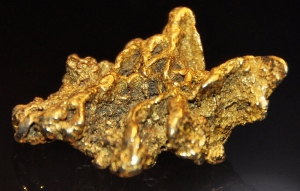
Known from its incipit, בָּרוּךְ שֶׁאָמַר "Barukh shèAmar" opens the pre-Shaḥarit Psuquei d'Zimra (Zemirot) service introducing the Psalms of the daily Hallel. It is thematically and stylistically connected to the centos of verses at the end of the daily Hallel, "Barukh [Hashem] l'Olam" and to the concluding prayer of Pesuqei d'Zimra, "Yishtabaḥ." The well-known short version (possibly abridged), famously contains 87 words, the numerical equivalent of the Hebrew word פז paz ("refined gold"). Extended variations for Shabbat and Festival days survive in the Farsi and Romaniote nusḥaōt.
The piyyut is traditionally attributed to the Anshei Knesset haGedolah (the Great Assembly, ca. 516-332 BCE, roughly corresponding to the early second Temple period and the Persian hegemony preceding that of Greece). While the phrase "Barukh shèAmar" is found in many early Rabbinic texts, the first known formulation containing the initial four (or five) blessings appears in Tanna debei Eliyahu Zuta, Seder Eliyahu Zuta 4:1 (final redaction in the 9th century CE). Saadya Gaon (882/892 – 942 CE) first instituted the recitation of Barukh She'amar for Shabbat, but in France, it became a custom to recite this prayer daily. Versions of Barukh She'amar appear in the manuscripts copies of Seder Rav Amram Gaon (d. 875 CE), with a number of variations. The most familiar form of Barukh shèAmar seems to derive from Sefer ha-Minhagot ("Book of Customs") by Rabbi Asher ben Shaul (haKohen) of Lunel (late 12th and early 13th centuries).


.jpg)