This is an archive of prayers, prayer-poems, and songs for the festival of Simḥat Torah, celebrated on the same day as Shemini Atseret in Erets Yisrael and on the second festival day of Shemini Atseret outside of Erets Yisrael.
![the Open Siddur Project [logo]](https://opensiddur.org/wp-content/uploads/2018/09/Open-Siddur-Project-Logo-2016.svg)
a community-grown, libre Open Access archive of Jewish prayer and liturgical resources — for those crafting their own prayerbooks and sharing the content of their practice
|
🡄 (Previous category) :: 📁 Shemini Atseret  Simḥat TorahFilter resources by Name Shmuel haDayan | Marcus Heinrich Bresslau | Central Conference of American Rabbis [CCAR] | Isaac Gantwerk Mayer | Moritz Mayer (translation) | Isaac Gantwerk Mayer (translation) | Isaac Gantwerk Mayer (transcription & naqdanut) | Yehoshua Heshil Miro | Penina Moïse | Andreas Rusterholz (transcription) | Honi Sanders (translation) | Akiva Sanders (translation) | Fanny Schmiedl-Neuda | Raphael Barukh Toledano | Unknown | Unknown (translation) | Aharon N. Varady (transcription) | Aharon N. Varady (translation) | Julia Watts Belser (translation) | Wikisource Contributors (transcription) | Ḳahal Ḳadosh Beth Elohim (Charleston, South Carolina) | Ḳaraite Jews of America Filter resources by Tag ABAB rhyming scheme | acrostic | Acrostic signature | phonetic alphabetic acrostic translation | Alphabetic Acrostic | anti-soporific | Aramaic | אתבש atbash | אין אדיר Ayn Adir | Bohemian Jewry | English vernacular prayer | epithalamion | הקפה ד׳ fourth haḳafah | German Jewry | German vernacular prayer | Har Sinai | חזק חזק ונתחזק ḥazaq ḥazaq venitḥazeq | חיזוק ḥizuq | hymns | hymns of creation | Jewish Women's Prayers | Judeo-Arabic | Nusaḥ haKaraim | Kavkazi Jewry | Maḥzor Aram Tsoba | mid-first millennium CE | Minhag Aleppo Musta'arabi | Mosheh Rabbenu | mourning | Needing Source Images | Nusaḥ Erets Yisrael | פיוטים piyyuṭim | פזמונים pizmonim | קינות Ḳinōt | פרשת בראשית parashat Bereshit | Simḥat Torah | South Carolina | stimulant | תרגום targum | תחינות teḥinot | teḥinot in English | Teḥinot in German | התורה the Torah | via negativa | זמירות zemirot | 7th century C.E. | 12th century C.E. | 17th century C.E. | 19th century C.E. | 20th century C.E. | 21st century C.E. | 45th century A.M. | 50th century A.M. | 54th century A.M. | 56th century A.M. | 57th century A.M. | 58th century A.M. Filter resources by Category During the Aliyot | Parashat Yitro | Rosh haShanah la-Melakhim | Seudat Leil Shabbat | Shavuot | Shemini Atseret | Shiv'ah b'Adar | Engagements & Weddings Filter resources by Language Filter resources by Date Range
Stable Link:
https://opensiddur.org/index.php?cat=6787
Associated Image: 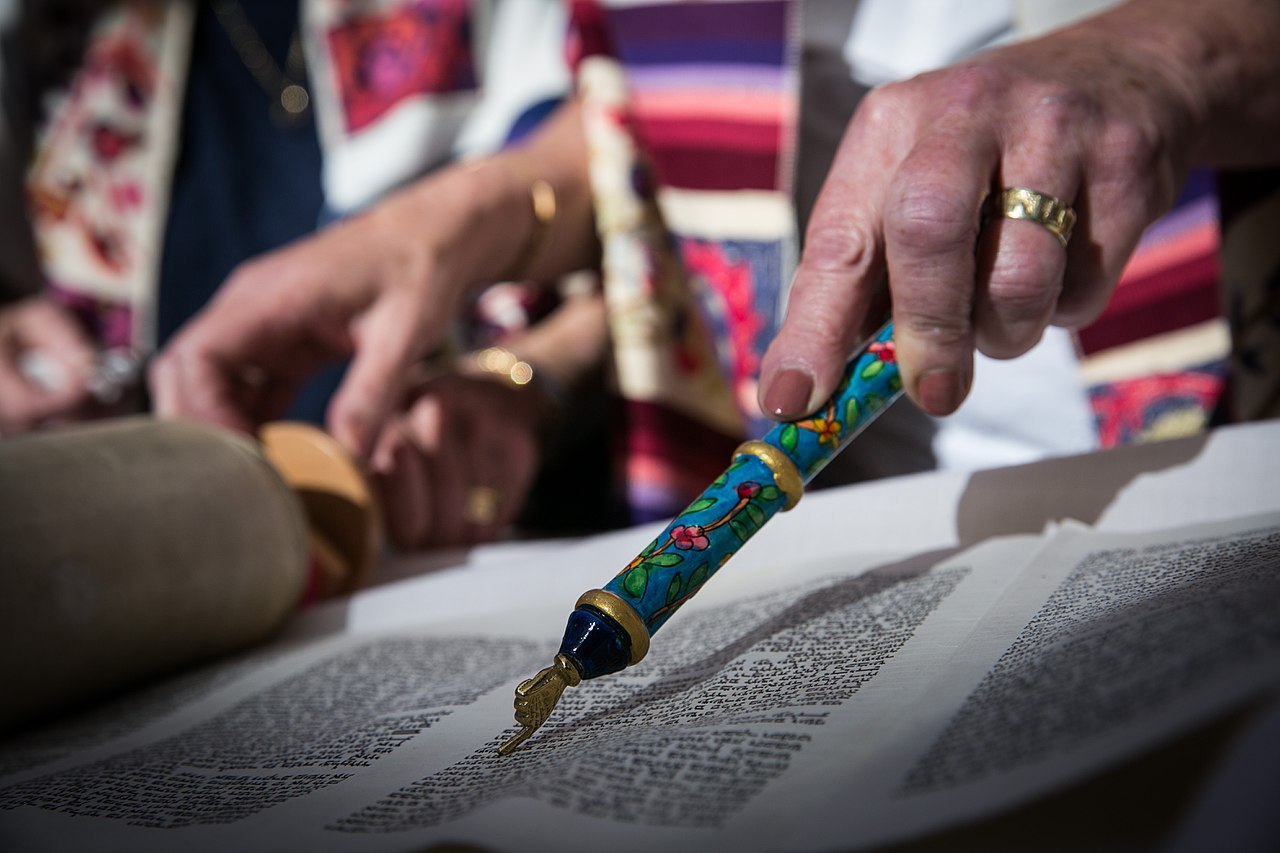
Torah reading by women (credit: Yochi Rappeport, license: CC BY-SA) (This image is set to automatically show as the "featured image" in shared links on social media.)
Terms of Use:
Be a mentsch (a conscientious, considerate person) and adhere to the following guidelines:
Additional Notes:
Support this work:
The Open Siddur Project is a volunteer-driven, non-profit, non-commercial, non-denominational, non-prescriptive, gratis & libre Open Access archive of contemplative praxes, liturgical readings, and Jewish prayer literature (historic and contemporary, familiar and obscure) composed in every era, region, and language Jews have ever prayed. Our goal is to provide a platform for sharing open-source resources, tools, and content for individuals and communities crafting their own prayerbook (siddur). Through this we hope to empower personal autonomy, preserve customs, and foster creativity in religious culture. ויהי נעם אדני אלהינו עלינו ומעשה ידינו כוננה עלינו ומעשה ידינו כוננהו׃ (תהלים צ:יז) · "May the pleasantness of אדֹני our elo’ah be upon us; may our handiwork be established for us — our handiwork, may it be established." (Psalms 90:17) |


