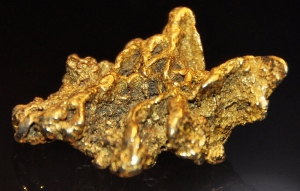
Known from its incipit, בָּרוּךְ שֶׁאָמַר "Barukh shèAmar" opens the pre-Shaḥarit Psuquei d'Zimra (Zemirot) service introducing the Psalms of the daily Hallel. It is thematically and stylistically connected to the centos of verses at the end of the daily Hallel, "Barukh [Hashem] l'Olam" and to the concluding prayer of Pesuqei d'Zimra, "Yishtabaḥ." The well-known short version (possibly abridged), famously contains 87 words, the numerical equivalent of the Hebrew word פז paz ("refined gold"). Extended variations for Shabbat and Festival days survive in the Farsi and Romaniote nusḥaōt. The piyyut is traditionally attributed to the Anshei Knesset haGedolah (the Great Assembly, ca. 516-332 BCE, roughly corresponding to the early second Temple period and the Persian hegemony preceding that of Greece). While the phrase "Barukh shèAmar" is found in many early Rabbinic texts, the first known formulation containing the initial four (or five) blessings appears in Tanna debei Eliyahu Zuta, Seder Eliyahu Zuta 4:1 (final redaction in the 9th century CE). Saadya Gaon (882/892 – 942 CE) first instituted the recitation of Barukh She'amar for Shabbat, but in France, it became a custom to recite this prayer daily. Versions of Barukh She'amar appear in the manuscripts copies of Seder Rav Amram Gaon (d. 875 CE), with a number of variations. The most familiar form of Barukh shèAmar seems to derive from Sefer ha-Minhagot ("Book of Customs") by Rabbi Asher ben Shaul (haKohen) of Lunel (late 12th and early 13th centuries). Filter resources by Name Filter resources by Tag Filter resources by Category Filter resources by Language Filter resources by Date Range An early variation of the early piyyut Barukh shèAmar as found in Seder Rav Amram as attested in Bodleian Library Ms. Opp. Add. Qu. 28. Categories: Tags: Contributor(s): An early variation of the early piyyut Barukh shèAmar as found in Seder Rav Amram as attested in British Library Or. 1067, fol. 6v-7r. Categories: Tags: Contributor(s): An early variation of the early piyyut Barukh shèAmar as found in Seder Rav Amram as attested on fol. 4r of JTS MS 4074. Categories: Tags: Contributor(s): This English translation by Rabbi Zalman Schachter-Shalomi z”l of “Barukh Sh’amar,” was first published in his Siddur Tehillat Hashem Yidaber Pi (2009). Linear associations of this translation according to the nusaḥ ha-ARI z”l by Aharon Varady. Categories: Tags: Contributor(s): Barukh shèAmar for Shabbat and festivals, in the Old Persian rite, as recorded in MS Adler 23 ENA in the JTS Library. The Old Persian rite shows some fascinating unique linguistic features. The first thing that immediately strikes one is its tendency towards poetic extensions and doublings, even in texts (such as the Avot blessing) where most other rites are almost completely uniform. It also shows some nonstandard vocalizations that appear to be influenced by the Babylonian system of vocalization. In modern Persian communities the standard rite is a variation of the Sephardic rite used throught the Mizraḥi world, but this older rite with its unique facets deserves to be preserved as well. This Barukh shèAmar is an intricate rhyming acrostic chock full of Biblical references. Categories: Tags: Contributor(s): A full alphabetical acrostic version of the Barukh shèAmar prayer, part of the uniquely complex old Romaniote-rite Psuqei d-Zimra liturgy as found in as found in the 1523 Venice printing of the Maḥzor Romaniote. Categories: Tags: Contributor(s): A paraliturgical reflection of the prayer Barukh She’amar for a shame resilience practice. Categories: Tags: Contributor(s): |
![the Open Siddur Project [logo]](https://opensiddur.org/wp-content/uploads/2018/09/Open-Siddur-Project-Logo-2016.svg)


.jpg)