This is an archive of extra-canonical (deuterocanonical) compositions from the period of the Second Temple.
⤷ You are here:
👂︎ Liturgical Readings, Sources, and Cantillation —⟶ Meḳorot (Sources) —⟶ Non-canonical Works —⟶ Exoteric —⟶ Second Temple Period 📁 Midrash Aggadah :: (Next Category) 🡆 Second Temple PeriodThis is an archive of extra-canonical (deuterocanonical) compositions from the period of the Second Temple. Filter resources by Name Mattai ben Alphaeus haLevi | Titus Flavius Josephus | Barukh ben Neriyah | Yeraḥmiel ben Shlomo | Shimon ben Yeshua ben Eliezer ben Sira | David ben Yishai (traditional attribution) | Morrison David Bial | Paltiel Birnbaum (translation) | Robert Henry Charles (translation) | Epictetus the Stoic | Jacques Faïtlovitch (translation) | Seckel Isaac Fränkel (translation) | Moses Gaster | Shem Tov ibn Shaprut (translation) | Avraham Kahana (Hebrew translation) | Mordecai Kaplan | Ralph Marcus (translation) | Isaac Gantwerk Mayer (transcription & naqdanut) | Isaac Gantwerk Mayer (translation) | Septuagint/ⅬⅩⅩ (translation) | Theodotion (translation/Greek) | Emmanuel Tov (Hebrew reconstruction) | Unknown | Aharon N. Varady (transcription) | Jospeh Ziegler (translation) | Jason of Cyrene Filter resources by Tag 1st century CE | 39th century AM | acrostic | Alphabetic Acrostic | Angels | anti-predatory | Antiquity | apocryphal psalms | Aramaic | assassination | Beta Esrael | Biblical Women | Cairo Geniza | captive animals | captives | cemetery prayers | Classical Antiquity | combating anti-Jewish oppression | Daniel | Dead Sea Scrolls | dedications and consecrations | deuterocanonical works | dragons | dreams | early Judaism | Ecclesiasticus | English Translation | ארץ ישראל Erets Yisrael | Ethiopian Jewry | exile | חבקוק Ḥabaquq | חנוך Ḥanokh (Enoch) | Hebrew translation | התבודדות hitbodedut | hymns of creation | iconoclastic | Jewish Antiquities | Jewish Women's Prayers | Jews of Alexandria | Judaean Desert Scrolls | kindling | Lord's Prayer | Maccabean Revolt | המקבים Maccabees | Mar'eh Kohen | martyrdom | Mäṣḥäf Ḳədus | military | Mosheh Rabbenu | mourning | מוסר mussar | mytho-historical chronicles | Needing Vocalization | נר תמיד ner tamid | parabiblical aggadah | Openers | polyglot | pre-rabbinic judaism | Psalms 151 | Psalms 152 | Psalms 153 | pseudepigrapha | קפיצת הדרך ḳfitsat haderekh | reconstructed text | self-sacrifice | sexual predation | שבת נחמו Shabbat Naḥamu | Stoicism | Syriac | המזבח the Mizbe'aḥ | the Pit | ציון Tsiyon | wisdom | Yeshayahu | יובל Yovel Jubilee | 2nd century B.C.E. | 1st century C.E. | 36th century A.M. | 37th century A.M. | 38th century A.M. | 39th century A.M. Filter resources by Category Extracanonical Megillot | Ḥanukkah Readings | Rosh Ḥodesh Iyyar (אִיָּר) | Nittel Nacht Readings | Parashat Ḥuqat | Pedagogical Essays on Jewish Prayer | Rosh Ḥodesh Readings | Shavuot Readings | Shiv'ah b'Adar Readings | Tsom Gedalyah Readings | Yom Kippur | Yom Niqanor Readings Filter resources by Language Filter resources by Date Range Resources filtered by COLLABORATOR: “Aharon N. Varady (transcription)” (clear filter) Sorted Chronologically (old to new). Sort most recent first? Selected verses from the book of ben Sira for a Seliḥot service Categories: Tags: 2nd century B.C.E., 36th century A.M., Cairo Geniza, Classical Antiquity, deuterocanonical works, Ecclesiasticus, Jews of Alexandria, מוסר mussar, wisdom Contributor(s): A mytho-historical chronicle of the story of humanity and Israel up until the Maccabean revolt depicted as a fable through a dream vision of Ḥanokh. Categories: Tags: 2nd century B.C.E., 36th century A.M., anti-predatory, deuterocanonical works, early Judaism, חנוך Ḥanokh (Enoch), mytho-historical chronicles, pre-rabbinic judaism Contributor(s): 💬 בן סירא מב:כא-מג:לא | ben Sira 42:21-43:31, a hymn of creation translated by Rabbi Mordecai KaplanEcclesiasticus (ben Sira) 42:21-43:31 is presented as “God the Lord of Nature” in The Sabbath Prayer Book of Rabbi Mordecai Kaplan (The Reconstructionist Foundation 1945), p. 376-372 in the Supplements subsection, “God in Nature.” The text of Ben Sira used here differs in places found in other manuscripts. Categories: Tags: 2nd century B.C.E., 36th century A.M., Classical Antiquity, deuterocanonical works, Ecclesiasticus, hymns of creation, Jews of Alexandria, Openers Contributor(s): The story of Shoshanah & the Elders, according to the text of Theodotion translated into Biblical Hebrew. The story of Bel and the Dragon according to the text of Theodotion, translated into biblical Hebrew. Categories: Tags: anti-predatory, Antiquity, captive animals, captives, deuterocanonical works, dragons, חבקוק Ḥabaquq, iconoclastic, Jewish Antiquities, קפיצת הדרך ḳfitsat haderekh, the Pit Contributor(s): Selections from 1 Maccabees, 2 Maccabees, and Pesiqta Rabbati which inform the story of Ḥanukkah: the desecration and re-dedication of the Temple (especially as it relates to Sukkot and the Brumalia), divine intervention in the Maccabean battles, and the Rekindling of the Sacred Fire. Categories: Tags: 2nd century B.C.E., 37th century A.M., Angels, Classical Antiquity, combating anti-Jewish oppression, dedications and consecrations, kindling, Maccabean Revolt, המקבים Maccabees, military, נר תמיד ner tamid, המזבח the Mizbe'aḥ Contributor(s): The poetic portion of the deuterocanonical work, Barukh, in Greek with English translation. Categories: Tags: 2nd century B.C.E., 37th century A.M., Classical Antiquity, deuterocanonical works, early Judaism, exile, שבת נחמו Shabbat Naḥamu, wisdom Contributor(s): The book of Barukh (also, Baruch and Barouch) in its reconstructed Hebrew vorlage from verse 1:1 till 3:8. Categories: Tags: Contributor(s): It is challenging to think of how to mark Nicanor Day, as it remains at a disadvantage, not only on years when it conflicts with Ta’anit Esther but on all years since it has no mitzvot. This is probably the main reason that, unlike Chanukah and Purim, it was lost to Jewish practice for more than a thousand years. Nevertheless, we do have its megillah, which has been translated into Hebrew and English. Perhaps, if we start reading chapters 13-15 of 2 Maccabees, even just to ourselves, on the 13 of Adar, we can begin to resurrect a holiday that was celebrated and instituted by Judah Maccabee and his followers over two millennia ago, and which they envisioned would continue throughout Jewish History. With the return of Jews to Israel and Jewish sovereignty to Jerusalem, I believe it is about time. A rabbinic Hebrew translation of the “Lord’s Prayer.” A short discourse on the necessity for prayer by the Stoic philosopher, Epictetus. Categories: Tags: Contributor(s): The story of Gedaliah as recorded by Josephus in his Jewish Antiquities. Daniel’s battle with the Dragon, one of the apocryphal Additions to Daniel, is affixed to the end of the book in the Septuagint. The editor has here included a new vocalized and cantillated edition of the Aramaic text preserved in the 12th century Divrei Yeraḥmiel (Oxford Bodleian Heb d.11 transcribed by Rabbi Dr. Moses Gaster). The language of this passage is an odd synthesis of Targumic, pseudo-Biblical Aramaic, and even some Syriac forms, so the editor’s vocalization is aiming for a happy medium of all the possibilities. (In several locations Divrei Yeraḥmiel uses incorrect Hebrew-specific forms, probably due to scribal error. These are here marked as a qere-ketiv split.) Categories: Tags: anti-predatory, Antiquity, Aramaic, captive animals, captives, deuterocanonical works, dragons, חבקוק Ḥabaquq, iconoclastic, Jewish Antiquities, קפיצת הדרך ḳfitsat haderekh, the Pit Contributor(s): The story of Daniel and the dragon held captive by the neo-Babylonians found in Aramaic in the Divrei Yeraḥmiel (the Chronicles of Jeraḥmeel, Oxford Bodleian Heb d.11). Categories: Tags: anti-predatory, Antiquity, Aramaic, captive animals, captives, deuterocanonical works, dragons, חבקוק Ḥabaquq, iconoclastic, Jewish Antiquities, קפיצת הדרך ḳfitsat haderekh, the Pit Contributor(s): The prayer of Azaryah and his song of praise with Ḥananyah, and Mishael from within the Furnace (also known as “the song of the three holy children”) found in Aramaic in the Divrei Yeraḥmiel (the Chronicles of Jeraḥmeel, Oxford Bodleian Heb d.11). Categories: Tags: Contributor(s):
Stable Link:
https://opensiddur.org/index.php?cat=3404
Associated Image:
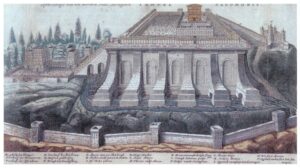
Dirk van Santen and the Keur Bible New Insights into Jacob Judah (Arye) Leon Templo's Model Temple, p. 9 (This image is set to automatically show as the "featured image" in shared links on social media.)
Terms of Use:
Be a mentsch (a conscientious, considerate person) and adhere to the following guidelines:
Additional Notes:
Support this work:
The Open Siddur Project is a volunteer-driven, non-profit, non-commercial, non-denominational, non-prescriptive, gratis & libre Open Access archive of contemplative praxes, liturgical readings, and Jewish prayer literature (historic and contemporary, familiar and obscure) composed in every era, region, and language Jews have ever prayed. Our goal is to provide a platform for sharing open-source resources, tools, and content for individuals and communities crafting their own prayerbook (siddur). Through this we hope to empower personal autonomy, preserve customs, and foster creativity in religious culture. ויהי נעם אדני אלהינו עלינו ומעשה ידינו כוננה עלינו ומעשה ידינו כוננהו׃ (תהלים צ:יז) · "May the pleasantness of אדֹני our elo’ah be upon us; may our handiwork be established for us — our handiwork, may it be established." (Psalms 90:17) | ||
Sign up for a summary of new resources shared by contributors each week
![]() ![]() |