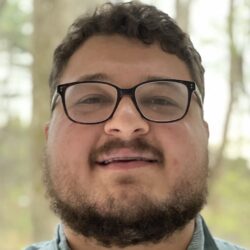
From a family of musicians, Isaac Gantwerk Mayer believes that creative art is one of the most powerful ways to get in touch with the divine. He composes music and poetry in Hebrew and English. (He also translates and authors his own original works.) Isaac runs a Jewish music transcription service, which will transcribe and set any Jewish music in any language, recorded or written. Contact his service on Facebook or via his music blog.
Filter resources by Category
🇺🇸 Abraham Lincoln's Birthday Readings | Addenda | Additional Fast Days | After the Aliyot | Aqédat Yitsḥaq | 🌐 Armistice Day Readings | Arvit l'Shabbat | Asarah b'Tevet | Asarah b'Tevet Readings | Rosh Ḥodesh Av (אָב) | Barkhu | Barukh shèAmar | Before the Aliyot | Blessings After Eating | Birkhot haTorah | Tehilim Book 3 (Psalms 73–89) | Congregation & Community | the Dry Season (Spring & Summer) | Earthquakes & Tsunamis | Epidemics & Pandemics | Erev Pesaḥ | Erev Shabbat | Extracanonical Megillot | Ḥabaquq | Pesaḥ Yamei Ḥag | Pesaḥ Readings | Ḥag haBanot (Eid el Benat) Readings | Ḥanukkah | Ḥanukkah Readings | Holocaust & Genocide Memorial Day Readings | Imminent Communal Danger & Distress | Incantations, Adjurations, & Amulets | Rosh Ḥodesh Iyyar (אִיָּר) | 🇺🇸 Juneteenth (Emancipation Day) Readings | Ḳaddish | Learning, Study, and School | Magid | Melakhim (Kings) | Midrash Aggadah | Mimouna | Seder Mimouna | Modern Miscellany | Morning Seliḥot | Motsaei Shabbat | Nirtsah | Rosh Ḥodesh Nisan (נִיסָן) | Nittel Nacht Readings | Parashat b'Shalaḥ | Parashat Éqev | Parashat Ḥuqat | Parashat Noaḥ | Parashat va'Etḥanan | Parashat Vayera | Parashat Yitro | Haggadot for the Seder Leil Pesaḥ | 7th Day of Pesaḥ | 🌐 π Day Readings | Psuqei d'Zimrah/Zemirot l'Shabbat ul'Yom Tov | Purim | Purim Readings | Purim Sheni | Purim Sheni Readings | Ḳadesh | Qedushah | Repenting, Resetting, and Reconciliation | Rosh haShanah (l’Maaseh Bereshit) | Rosh haShanah la-Behemah Readings | Rosh haShanah la-Ilanot (Tu biShvat) | Second Temple Period | Seder haTefilot laTaaniyot | Seder intro | Sefirat ha-Omer | Seudat Leil Shabbat | Seudat Purim | Shabbat haGadol | Shabbat Məvorkhim | Musaf l'Shabbat | Shabbat Readings | Shaḥarit l'Shabbat ul'Yom Tov | Shavuot | Shavuot Readings | Shemini Atseret | Shemini Atseret Readings | Shir haShirim (the Song of Songs, Canticles) | Shiv'ah Asar b'Tamuz | Shiv'ah b'Adar | Sigd Festival | Simḥat Torah | Khaf Sivan | Torah Study | Symbolic Foods | 🤦︎ Taḥanun (Nefilat Apayim) | Tishah b'Av | Tishah b'Av Readings | Rosh Ḥodesh Tishrei (תִּשְׁרֵי) | Engagements & Weddings | Well-being, health, and caregiving | the Wet Season (Fall & Winter) | Labor, Fulfillment, and Parnasah | Yaḥats | 🇮🇱 Yom ha-Atsma'ut Readings | Yom haḲeshet (27 Iyyar) Readings | Yom Kippur | Yom Kippur Readings | Yom Meturgeman | Yom Simḥat Kohen | Yonah | Yotser Or
Filter resources by Tag
Filter resources by Name
Filter resources by Language
Filter resources by Date Range
Contributed by:
Isaac Gantwerk Mayer (translation), Isaac Gantwerk Mayer (transcription & naqdanut), David ben Aharon ibn Ḥassin
A piyyut of the 18th century by R. David Ḥassin, one of the greatest composers of Morocco. In this piyyut, dedicated to the city of Tiberias and recounting its praises, we tour Tiberias and the graves of the tannaim and amoraim there, and come to the place of Maimonides’ burial according to tradition. From the dead, the composer moves on to tell the prose of the living – R. Ḥayyim Abulˁafia, who renewed Jewish settlement in Tiberias to where he had moved with his students in the year 5500 [1740], doing much to revitalize the Jewish settlement and build the city, for which R. David Ḥassin praises and blesses him at the conclusion of the poem. This poem was very beloved and merited widespread circulation, and is found in poetry books of many different Mizraḥi communities. This poem has also merited a number of imitations and adaptations, testifying to its great popularity. The most well-known imitation is a poem by the Israeli diaspora-emissary R. Eliyahu Ḥazzan, who arrived at Morocco, came across this song, and composed an imitation, also called “As Every Day I Hope” — except R. Eliyahu Ḥazzan’s song is dedicated to Jerusalem and tours around it.
Contributed by:
Isaac Gantwerk Mayer (translation), Isaac Gantwerk Mayer (transcription & naqdanut), Unknown
There are many different versions of this beloved Ladino pizmon for Havdalah. This one is found in Tefilat Imanuel, published in Vienna in 1924.
Contributed by:
Isaac Gantwerk Mayer (transcription & naqdanut), Isaac Gantwerk Mayer (translation), Saadiah ben Yosef Gaon
It is somewhat well known that in the Italian rite, there are alternative texts for the first and third blessings of the evening Shemaˁ liturgy on Shabbat, texts which were rejected by Ashkenazi practice out of fear the community could become confused and recite them on weekdays. But these Shabbat-specific blessings, derived from the old Erets Yisrael rite and preserved in the siddur of Rav Saˁadia Gaon (RaSaG), are not alone! All the blessings of the Shabbat evening Shemaˁ service — as well as all the blessings of the Saturday night Motsaei Shabbat Shemaˁ service! — have unique poetic forms in RaSaG’s siddur. This part, the Saturday night rite, is part two of a two-part series posting these liturgical texts found in the siddur of — and approved of by — the gaon.
![the Open Siddur Project [logo]](https://opensiddur.org/wp-content/uploads/2018/09/Open-Siddur-Project-Logo-2016.svg)


