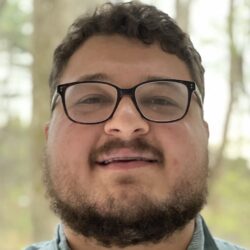
From a family of musicians, Isaac Gantwerk Mayer believes that creative art is one of the most powerful ways to get in touch with the divine. He composes music and poetry in Hebrew and English. (He also translates and authors his own original works.) Isaac runs a Jewish music transcription service, which will transcribe and set any Jewish music in any language, recorded or written. Contact his service on Facebook or via his music blog.
Filter resources by Category
🇺🇸 Abraham Lincoln's Birthday Readings | Addenda | Additional Fast Days | After the Aliyot | Aqédat Yitsḥaq | 🌐 Armistice Day Readings | Arvit l'Shabbat | Asarah b'Tevet | Asarah b'Tevet Readings | Rosh Ḥodesh Av (אָב) | Barkhu | Barukh shèAmar | Before the Aliyot | Blessings After Eating | Birkhot haTorah | Tehilim Book 3 (Psalms 73–89) | Congregation & Community | the Dry Season (Spring & Summer) | Earthquakes & Tsunamis | Epidemics & Pandemics | Erev Pesaḥ | Erev Shabbat | Extracanonical Megillot | Ḥabaquq | Pesaḥ Yamei Ḥag | Pesaḥ Readings | Ḥag haBanot (Eid el Benat) Readings | Ḥanukkah | Ḥanukkah Readings | Holocaust & Genocide Memorial Day Readings | Imminent Communal Danger & Distress | Incantations, Adjurations, & Amulets | Rosh Ḥodesh Iyyar (אִיָּר) | 🇺🇸 Juneteenth (Emancipation Day) Readings | Ḳaddish | Learning, Study, and School | Magid | Melakhim (Kings) | Midrash Aggadah | Mimouna | Seder Mimouna | Modern Miscellany | Morning Seliḥot | Motsaei Shabbat | Nirtsah | Rosh Ḥodesh Nisan (נִיסָן) | Nittel Nacht Readings | Parashat b'Shalaḥ | Parashat Éqev | Parashat Ḥuqat | Parashat Noaḥ | Parashat va'Etḥanan | Parashat Vayera | Parashat Yitro | Haggadot for the Seder Leil Pesaḥ | 7th Day of Pesaḥ | 🌐 π Day Readings | Psuqei d'Zimrah/Zemirot l'Shabbat ul'Yom Tov | Purim | Purim Readings | Purim Sheni | Purim Sheni Readings | Ḳadesh | Qedushah | Repenting, Resetting, and Reconciliation | Rosh haShanah (l’Maaseh Bereshit) | Rosh haShanah la-Behemah Readings | Rosh haShanah la-Ilanot (Tu biShvat) | Second Temple Period | Seder haTefilot laTaaniyot | Seder intro | Sefirat ha-Omer | Seudat Leil Shabbat | Seudat Purim | Shabbat haGadol | Shabbat Məvorkhim | Musaf l'Shabbat | Shabbat Readings | Shaḥarit l'Shabbat ul'Yom Tov | Shavuot | Shavuot Readings | Shemini Atseret | Shemini Atseret Readings | Shir haShirim (the Song of Songs, Canticles) | Shiv'ah Asar b'Tamuz | Shiv'ah b'Adar | Sigd Festival | Simḥat Torah | Khaf Sivan | Torah Study | Symbolic Foods | 🤦︎ Taḥanun (Nefilat Apayim) | Tishah b'Av | Tishah b'Av Readings | Rosh Ḥodesh Tishrei (תִּשְׁרֵי) | Engagements & Weddings | Well-being, health, and caregiving | the Wet Season (Fall & Winter) | Labor, Fulfillment, and Parnasah | Yaḥats | 🇮🇱 Yom ha-Atsma'ut Readings | Yom haḲeshet (27 Iyyar) Readings | Yom Kippur | Yom Kippur Readings | Yom Meturgeman | Yom Simḥat Kohen | Yonah | Yotser Or
Filter resources by Tag
Filter resources by Name
Filter resources by Language
Filter resources by Date Range
Resources filtered by COLLABORATOR: “Reuven Eliyahu Yisrael (translation)”
(clear filter)
Contributed by:
Isaac Gantwerk Mayer (transcription & naqdanut), Isaac Gantwerk Mayer (translation), Reuven Eliyahu Yisrael (translation), Ephraim bar Isaac of Regensburg
Im Afes Rova’ ha-Qen, an Aqedah (poetic retelling of the binding of Isaac) written by the 12th-century scholar R. Ephraim ben Isaac of Regensburg, is one of the few piyyuṭim of Ashkenazi origin to have a beloved place in the Sephardic liturgy. (Much more commonly things go the other way.) In current Sephardic practice it is recited every single weeknight in the month of Elul, as part of the seliḥot liturgy — as well as on the second day of Rosh haShanah. It is also recited in most Ashkenazi Seliḥot liturgies — in the Bohemian and Lithuanian customs on the fast of Gedaliah, and in the Polish custom on the fourth day of the ten days. Which means that not only is this Ashkenazi piyyuṭ beloved by Sephardim, it is substantially *more* beloved by Sephardim than it is by Ashkenazim! And as with any beloved piyyuṭ, it has been translated into the colloquial for all the people to appreciate its language. The following is not only the complete Hebrew text of Im Afes along with a new English translation, but also a rhyming Ladino translation composed by R. Reuven Eliyahu Yisrael, the spiritual leader of the Sephardic community of Craiova, Romania, and published in the aforementioned town in the year 1910 (in טראדוקסייון ליברי די לאס פואיזיאס איבראיקאאס). To demonstrate the techniques used by R. Yisrael in his translation, a literal translation of the Ladino, as well as a transcription into the Latin-script Aki Yerushalaim orthography, is also provided.
Contributed by:
Isaac Gantwerk Mayer (transcription & naqdanut), Isaac Gantwerk Mayer (translation), Reuven Eliyahu Yisrael (translation), Unknown
“ben Adam Mah Lekha Nirdam,” of unclear origin, is the opening piyyuṭ of the Sephardic seliḥot service every morning. Drawing a parallel between the literal slumber from which the petitioner has just awoken and the metaphorical slumber of sin, it serves as a fitting introduction to the early morning liturgy. As with any piyyuṭ in such a prominent place, of course, has been translated into the colloquial for all the people to appreciate its language. The following is not only the complete Hebrew text of Ben Adam Ma Lekha Nirdam along with a new English translation, but also a rhyming Ladino translation composed by R. Reuven Eliyahu Yisrael, the spiritual leader of the Sephardic community of Craiova, Romania, and published in the aforementioned town in the year 1910 (in טראדוקסייון ליברי די לאס פואיזיאס איבראיקאאס). To demonstrate the techniques used by R. Yisrael in his translation, a literal translation of the Ladino, as well as a transcription into the Latin-script Aki Yerushalaim orthography, is also provided.
![the Open Siddur Project [logo]](https://opensiddur.org/wp-content/uploads/2018/09/Open-Siddur-Project-Logo-2016.svg)


