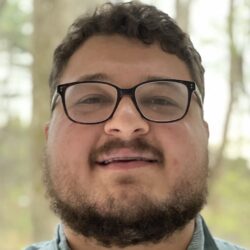
From a family of musicians, Isaac Gantwerk Mayer believes that creative art is one of the most powerful ways to get in touch with the divine. He composes music and poetry in Hebrew and English. (He also authors his own original works and transcribes Hebrew and Aramaic text, adding niqqud and t'amim as needed.) Isaac runs a Jewish music transcription service, which will transcribe and set any Jewish music in any language, recorded or written. Contact his service on Facebook or via his music blog.
Filter resources by Category
🇺🇸 Abraham Lincoln's Birthday (February 12th) | 🇺🇸 Abraham Lincoln's Birthday Readings | Addenda | Additional Fast Days | Additional Preparatory Prayers | After the Aliyot | Weekday Amidah | Aqédat Yitsḥaq | 🌐 Armistice Day Readings | Arvit l'Shabbat | Asarah b'Tevet | Asarah b'Tevet Readings | Ashrei | Rosh Ḥodesh Av (אָב) | Morning Baqashot | Barekh | Barkhu | Barukh shèAmar | Bedtime Shema | Before the Aliyot | Berakhot she'Asani | Blessings After Eating | Birkhot haTorah | Bnei (Bar/Bat) Mitsvah & Other Birthday Prayers | Tehilim Book 5 (Psalms 107–150) | Tehilim Book 4 (Psalms 90–106) | Tehilim Book 1 (Psalms 1–41) | Tehilim Book 3 (Psalms 73–89) | Tehilim Book 2 (Psalms 42–72) | Brit Milah & Simḥat Bat | 🇺🇸 National Brotherhood Week | Slavery & Captivity | Congregation & Community | Sefer Devarim (Deuteronomy) | the Dry Season (Spring & Summer) | 🇺🇸 Education and Sharing Day | Eikhah (Lamentations) | Epidemics & Pandemics | Erev Pesaḥ | Erev Shabbat | Extracanonical Megillot | Ezra-Neḥemiah | Pogroms & Genocide | 🇩🇪 Germany | Government & Country | Ḥabaquq | Pesaḥ Yamei Ḥag | Pesaḥ Readings | Ḥag haBanot (Eid el Benat) Readings | Ḥaggai | Hallel for Festivals & Rosh Ḥodesh | Hallel | Ḥanukkah | Ḥanukkah Readings | Hateful Intolerance, Prejudice, and Bigotry | Holocaust & Genocide Memorial Day Readings | Imminent Communal Danger & Distress | Incantations, Adjurations, & Amulets | 🇺🇸 Independence Day Readings | 🇮🇪 Ireland | Rosh Ḥodesh Iyyar (אִיָּר) | 🇺🇸 Juneteenth | 🇺🇸 Juneteenth (Emancipation Day) Readings | Ḳaddish | Learning, Study, and School | Magid | Rosh Ḥodesh Marḥeshvan (מַרְחֶשְׁוָן) | 🇮🇱 Medinat Yisra'el (the State of Israel) | Melakhim (Kings) | Midrash Aggadah | Midrash Halakhah | Mimouna | Seder Mimouna | Modern Miscellany | Morning Seliḥot | Motsaei Shabbat | Mourning | Mussar (Ethical Teachings) | Nirtsah | Rosh Ḥodesh Nisan (נִיסָן) | Nittel Nacht Readings | Parashat Bereshit | Parashat b'Shalaḥ | Parashat Devarim | Parashat Éqev | Parashat Ḥuqat | Parashat va'Etḥanan | Parashat Vayera | Parashat Yitro | Haggadot for the Seder Leil Pesaḥ | Pesaḥ | 7th Day of Pesaḥ | 🌐 π Day Readings | Psalm of the Day | Psalms 149 | Psalms 150 | Psuqei d'Zimrah/Zemirot l'Shabbat ul'Yom Tov | Purim | Purim Sheni | Purim Sheni Readings | Ḳabbalat Shabbat | Ḳadesh | Qedushah | Reading Schedules | Repenting, Resetting, and Reconciliation | Rosh haShanah (l’Maaseh Bereshit) | Rosh haShanah la-Behemah | Rosh haShanah la-Behemah Readings | Rosh haShanah la-Ilanot (Tu biShvat) | Tu biShvat Readings | Rosh haShanah la-Melakhim | Rosh Ḥodesh | Rosh Ḥodesh Readings | Rūt (Ruth) | Samaritan Prayerbooks | Saturday | Second Temple Period | Seder al-Tawḥid | Seder haTefilot laTaaniyot | Seder intro | Sefirat ha-Omer | Sefirat ha-Omer Readings | Seudat Leil Shabbat | Seudat Purim | Shabbat haGadol | Shabbat Kallah Readings | Shabbat Məvorkhim | Minḥah l'Shabbat | Musaf l'Shabbat | Shabbat Readings | Shaḥarit l'Shabbat ul'Yom Tov | Shabbat Siddurim | Social Justice, Peace, and Liberty | Shavuot | Shavuot Readings | Shemini Atseret | Shemini Atseret Readings | Sefer Shemot (Exodus) | Shir haShirim (the Song of Songs, Canticles) | Shirat ha-Yam | Shiv'ah Asar b'Tamuz | Shiv'ah b'Adar | Shiv'ah b'Adar Readings | Sigd Festival | Sigd Festival Readings | Simḥat Torah | Simḥat Torah Readings | Khaf Sivan | Special Haftarot | Torah Study | Sukkot | Symbolic Foods | Taanit Esther | 🤦︎ Taḥanun (Nefilat Apayim) | Tehilim (Psalms) | Terror | Tishah b'Av | Tishah b'Av Readings | Rosh Ḥodesh Tishrei (תִּשְׁרֵי) | 🌐 Transgender Day of Remembrance (November 20th) | 🌐 Transgender Day of Visibility (March 31st) | Travel | Tsom Gedalyah | Tu b'Av | 🇺🇸 Veterans Day Readings | War | Engagements & Weddings | Well-being, health, and caregiving | the Wet Season (Fall & Winter) | Labor, Fulfillment, and Parnasah | Yaḥats | Yeshayah (Isaiah) | Yirmiyah (Jeremiah) | Yishtabaḥ Shimkha | 🇮🇱 Yom ha-Atsma'ut (5 Iyyar) | 🇮🇱 Yom ha-Atsma'ut Readings | 🇮🇱 Yom haShoah (27 Nisan) | Yom Kippur | Yom Meturgeman | Yom Simḥat Kohen | Yotser Or
Filter resources by Tag
Filter resources by Name
Filter resources by Language
Filter resources by Date Range
Resources filtered by CATEGORY: “Psuqei d'Zimrah/Zemirot l'Shabbat ul'Yom Tov”
(clear filter)
Contributed by:
Isaac Gantwerk Mayer (transcription & naqdanut), Isaac Gantwerk Mayer (translation), Unknown, Shlomo haMelekh ben David, David ben Yishai (traditional attribution)
Tefilat haShir refers to an ancient (perhaps dating back to the Temple era!) custom of reciting the fifteen psalms of ascents (Psalms 120 to 134) before Psuqei d’Zimra. First identified as a unique segment of the Eretz-Yisrael rite by Prof. Ezra Fleischer z”l, this custom was so beloved by the Jews who followed the western rite that long after the rest of its prayer traditions were abandoned it was preserved by the Western-rite Jews of Cairo (see Vered Raziel-Kretzmer, “How Late was the Palestinian Rite Practiced in Egypt?” Tarbiz 85 [2018], heb.) Tefilat haShir was preserved in variant forms in several other communities. For instance, it is found in the Maḥzor Aram Ṣoba, published in 1560 for use of the Musta’aravi Jews of Aleppo. It is also found in the Krymchak variant of the Romaniote rite, also known as Minhag Kaffa. In both cases it would be recited exclusively on sabbaths and festivals. (Note that this was not the case in the old Eretz Yisrael rite, where it was a daily practice!) The Kaffa and Aram Ṣoba forms of the Tefilat haShir cycle are very similar, with a few differences in the introduction and the ending. Their core is the fifteen songs of ascents, interlaced with linking verses from elsewhere in Tanakh featuring a Leitwort (theme-word) related to the psalm. Both are included here, with color coding for substantial differences and footnotes to mark minor distinctions. In Minhag Kaffa, as printed in 1735, the Birkat haShir cycle is inserted after the morning Torah study cycle. In the Maḥzor Aram Ṣoba, it is the beginning of the service, the first thing recited in the synagogue after monring blessings, and consequently inserted before the Torah study cycle.
Contributed by:
Isaac Gantwerk Mayer (transcription & naqdanut), Isaac Gantwerk Mayer (translation), Unknown
A full alphabetical acrostic version of the Barukh shèAmar prayer, part of the uniquely complex old Romaniote-rite Psuqei d-Zimra liturgy as found in as found in the 1523 Venice printing of the Maḥzor Romaniote.
Contributed by:
Isaac Gantwerk Mayer (transcription & naqdanut), Isaac Gantwerk Mayer (translation), Unknown
Barukh shèAmar for Shabbat and festivals, in the Old Persian rite, as recorded in MS Adler 23 ENA in the JTS Library. The Old Persian rite shows some fascinating unique linguistic features. The first thing that immediately strikes one is its tendency towards poetic extensions and doublings, even in texts (such as the Avot blessing) where most other rites are almost completely uniform. It also shows some nonstandard vocalizations that appear to be influenced by the Babylonian system of vocalization. In modern Persian communities the standard rite is a variation of the Sephardic rite used throught the Mizraḥi world, but this older rite with its unique facets deserves to be preserved as well. This Barukh shèAmar is an intricate rhyming acrostic chock full of Biblical references.
Contributed by:
Johann Stephan Rittangel (Latin translation), Unknown, Aharon N. Varady (transcription), Isaac Gantwerk Mayer (translation)
The text of the prayer Nishmat Kol Ḥai in Hebrew with a Latin translation
Contributed by:
Johann Stephan Rittangel (Latin translation), Unknown, Aharon N. Varady (transcription), Isaac Gantwerk Mayer (translation)
The text of the short prayer ha-El b’Taatsumōt Uzekha in Hebrew with a Latin translation.
Contributed by:
Johann Stephan Rittangel (Latin translation), Unknown, Aharon N. Varady (transcription), Isaac Gantwerk Mayer (translation)
The text of the short prayer uv’Maqhalōt in Hebrew with a Latin translation.
Contributed by:
Johann Stephan Rittangel (Latin translation), Unknown, Aharon N. Varady (transcription), Isaac Gantwerk Mayer (translation)
The text of the short prayer Shokhen Ad in Hebrew with a Latin translation.
Contributed by:
the Mesorah (TaNaKh), Unknown, David ben Yishai (traditional attribution), Isaac Gantwerk Mayer (translation)
An English translation of Psalms 92 set side-by-side with the Masoretic text.
Contributed by:
the Mesorah (TaNaKh), Isaac Gantwerk Mayer (translation)
Psalms 136, translated into English by Isaac Gantwerk Mayer.
![the Open Siddur Project [logo]](https://opensiddur.org/wp-content/uploads/2018/09/Open-Siddur-Project-Logo-2016.svg)


