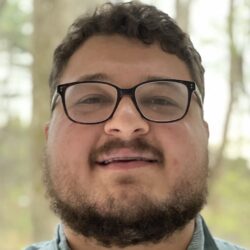
From a family of musicians, Isaac Gantwerk Mayer believes that creative art is one of the most powerful ways to get in touch with the divine. He composes music and poetry in Hebrew and English. (He also authors his own original works and transcribes Hebrew and Aramaic text, adding niqqud and t'amim as needed.) Isaac runs a Jewish music transcription service, which will transcribe and set any Jewish music in any language, recorded or written. Contact his service on Facebook or via his music blog.
Filter resources by Category
🇺🇸 Abraham Lincoln's Birthday (February 12th) | 🇺🇸 Abraham Lincoln's Birthday Readings | Addenda | Additional Fast Days | Additional Preparatory Prayers | After the Aliyot | Weekday Amidah | Aqédat Yitsḥaq | 🌐 Armistice Day Readings | Arvit l'Shabbat | Asarah b'Tevet | Asarah b'Tevet Readings | Ashrei | Rosh Ḥodesh Av (אָב) | Morning Baqashot | Barekh | Barkhu | Barukh shèAmar | Bedtime Shema | Before the Aliyot | Berakhot she'Asani | Blessings After Eating | Birkhot haTorah | Bnei (Bar/Bat) Mitsvah & Other Birthday Prayers | Tehilim Book 5 (Psalms 107–150) | Tehilim Book 4 (Psalms 90–106) | Tehilim Book 1 (Psalms 1–41) | Tehilim Book 3 (Psalms 73–89) | Tehilim Book 2 (Psalms 42–72) | Brit Milah & Simḥat Bat | 🇺🇸 National Brotherhood Week | Slavery & Captivity | Congregation & Community | Sefer Devarim (Deuteronomy) | the Dry Season (Spring & Summer) | 🇺🇸 Education and Sharing Day | Eikhah (Lamentations) | Epidemics & Pandemics | Erev Pesaḥ | Erev Shabbat | Extracanonical Megillot | Ezra-Neḥemiah | Pogroms & Genocide | 🇩🇪 Germany | Government & Country | Ḥabaquq | Pesaḥ Yamei Ḥag | Pesaḥ Readings | Ḥag haBanot (Eid el Benat) Readings | Ḥaggai | Hallel for Festivals & Rosh Ḥodesh | Hallel | Ḥanukkah | Ḥanukkah Readings | Hateful Intolerance, Prejudice, and Bigotry | Holocaust & Genocide Memorial Day Readings | Imminent Communal Danger & Distress | Incantations, Adjurations, & Amulets | 🇺🇸 Independence Day Readings | 🇮🇪 Ireland | Rosh Ḥodesh Iyyar (אִיָּר) | 🇺🇸 Juneteenth | 🇺🇸 Juneteenth (Emancipation Day) Readings | Ḳaddish | Learning, Study, and School | Magid | Rosh Ḥodesh Marḥeshvan (מַרְחֶשְׁוָן) | 🇮🇱 Medinat Yisra'el (the State of Israel) | Melakhim (Kings) | Midrash Aggadah | Midrash Halakhah | Mimouna | Seder Mimouna | Modern Miscellany | Morning Seliḥot | Motsaei Shabbat | Mourning | Mussar (Ethical Teachings) | Nirtsah | Rosh Ḥodesh Nisan (נִיסָן) | Nittel Nacht Readings | Parashat Bereshit | Parashat b'Shalaḥ | Parashat Devarim | Parashat Éqev | Parashat Ḥuqat | Parashat va'Etḥanan | Parashat Vayera | Parashat Yitro | Haggadot for the Seder Leil Pesaḥ | Pesaḥ | 7th Day of Pesaḥ | 🌐 π Day Readings | Psalm of the Day | Psalms 149 | Psalms 150 | Psuqei d'Zimrah/Zemirot l'Shabbat ul'Yom Tov | Purim | Purim Sheni | Purim Sheni Readings | Ḳabbalat Shabbat | Ḳadesh | Qedushah | Reading Schedules | Repenting, Resetting, and Reconciliation | Rosh haShanah (l’Maaseh Bereshit) | Rosh haShanah la-Behemah | Rosh haShanah la-Behemah Readings | Rosh haShanah la-Ilanot (Tu biShvat) | Tu biShvat Readings | Rosh haShanah la-Melakhim | Rosh Ḥodesh | Rosh Ḥodesh Readings | Rūt (Ruth) | Samaritan Prayerbooks | Saturday | Second Temple Period | Seder al-Tawḥid | Seder haTefilot laTaaniyot | Seder intro | Sefirat ha-Omer | Sefirat ha-Omer Readings | Seudat Leil Shabbat | Seudat Purim | Shabbat haGadol | Shabbat Kallah Readings | Shabbat Məvorkhim | Minḥah l'Shabbat | Musaf l'Shabbat | Shabbat Readings | Shaḥarit l'Shabbat ul'Yom Tov | Shabbat Siddurim | Social Justice, Peace, and Liberty | Shavuot | Shavuot Readings | Shemini Atseret | Shemini Atseret Readings | Sefer Shemot (Exodus) | Shir haShirim (the Song of Songs, Canticles) | Shirat ha-Yam | Shiv'ah Asar b'Tamuz | Shiv'ah b'Adar | Shiv'ah b'Adar Readings | Sigd Festival | Sigd Festival Readings | Simḥat Torah | Simḥat Torah Readings | Khaf Sivan | Special Haftarot | Torah Study | Sukkot | Symbolic Foods | Taanit Esther | 🤦︎ Taḥanun (Nefilat Apayim) | Tehilim (Psalms) | Terror | Tishah b'Av | Tishah b'Av Readings | Rosh Ḥodesh Tishrei (תִּשְׁרֵי) | 🌐 Transgender Day of Remembrance (November 20th) | 🌐 Transgender Day of Visibility (March 31st) | Travel | Tsom Gedalyah | Tu b'Av | 🇺🇸 Veterans Day Readings | War | Engagements & Weddings | Well-being, health, and caregiving | the Wet Season (Fall & Winter) | Labor, Fulfillment, and Parnasah | Yaḥats | Yeshayah (Isaiah) | Yirmiyah (Jeremiah) | Yishtabaḥ Shimkha | 🇮🇱 Yom ha-Atsma'ut (5 Iyyar) | 🇮🇱 Yom ha-Atsma'ut Readings | 🇮🇱 Yom haShoah (27 Nisan) | Yom Kippur | Yom Meturgeman | Yom Simḥat Kohen | Yotser Or
Filter resources by Tag
Filter resources by Name
Filter resources by Language
Filter resources by Date Range
Contributed by:
Isaac Gantwerk Mayer (translation), Anan ben David
All Jews around the world today follow some variant of the annual cycle of Torah readings, developed in the Babylonian diaspora in the talmudic era. In this cycle, the entire Torah is read once a year. (Some Reform communities recite a selection from each parasha, while many Conservative communities follow an ersatz triennial system where a third of each parashah is read every week, but the parashiyot still follow the annual cycle.) The old Erets Yisrael rite had a triennial, or technically semiseptennial, cycle, going through the entire Torah once every three and a half years. But there is a third cycle that has otherwise been completely forgotten about: the semiannual cycle. This cycle was developed by ‘Anan ben David, the legendary founder (or if you ask the Ḳaraites, reviver) of the Ḳaraite movement, in his (only fragmentarily preserved) Sefer ha-Mitsvot. In it, the entire Torah is read twice a year, concluding on the intermediate sabbath of both Pesaḥ and Sukkot before starting anew the next week. This idea did not catch on, even among the Ḳaraites, who to this day use an adaptation of the rabbinic annual cycle instead. But it has largely been preserved. Here it is restored and reconstructed for those whose main complaint with the Torah reading is it isn’t long enough.
Contributed by:
Isaac Gantwerk Mayer, Unknown, Isaac Gantwerk Mayer (translation)
This is a litanic Ḳiddush for a Rosh Ḥodesh meal, constructed based on the Ḳiddush for Rosh Ḥodesh in Jerusalem as described in Masekhet Soferim chapter 19:9, mostly following the GRA’s edition. Traditionally it would be done in the presence of twelve town elders and twelve scholars of ritual purity, but today we could adapt it to be recited at a festive meal for Rosh Ḥodesh in the presence of seven — the minyan count according to the traditional Western practice recorded elsewhere in Masekhet Soferim 10:7.
Contributed by:
Unknown, Isaac Gantwerk Mayer (transcription & naqdanut), Isaac Gantwerk Mayer (translation)
The Tabula Smaragdina, or the Emerald Tablet, is a cryptic and compact work, part of the Technical Hermetica — a genre of mystical and magical texts of great popularity in the medieval and renaissance era. Traditionally attributed to the legendary figure Hermes Trismegistus, it is considered a foundational text for Near Eastern and European alchemy. It is the ultimate source of the popular occultist expression “as above, so below,” although that specific expression doesn’t appear in the original Arabic text as found in the ninth-century Secret of Creation.
Contributed by:
Eliyahu ben Shlomo Zalman, Isaac Gantwerk Mayer (translation)
The “minor tractate” Soferim is one of our best sources for early liturgical practice. It is the oldest known source for multiple practices still followed today, such as the blessing for the haftarah. Such luminaries as the Vilna Gaon considered it a vital work. But some of its practices are… well, odd. There are customs in Tractate Soferim which are found nowhere else in classical rabbinics — blessings for the recitation of books in Writings other than the scrolls, a three-year cycle of Torah readings, and a custom to divide the scrolls in half when reading them. This service is constructed based on the descriptions and passages of Tractate Soferim, mostly following the Gra’s edition. In some ways it may be very familiar, especially to Ashkenazim, but in others it is a fascinating glimpse into a heretofore lost practice of Judaism.
![the Open Siddur Project [logo]](https://opensiddur.org/wp-content/uploads/2018/09/Open-Siddur-Project-Logo-2016.svg)


